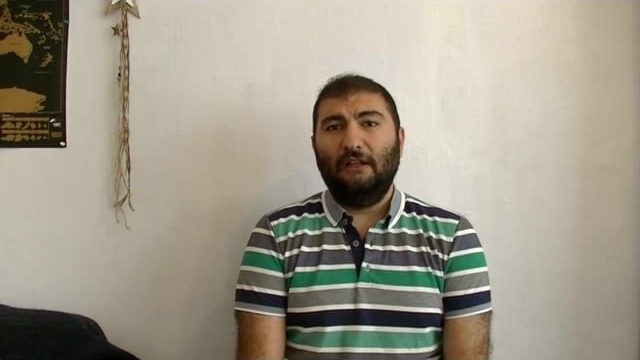
Country of origin: syria
Year of settlement: 2015
Age on arrival: 24
City: antwerp
Gender: male
Language of the interview: English
[i] Good afternoon, [name]. Today I would like to interview you for the project Specially Unknown for the Red Starline Museum. And before I start with my questions, can you please tell me a little bit about yourself, where you’re coming from, what do you do in life?
[r] I’m [name] from Syria, from the north part of Syria, from Aleppo. I’m living in Antwerp for the last four years and I studied before coming to Belgium, in Syria, in Aleppo University, biology, chemistry, but unfortunately I couldn’t graduate because the last year I couldn’t finish because I need to leave to Turkey. And I’m living in Antwerp for, as I said, for the last four years and I’m working in theater in center of Antwerp.
[i] And can you tell me a little bit more about your family? Do you have brothers and sisters?
[r] Actually I have one brother and sister and my sister live in Germany and my brother living here in Antwerp with his wife and little child and my parents still live in Aleppo in Syria.
[i] And can you tell a little bit more about your childhood? How was it for you to live in Aleppo? What did you do?
[r] Actually I’m born in Aleppo and after that we moved to our mother city. It’s called Al-Hasakah is the mother of the city of my father and we were living there for several years. Therefore my childhood it was separated between Al-Hasakah and Aleppo. I grew up between these two cities because the family of my mother were also living in in Aleppo and we’re like living between these two cities. I grew up in in some very nice atmosphere in Al-Hasakah. Al-Hasakah is one of the most one of the most cities in Middle East I think has a lot of nationalities and ethnic groups living in the same small area. For example there are Syrian people, Armenian, Arabian, Kurd and Turkmen. A lot of other small groups had a lot of other nationalities who was living there for a lot of years for many years I think. It was always like that this city. I learned a lot from all my friends from all the different cultures there and I think that helped me a lot for my first year here in Europe to have more understand for other people for other culture and my childhood was very nice. I was going to some let’s say conservative school. It was like Christian school and we were playing only in the church and like even Sunday we were going to Sunday school. It was in church. It was a lot of time there and I had many friends also in the street where we were living. I still remember some names. It was nice time for my life and then we moved to Aleppo. When I was 10 years old or 11 years as I remember, we moved to Aleppo and started my teen-ager there, teenage there. And it was also nice. I got a lot of friends in our area and yeah. Actually I was a happy child.
[i] So you spent 10 years in this city?
[r] Let’s say like that yes. First I’m a I’m born in Aleppo and then we moved to that city called Al-Hasakah and then we came back to Aleppo because my brother and sister, they were plus 18 and they needed to enter the university and we didn’t have university at that city, therefore we had to move back again to Aleppo and we had our house there and the whole family there, therefore it was not an issue to move. It was easy.
[i] And what was the difference between life in that city and in Aleppo?
[r] That city is much smaller than Aleppo. In Aleppo, more than 4 million people are living in the city of Aleppo. It’s super huge, the capital economic city of the Middle East. All the conversation, all the life going about money and economy and working hard and long work time. The first city where I was living, it was like more relaxed, more chill. People had long days, long hours to do other stuff out of work. And that was big difference for me because in the beginning, when I was 11, 12 years old, I remember the main conversation of all the friends in the school was how the business fathers, how it’s going on in the port of Syria, or how much cost the dollar of the day. It was a bit weird for me because like for 11 years, 12 years old teenager, the most important to play football and to watch some cartoon on TV. It was not really that important. But like year after year, I integrated in that community in Aleppo. And I made a lot of friends also. Normally like I’m a social person and it’s easy for me to make friendship. It was like big step between the first city and Aleppo. But actually, I learned a lot from that. And I’m happy also with that because I started to get into this business community, even though if my father was not businessman, either me or anyone of my family. But it was nice time. I learned a lot. Yeah, actually, it was also nice time.
[i] And you said that you went to some Christian conservative school?
[r] Yeah, actually, it was Protestant school. And normally I’m Kurd. And for Kurd people, it doesn’t matter what is your religion as long you respect all human being. And it was a choice of my parents because it was private school. And they want of me to speak good English. But like now, I… I forgot most of the English because I’m living here for the last four years, as you see. And I have to speak Dutch at work, at school. But it was private school. And the level of teaching, education in Syria between… The differences between the normal school of the government and private is very high and very big. And therefore, they had a choice to send me to that school. I think I don’t have any friends. At the moment, I’m in contact from that school. Because most of them, they like… After the graduation of the secondary school, they went to America or England or France to finish their university. And after that, I didn’t have contact with them. And like, yeah, I would like to meet them these days. I’m living in Europe and it’s much easier to contact them and to see. But if you lost the contact for more than 10, 15 years, it’s difficult again to bring this contact.
[i] You said that it was very expensive to study in this school. And how come that your family could afford you studying in this school?
[r] Actually, it was a bit expensive. But my father and my mom, they had a choice. They sent me and my brother and sister to private schools. And they suffered a lot because of that. And they were trying hard to afford it for us. And like, normally, I don’t like to talk about this point. It’s a bit sensitive for me because I had also a lot of friends who couldn’t reach that kind of education. And yeah, it’s like luck. It’s kind of destiny in this world. Like, some people can afford, some other people cannot. And I would like not to go further about this point.
[i] And how was it for you to study in the Christian school? Did you enjoy it?
[r] Actually, it was not that annoying. It was nice. But to go to church every day for all my life for half an hour in the morning and Sunday the whole day, and sometimes after the school. I will not say it was too long, but maybe we didn’t have other things to do at that time. We were young. But when we grew up a bit, I started to go less. But I also learned a lot of going to church every day to be more humble and to appreciate everything I have. Sometimes I forget about that. But I’m trying to still be in contact with that part of me. I’m not a religious person. But yeah, in our difficult moments, sometimes we run away to that part of our soul. And we try to find the peace. We try to find the moment that we are far away from everything and in contact with some bigger power or energy in this universe.
[i] But how did you feel to go to the Christian school every day, even though it was completely unknown and different, and you were not raised as a Christian person? How did you feel to go with the pupils who were raised in a Christian family?
[r] Actually, we were raised in my family, we were raised as a people who were respecting human beings of all religions. And that helped me a lot because we are not… I didn’t grow up in some conservative family, not so religious. Let me say, not religious at all. In some religious country like Syria, not too religious country, but still everyone has a religion and they believe and they go to mosque or church. Or whatever they want to call it. It was in the beginning not difficult at all because I was six years old. But when I grew up, I started to feel the differences between both communities or three communities that are in Syria, like Kurds, they are not religious, and Christians who are religious and Muslims. Some of them like more or less religious than other people. But I didn’t… In the beginning, I didn’t feel any difference between me and my friends because we were just playing, going to church, going to our classes. But when I grew up, I started to feel that there is something missed between me and them because they started to become more in groups, like Christian people in group, Muslim in group. And I didn’t have a group for me. And that was a bit difficult, but… Like, it was not so difficult for a long time because after a while, I discovered that, oh, okay, I’m social. I can be friends with both groups. And that was my strong point, last point actually. I’m happy about that because I have friends from all religions and I could. .. I could easily go with everyone. And in the end, I could make groups of friends who are mixed. And it was very nice for me that I was young and I could do it. But… Each group of these people, they have their special, like, habits and special tradition. And I was happy with both. Like, I was taking what I feel happy and feel comfortable with and just not follow what not make me happy, let’s say. Until what age have you been studying in this school? I studied long in this school. Let me say when we moved to Aleppo. And then I moved to other city. I studied long. The last year, I didn’t study in this school. It’s mixed up now in my mind. I cannot say specifically because we are living in two different cities and we moved. And for several months, I didn’t go to this school because this school has… There is one in Al-Hasakah. And also other one in Aleppo with different name. But it’s the same school. And they even have a third school in Beirut in Lebanon. A bit mixed up now.
[i] And then when you graduated, did you already know what you’re gonna study in university? Or how did you make this choice?
[r] I made this choice when I was, I think, 17 years old. I decided, okay, I like chemistry. I will study biology chemistry. Because I liked it so much when I was studying in the secondary school. And I thought, okay, I will do it. But it was against the wish of my parents because my mom wanted me to become a doctor or engineer or something. But I was not that level of student that can spend 10 hours a day studying for two years to get that point. I was just like studying one hour a day and spend the rest playing or with my friends. And therefore I knew from the beginning I would not be able to reach that point. But my mom was insisting a lot like, ah, you have to do it and have to become a doctor. You are a smart student and you can do it. But I was always like agree with her and say, yeah, I hope so. Let’s hope and let’s see. But I knew from the beginning that I’m going to study biology chemistry. And in some moment my father was against super hard. He wanted me to study like him. Geology. In the day that I needed to go to apply for what I had, I’m going to go to study in the university. I just last minute changed all the application from geology to chemistry and I didn’t tell my parents. And after one half month or one month, I remember we got the result that I’m accepted in the science college of the university. And I’m allowed to study there, biology chemistry. My parents, they were a bit upset, but I didn’t tell them that I changed the application from geology to chemistry. And I said, yeah, I put it like as a second wish chemistry, therefore it didn’t happen with geology. But they accepted in the end because it was my wish also. And I started to study 2010, I remember. And I studied there for four years. And the last year I couldn’t finish because the situation in Aleppo was difficult and I needed to leave. I needed to leave because it was not stable anymore there. It was not safe. I lost a lot of friends. I saw a lot of people die in front of my eyes. And also for many other reasons I couldn’t stay anymore there. And in 2013… I moved to Istanbul, to Turkey with my sister and her husband. And we started to live there from end 2013 as I remember.
[i] And can you tell about that moment when you took the decision, okay, that’s enough. Like I really had enough of all this situation and I really want to move on to some other country. Remember this specific moment?
[r] Yeah, I remember very well. I didn’t have a lot of time. And I also didn’t have any money. Because the situation was like disaster. Everything was destroyed in Aleppo. I called one of friends who is from Iraq who is living in Baghdad. And we are very good friends. We are studying together at the school and university. But because the war started in Syria he needed to leave to go back to Iraq. I was talking with him and I was complaining that the situation is not okay anymore to stay. And it’s dangerous for me for several reasons. And then he was asking me why you don’t leave, why you are staying there. I said because I don’t have like one cent in my pocket. I cannot leave. It’s super difficult. And he was… He is one of my best friends. Like he fixed some small amount of money and he sent to me next day. He called me next day and he said there is some money for you in some place. Go and get it. And leave. Don’t stay there. It’s not okay anymore. And then like okay. I don’t have any reason not to leave. If it was possible. Not possible. When I say it’s possible, it’s possible like ten percent. Not possible like oh okay the door is open. Please come. Just come to Turkey. It was also super hard and so it was difficult. And we needed to cross some checkpoint of ISIS and I’m Kurd. And free army and all these things. And I was living in the city center of Aleppo. And it was also like… Big… issue. It was not… It was not… It was not a pleasure for them to meet someone from Aleppo. From city center and Kurd. And was living during the years of war. Therefore it was also like… I took big risk to leave. And we just did it. Me and my sister and my brother. We entered Turkey. In 2013. We moved to Istanbul straight away. And also at the border it was not easy at all. Because it was under control from other part of guys who was involved in the war in Syria. And the husband of my sister didn’t have passport. And it was much more difficult. And he needed to enter in illegal way. And we were waiting at the other side for several hours. And then we lost the hope that he crossed. And then we took decision. Okay we will just continue our trip to Istanbul. And in moment that he appeared between the trees. And it was very emotional. Because we started to cry. Because we thought we will not meet anymore.
[i] What did you think happened with him?
[r] You don’t know. Like we don’t know what possible happened at the border. He is entering in illegal way. Maybe they just have been like caught by the army. Turkish army. Or he died on the way. There are a lot of possibilities and you never know.
[i] But how was the process organized for refugees to go from Syria to Turkey? Like on the border. How was it? Was it open? Was it half open? Or was it forbidden to go? How was it?
[r] At that moment it was mixed. It was legal. Illegal. Forbidden. Not forbidden. Every day the situation changing at the border. And you never know in which way you will enter the country. You have passport. You don’t have. You have your ID with you. You don’t have. You have a hundred dollars to pay to someone to help you to cross the border or not. It was not… Like the situation there it was not clear at all. It was able to change every second. Not every day. But luckily we could cross. And we could get to Istanbul. We have one of our aunts who is living in Istanbul for like two, three years. And we arrived to there. We spent like two, three weeks before we could find an apartment. And to move and started to look for a job there. It was… It was… At that moment it was like so mixed because we arrived. It was beginning of the winter. It was dark and raining every day. But it was… The feeling it was very mixed because we were happy that finally we are in some safe place. Maybe we can… We can have a new beginning of our life. But also you never know what… We don’t speak Turkish. At that moment we didn’t speak Turkish. And you don’t know if we were able to stay there illegal way, legal way. What they are the procedure. Or how we can find a work. If we can find an apartment. If we able to stay there or they will kick us out or… Also all the time that I spent in Turkey. It was also not that kind of stability in my life. It was some days was pleasure. Some days… Some happy days with the friends, with the family. Some other difficult moments. Be fired of job or be looking for other job. And if you don’t work for one week that mean you will not have food to eat. You will not be able to pay the rent. Because I was sharing apartment with my sister and her husband. But even though… Imagine that three of us not able to work anymore for one of the reasons. Yeah it’s… It’s hard.
[i] And what was at that moment the legal situation for refugees in Turkey? Like how they were accepted? Were they given some opportunities? Or how it was going on?
[r] There is nothing called refugees in Turkey. There are Syrian refugees in Turkey. Like at the border between Syria and Turkey. There is the only people who are called refugees. But for all the other people who entered Turkey. Legal or illegal way. They were able to register as… I don’t know what to call it. Just as Syrian people who is living in Turkey. Most of people they were staying there in illegal way. No papers. No work permit. No residence. No insurance. No nothing. And if they go to work. That there is no guarantee that in the end of the month. The owner of the place or the factory will pay their salaries. And it was happening a lot in the beginning. I think till today it’s happening a lot. That they ask you to work for one month. It’s like… It’s test period. And then they don’t pay. They just make like excuse. Ah okay you are not good enough. We will not hire you. We will not pay you anymore. And we didn’t have a rights to go to complain. Or to ask about for our rights. And they are not real refugee. The people who are living in Turkey. Not at the border. They are not refugee. They are just people. They can get some paper. Luckily if they are lucky. They can get kind of not insurance. But they get some paper. That they are allowed to enter the… If there is some situation. They go to the hospital of the government. And also difficult. Not easy. Like… These days I don’t know how is it. Because I am not living there anymore. But I can imagine. I hear a lot of stories that it’s still difficult. And millions of Syrian people in Turkey. They are suffering because of nothing. Not… Because they did something bad. Just because it’s political. And Turkey is a huge country. And now they have also some difficult moment politically. And…
[i] How long have you been living there?
[r] I was living for almost two years. Less than two years. In Istanbul. And then… Also I took decision to move to Europe. Like one second.
[i] Can you tell a bit more about this moment? When you realized that you want to move to Europe?
[r] Actually I got a call from some friends. They were planning to… To cross the border or the ocean. Between Turkey and Greece. To come to Europe. I got a call from them. They are my very good friends. We were living in the same area in Aleppo. And then I was thinking. Like okay… Is it okay to stay in Turkey anymore? I didn’t have papers. If I will get sick. If I will get some medical attention or not. If I will marry my children. They will have a good future here. If I would like to visit my parents. Or my parents want to visit me. If it’s possible or not. And all these questions. I didn’t have any answer. And it was like clear that… The situation of Syrian people in Turkey is becoming worse. And more difficult. And I also didn’t have anything to lose. And I thought okay. I will take the risk. And even though if… The possibility that we will die on the way. Or we will be… Be arrested by the army. At the border of any of these countries. From Turkey to Europe. But I took the decision. And… In three days I had the decision that okay. I will leave Turkey. And I will… I will go to Europe. But I didn’t know specifically which country. And we started the journey. I remember. End August… 2000… End August… I don’t remember actually. I don’t remember. Or beginning August 2015. Something like that. And… From Istanbul. We went to Bodrum. In… In… In Turkey. It’s at the seaside. And from there we… Our journey started. To… Like the typical journey of Syrian refugees from… From Turkey to Europe.
[i] And can you tell a little bit more about this typical journey? What are the steps?
[r] The steps is… I will tell it. How happened with us. We were a group of 35 people. Kind of know each other. All from Syria. All from Aleppo. We decided to take the boat together. From Bodrum. It was not a real… Not a boat. Like… Air boat. Like this… Balm. We just… Pimp it with some water. Some water. Sorry. Some… In the water. With some air. And… Yeah. Normal… The normal journey takes one… One and a half hour. One hour and a half… 30 minutes. From Bodrum to Kos. In Greece. Some small island in Greece. Maybe it’s big. But like… In comparison with Turkey it was small. And… We started our trip after midnight. But… The first 30 minutes… Of… Our trip in the boat… It was like… Okay. We are going to… A new country. It’s nice. The weather was super cool. It was not cold. It was summer time. And… There were also… Like… Children with us on the boat. I remember the son of my sister. He was four months old. Four months old. When we got this… Trip. And also my sister and her husband. And little baby. They were with me also. Because… We decided we will not… We started our trip together. From Aleppo to Istanbul. We will continue together to Europe. After the first 30 minutes on the boat. The engine got broken. And the water started to… To come on the boat. And… We were like more than 35 people. It was super small. I couldn’t feel my legs. Because someone else was sitting on my legs. We tried to call our friends. To call everyone we know if can help us to fix the engine. And after like 2 or 3 hours the engine worked again. I don’t know how. We tried all the ways to make it work again. And it worked. And then… In the middle between the international water between Turkey and Greece was super dangerous. Because the waves they were coming from both sides. And the… This small boat like very light was going around in circle. And we couldn’t control anymore or the person who was driving. He couldn’t control anymore. And we were trying to help just to get the other side of the beach. Just to get to Greece. And luckily like after 5 hours we could reach the beach of Kos. We were super happy. We were crying. We were hugging each other. It took 5 hours in place of 1 of 1 hour 30 minutes. We were totally wet. The boat was almost under the water. But we were luckily we got there. We spent like several days there. The first day we didn’t sleep because we arrived in the morning. Second day we slept at the beach. Like with… thousands of other Syrian people who took the same trip. But there were no transportation from Kos to Athena. After 5 days of trying we could reach there, the capital of Greece. We spent there also I think 2 days as I remember. I don’t remember the days but we spent also 1-2 days there. And then we took some bus. And we went to the border between Greece and Macedonia. And there also we were walking for more than 8 or 9 hours. Because it was not allowed for the bus to get in the border of Macedonia. He supposed to stop at some point. And we started to walk. It was not a difficult moment at that time, because the weather was okay, it was early in the morning, it was not too warm, but after walking for nine hours, and it was super difficult to enter Macedonia, the army didn’t let us, and we were trying super hard to, from the other side or from other village, and after trying for half of the day, we could do it, we arrived to the first train station in Macedonia, and there you are not allowed to go further to the border with Serbia before you get some paper from the police station, in the train station, and we were waiting also there for more than 20 hours, and we slept all on the in the train station, but there is no train station, therefore, we were thousands of people there waiting, we slept like on the street, I remember some rope was my pillow. Next day we moved to the border with Serbia, and there also, our group became two groups, because we couldn’t go with a big group, because they could recognize us at the border. And we were walking also for more than 10-11 hours, with the children, with the old people, with some, we had also in our group a pregnant lady, it was also difficult for her to walk like for 10-11 hours. Luckily, we got some, we were in some village at the border with Serbia, and we were in some village in Serbia, and then we could find some place to sleep, luckily, and next day we moved to Belgrade, the capital of Serbia, we spent also there 2-3 days. We were spending several days in each city, not because we wanted, not because it was vacation, But it was not always the border open, or it was not always easy, or the weather was not always helping, sometimes was raining, and we had to stay longer in several cities. Then we took some train, and we went to the border with Hungary, the first border of Europe, after Greece, but it was the most difficult moment, because there were a lot of soldiers of the Hungarian army at the border, and it was. .. they were not treating the people in a good way, and they knew that we are from Syria, we are refugees, our country destroyed it, we don’t have other choice, we had to go further with our trip, but it was like the mentality of the regime in Hungary, or the soldier, it was not that friendly with us. It was a bit difficult, but we could also, after walking for a lot of hours, to reach some transportation, and go and move to Budapest, capital of Hungary. We spent also there one or two days, I remember, maybe one day. Then we moved to Austria, from there to the border with Germany, there we could get also in other train, and move to our last step of our journey for all the refugees, Munich train station in Germany. In north of Ger…, south of Germany, yeah. At that point I was alone with the whole group of 35 people, we separated, and we don’t know who is where, and what happened with who, and where are they, where is the rest of the group, who arrived to Germany first, who didn’t arrive, who is still in Hungary waiting for some way to get in Germany. I still remember the face of my sister, she was crying so hard. Because we couldn’t stay together, I didn’t have a lot of money left with me. And I didn’t also want to stay in Germany, I don’t know why, but I didn’t want to stay. And the money was not enough to buy three train tickets for three of us to come to Belgium. I decided to come to Belgium, and they stayed there. And till today they are still living in Germany. And they have… like the young boy now, he’s four years old, he’s going to school. He has a good life, he will have also a good future, I hope so. That was the biggest reason why they came with me. And they got also other child, a daughter. And yeah, they are trying to build their life also there.
[i] It was a pretty long trip. How many days did it take to go from Turkey to Germany? To Munich, to reach there?
[r] I think like around a month.
[i] Pretty long.
[r] It took long, yeah. It took long, it could be shorter, but we were not that lucky on the way. For some people it took of them ten days or two weeks, maybe one week. But at that moment, and the situation between the European countries, I think it took… it was taking like between 20 days to 30 days. And for us it was the same also.
[i] Why, like in general, why did you have this image in your mind that you want to go to Germany or to Belgium? Why like not other country? Why these countries?
[r] First of all, Germany is the biggest country of, let’s say, of central of Europe. And there are a lot of refugees there for like for the last hundred years. I don’t know why, but most of Syrian people, they decided to go to Germany. Personally, I don’t know why. I choose to come to Belgium because like I studied biology, I studied in Syria, biology, chemistry, and I thought it’s… Belgium is the second country in the world with chemical industry. And I thought it would be a good opportunity for me to continue my study or to find a job in the future. But it turned out in a different way, because now I’m working in theater. But that was my ambition. But I didn’t have any image about Europe. How is it… I heard a lot, I’m a fan of European football. I saw a lot of videos of photos. I had many friends, they were coming to Germany to study and come back to Syria or to England or to France. But I didn’t have any image. Because I never thought that I would leave Syria. I was so happy there. And I had like… I will not say like, oh my God, I had the best life in the history there. But I had good life there and I was happy with that. And I wanted to stay. I never thought for one moment, even though the last week for me in Aleppo, before I go to Turkey to move to Istanbul, I never thought that for one moment that I will move to Europe. It was not even in my mind. But it just happened. It was a chance to start a new life. To get the opportunity and I did it. It happened in one hour maybe. All the decisions I took didn’t take long. Just to get the right moment to do it.
[i] And you said that your sister stayed in Germany and you didn’t feel like staying there. And what was the reason that you wanted to go further?
[r] I don’t know. I don’t know actually. I just didn’t feel. Maybe it’s too big for me. Maybe I’m used to living like the last 10 years for me in Syria. I used to live in Aleppo. There are more than 4 million people living in Aleppo. Aleppo is a small city. It’s not huge like Istanbul. Maybe I wanted to feel more like in a smaller country. And also Belgium is the capital of Europe. And… I don’t know. I felt for a reason that I would be more happy in Belgium than in Germany. I didn’t know. It’s just a feeling you get on the way. And I don’t know how to explain it. But… You need to take the same trip to understand and to get the feeling. I didn’t feel to stay in Germany. But I love to go to Germany. Always. I have very good friends. My best friends. They are living in Bonn in Germany. And I’m going like… once… two or three months… Recently. Yeah, I’m going always. I like to be there. To visit. To see my friends. To spend nice time with them. But I’m okay here in Belgium.
[i] Do you remember the moment when… the day when you arrived to Antwerp? How was it? And why did you choose Antwerp?
[r] I didn’t arrive to Antwerp. I arrived to Brussels. Yeah, I remember. I arrived at 9 in the morning. My brother was already… living there for… three months before I arrived. With his wife. And I called him. I said, okay, I’m at the train station. What should I do? He said, okay, wait for me. I’m coming like… in half an hour or one hour. And I was sitting there… drinking some coffee in some cafe. It was a rainy day. It was cloudy. It was dark. The area of train station was not that clean. And I was like, this is Europe? It’s not clean. As they show us in the movies or in…
[i] So you did have an image of Europe?
[r] Not that image. Like what they show us in the movies. Like James Bond. How he’s going to Venice or to London or Paris. All this nice image of Eiffel Tower or… Champs Elysees or… Not that image. But I felt, okay, it’s dark. It’s rainy. Okay. I’m staying now. It was a bit cold because I arrived only with shorts and T-shirt. And I was drinking some coffee and I was hiding in some cafe waiting for my brother to come and pick me. But at that moment I was not afraid at all. I was like… I was kind of okay. Now I will have deep breath and that is it. My journey is finished. And I arrived to my destination and let’s see what will happen.
[i] And you didn’t realize that at that moment your journey was just beginning? Journey. No, actually I didn’t care because I was so wasted and tired of being one month on the way trying to hide from the army and police and dangerous people on the way. I didn’t think about my real journey. How it will start, my real trip here. I just wanted to get shower and sleep a bit and eat and just to have a bit rest for several days. And then I will think about what I’m gonna do. But yeah, it was very nice moment. I saw my brother that I didn’t see for several months. It was nice.
[i] And he picked you up and took you to his house?
[r] Yeah, yeah. I went to where he was living. Small studio. Last floor. Last floor till now I remember. And I arrived, I took shower. He gave me some clothes. They made some food for me.
[i] And he was already in Belgium for several months before you?
[r] Yeah. It’s true. He was before me several months. He took the same trip also.
[i] So he already had some life settled.
[r] Yeah, he was waiting for his papers. And he was not sure what’s gonna happen, where he will move to live. He was also in Brussels. And I thought also I will move to Brussels. Like after I get my papers, I will move to Brussels. But they send me to the, like to some asylum center in some small city or small village, let’s say, or area of Belgium. Called Kapellen at the border with Netherlands. Like the last point of Belgium. The north. And then I started like from the second or third day I started to go to school. I started to learn Dutch. And I started to hear Dutch a lot. And I was like okay. And the closest city to Kapellen was Antwerp. And I felt okay. It sounds good. Let’s try to stay here. And… After I got my papers, I moved to Antwerp. And I’m living here in Antwerp already like, let’s say, around three years.
[i] And? Are you happy with your life in Antwerp? How is it going for you?
[r] Yeah. Actually, I’m… I’m okay. Like, let’s not say like I’m… I’m happy. There are difficult moments also. I’m still young. I’m still trying to find my own place here. My own way. I have a work. I’m living in a nice area. I have a nice girlfriend also. We live together already for more than two years. And everything is going well. Yeah. Sometimes, some difficult moments. I really hate to be here. And I’m asking myself. Why I’m here? Why I came to here? Why not to other city? Why to other country? But I remember then everywhere there are difficult moments and good moments. There are bad people and good people. Everywhere could be the same. More, less. The same. And, but I stay positive and…
[i] But what are the difficulties you talking about? Can you give one or two examples?
[r] Like the biggest difficult moment here, I think, or the reason why I have difficulties in my life, because of the campaign made against refugees from some political. .. from politics, from people who are working in politics to get more money, to get more power on the nation here or and whole Europe… I don’t talk specifically about Belgium or Antwerp or north of Belgium. I’m talking about whole Europe, that there are people got the chance to play on this side, and it created some not nice atmosphere. I will not say atmosphere, but … people, some people they are thinking that I came to here to stay home and they get the money of their taxes and be lazy and stay home and not do anything in my life and this is not true at all because as a Syrian person, I will talk about Syrian people, we are super positive, we are active, we are learning the language even though without learning 100% Dutch. Now I speak fluently Dutch but I feel more, when I want to give interview, I feel more English because I used to talk English all my life but I also speak fluently Dutch and I’m working in some, in theater and I speak the whole day Dutch. Not only me, most of Syrian people who arrived at the same time when I arrived, they are all positive and active and their children going to school, going to university. They open their own business and I don’t feel that people has enough reason to be negative against us and that’s a pity because if they have not good story or not good history with some kind of immigrant, it’s not because of me. I arrived to here only four years ago and I’m active and I’m doing everything to prove that day after day after day. I pay also taxes the same like Belgian people and soon I will get my Belgian nationality and I will be part of the community here and I’m working also in some culture center and some very big theater in Belgium and we try our best to unite these small parts of community to make it one part. It’s my job also. The job of the team that with who I’m working and I hope that soon the reality will be more clear and this issue will not have negative effect on my children or our children as a new immigrant generation here in Belgium. I hope so and we are working hard on that.
[i] I know that you all organize a lot of different activities in Arenberg for diverse community and just for all the community in Antwerp? Maybe can you tell a little more about this event that you organize?
[r] Yeah, actually my focusing, I’m organizing events in the place where I’m working and my goal or my target is always to mix public under the name of our theater. And I’m always trying to organize activities for all parts of communities to come and unite in one place, one very small place. I’m organizing normally international activity. I will give some names. I organize international culture day for international student in University of Antwerp who they are arriving mostly beginning September. And I’m organizing this activity once a year beginning October. Or middle of October. They are super new in Belgium. They don’t speak the language. Most of them they don’t know a lot about culture. Therefore I’m organizing activity called international culture day. Welcome in Antwerp. I’m trying to show the real face of culture of Antwerp to international student. And make it more clear for them. And show them like make the whole day full of activity around the culture houses of Antwerp. And they are all happy. And everyone satisfied with this activity. I’m talking about the university and international student. Because most of them before come to Belgium they don’t know a lot. Like they know okay there is a Belgian chocolate, Belgian beer. There is one museum called… I will not say what is the name. But it’s like the biggest one of the biggest museum in Belgium. And it’s attractive for them. They don’t see the real face of culture houses in Antwerp. And how rich is this city. Antwerp rich with the culture. Like it’s going for hundreds of years. And I’m proud to be part of this community. That who can still give attention. And still give more details about how was the culture community. And the artistic community in Antwerp. I’m proud to be part of that. I’m trying also to show it for the international student. And all the rest of people who are living here for very long. But they don’t know a lot about the art and culture of this city. It’s very rich city. And yeah I’m happy to do that. I’m organizing other activities also. Like international refugees work day. I’m proud to be refugee. It’s not that pleasant. It’s difficult. But I’m happy. I’m trying to show the real face of refugee. We are not lazy people. And we try to do something. I’m not saying that just because I’m front of the camera. I’m also theater actor. And I made a theater piece with our friends. And I think my message delivered for thousands of people. Because we are playing a lot in Belgium and Europe. And I’m not saying that only because I’m front of the camera. I can say it also on the stage. But this is the reality. This is what I’m trying to do at least personally.
[i] I think now I’ll ask one of the most popular questions. That I think thousands of people have in mind. How is this possible? That a refugee that arrived from Syria just one or two years ago. And he just learned the language. And his language is not perfect. How is this possible? That you got such an amazing job. In one of the biggest theaters of Belgium. And that you’re having this position. How did you come to this? How is this possible?
[r] Actually it was not easy at all. Because I started to make… Four years ago when I arrived to Belgium. I started to learn Dutch. I was not speaking Dutch. But I started to learn in the school. I met a group of people in the same refugee center when we were leaving. And there started the story. I studied biology and chemistry. But my hobby and my passion is marketing and sales. I was working also in marketing and sales in Syria and Turkey. And I still love it so much. But we decided together to make a theater performance. We were… No one of us did anything related with theater in all his life. We’re all amateur artists. Not artists like… We were trying to do something on the stage. And we were… We were doing a lot of repetition. We were sitting together. We were writing script. And then it was with a small part of text. It was not… It was with the original music. It was with some videos we took from YouTube. And we were trying so hard just to express our feeling on the stage. Then I realized that it’s good way to deliver my message. That we are not lazy. And we’re trying to do something positive for the community. And from that moment I started to go to a lot of cultural activity and artistic activity here in Antwerp and in Belgium. I was going minimum two, three… Three evening a week. And it was big amount. Big number. I was trying always to find like tickets. All big organization they are offering always for refugees or poor people like me free tickets. And I was always thankful for this opportunity. And I started to make big network by talking to the people after their show or to the artist or to the organizers. And from that point I started to have strong network in Antwerp. And let’s say in Antwerp and north of Belgium. And that was my start point to go further and to get to know more people who are working in the backstage. Not on the stage. And that helped me a lot to find first simple job. I was dividing flyers and hanging posters. But I had a lot of creative ideas. And I was going almost every day to our director. And I was talking with her about my creative ideas and what I want to do. And how I want to change the situation and the scene about refugee. And she was also happy. She supported me. And then I got later this job. And I have chance now to organize events for all parts of the community. Not only for refugees. I’m organizing for everyone. And like I’m not giving now a lot of details. Because it’s very long story and you need to make a documentary about. Actually there is a documentary about. But like for this short interview let me say that… I’m so happy to be in the backstage now. Not on the stage anymore. But soon I will be back again. And I’m organizing my own show. I will be the host with young talent from Antwerp. Professional artist or not professional. Just people they have passion to arts. We try to do something together once a month where I’m working.
[i] What is the name of this show?
[r] It’s a bit funny because… The name is [name] Invite. Because I’m [name] and I’m inviting artists to do something for the first time. It’s kind of out of box. Because I’m asking some dancer to make some film. Or asking some singer to make debate about the difficulties of singers. This kind of event. The artist going out of his comfort zone. And do something for the first time. And I think the first edition is supposed to be in October. But for some reason we will start from December 2019 in Antwerp.
[i] It sounds like a very nice plan. And maybe you can also tell a little bit about your future plans here in Belgium and Europe. What do you want to achieve?
[r] It’s a difficult question because I live day by day. Of course I would like to have a stable life. I want to have a good future. I want to make small family here. And to deliver my message that I’m doing through my work. But my long term maybe to be artistic leader of some theater. Some big theater in Belgium. Or maybe after several years of getting enough experience in the Flemish community. To move to Brussels. And try to also to do something there. I don’t know. I still need to learn French. But you never know. Or maybe I stay here. Maybe I move to the south part of Belgium. To learn something new. But luckily I’m here now.
[i] It’s like one of the most famous questions for a job interview. How do you see each other in five years? Do you have this image of yourself in five years?
[r] No. I have image for next month. It’s difficult also to like how much or the max ambitious refugee here. It’s difficult to ask this question. Because we live day by day. We were living especially for people from Syria. We were facing the death every day. And we were trying to run away. Just to… We were not thinking about after five years. We were thinking about tomorrow or next week or next year. In Turkey it was also the same difficult for me. Here it’s still difficult and hard. And let us say I’m thinking about after two years. How it will be my life. I think I will be in the same position. But I will have stronger network. And I will be able more to deliver the message that I started working in arts for it. I hope that. And after we will see. You never know what will happen. Maybe I go back to my work in marketing and sales. That is my passion. I love it so much. But now I feel that I’m more useful in the art community.
[i] And you said that you have some message that you want to deliver to the community. What is exactly this message that you want to deliver? Maybe to the Belgian community?
[r] Maybe it’s too optimistic. But I want not to hate each other anymore. And not to be racist. It’s difficult because politics is dirty. And earning a lot of money because of that. But I hope someday the biggest amount of people who are living in Antwerp. They will realize that. And will understand. That if we are one hand. If we show love to each other. We can build the country in a better way. At least for the next generation. For our children. I will not say we know what will happen after 100 years. But at least for the next generation. To make this community a better place for them. And more love. We need a lot of love.
[i] Okay. Thank you very much [name] for this nice interview. I wish you good luck in your future with your career. And thanks a lot.
[r] Thank you. Thank you so much. And I hope that this project from Red Star Line will go further. And after several years we will see some real effect of this kind of projects. Can change the community. Can change the perspective of people. How they are looking. And how they treat each other. I know Red Star Line Museum. And they do huge work. And I hope. I wish them success. And I know how difficult was this project. I heard a lot about. And I am trying also to help. And I wish them the best. Nice people. Try to make some difference in the community. And good luck.
[i] Okay. Thank you so much.


