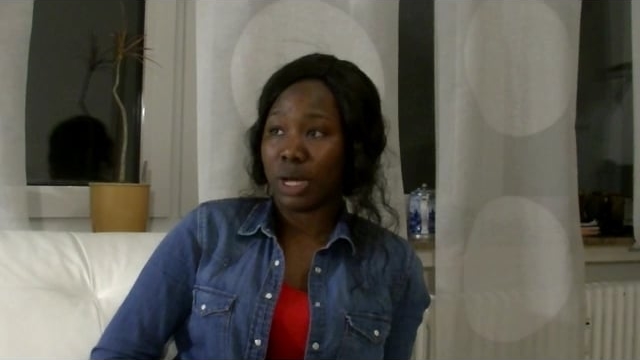
Country of origin: guinea
Year of settlement:
Age on arrival:
City: bochum
Gender: female
Language of the interview: Fula
[i] Yes, welcome! [Name] is my name, Fiedworker for our project “Specially Unknown” and today we have Ms. [Name] as our guest. Yes, just introduce yourself.
[r] My name is [Name], I come from Guinea. I am 19 years old and I was born in Guinea. I can’t speak German that well and that’s why I’ll speak in Fula.
[i] Ms. [Name], which city in Germany do you come from?
[r] I live in Dortmund, on […]Straße, number 87.
[i] Okay, this is about your life story and that means you would tell us [anything you want] about your life story. I would ask you a few questions, but the focus is on your story, we’ll just listen. You have chosen to speak in Fula because in Fula you can express yourself much more freely. And we do that too. Welcome again. Regarding our project “Specially Unknown”, which tells the stories of people who are talked about very little […] So, the aim of the project is to put these people in the foreground and to archive their stories. My name is [Name] and I am employed as a fieldworker for this project. I will ask you questions, write down the answers and save them in a database. Welcome again.
[r] Thank you very much, I am honored. When telling the story, I will first start with my childhood. Afterwards I will tell you about my childhood and my life today. Finally I will tell you something about my trip to Germany and my arrival in the city where I live. As I said before, I was born in Guinea Conakry. My parents and my family members live there. My siblings also live there and most of my family lives there. During my childhood, my parents had made upbringing rules for us and each of us [children] had to follow them. For example, at home we followed my father’s rules. Everyday life was regulated in such a way that everyone… Family member was aware of his responsibilities. After I got up in the morning, as soon as I was big enough, I was supposed to wash the dishes and sweep the front of the house. Sometimes I should also sweep the house. These were my tasks at home. After homework was done, I headed to school. After school, I should go to Arabic school. But before that, we put [the whole family] in a bowl. If someone came home a little early, then he or she should wait until everyone is there to be able to eat. In the event that a family member was absent during the meal [without parental permission], then that person could only eat in the evening. This rule was used for the punctuality of the family members. This means that everyone should go straight home after school. That was one of the rules in the house. After school and after we ate, we always had 30 months to recover before going to Arabic school. Our father insisted that we learn our religion, Islam. That’s why we had to go to Arabic school by 5 p.m. Afterwards we had an hour of free time to play. After free time we took a shower. This ended our time away from the farm and our home. From that time on we were forbidden to go outside. You weren’t allowed to go outside again until the next morning. This is how my childhood was. Of course there was also living together with the neighbors, with friends, acquaintances, just with society. There was a nice life together. Nobody relied only on themselves. When games were organized in the neighborhood, I was allowed to watch and participate. But before that, I should get my parents’ permission. Because without permission I could be punished by my parents. That’s why I should have my parents’ permission.
[i] Thank you for your introduction. You mentioned your parents’ course, what can you tell us about their history? Where is your mother from?
[r] Both of my parents also come from Guinea. Both come from the same village.
[i] What is the name of the village?
[r] Dinguiraye. They come from Dinguiraye.
[i] what is their job?
[r] My father is a trader, my mother is a housewife.
[i] What does your father sell?
[r] Food.
[i] Are there any memories from your childhood with your parents that shaped you? Were the house rules always like this or were you brought in?
[r] In my memory these rules were always like that. My older siblings have also followed the same house rules. Therefore, it was normal for every new family member to accept and follow these rules.
[i] Okay. As she just meant, this is about an Arabic school and a normal [French] school.
[r] Yes, I also attended normal school.
[i] Okay. How was your first day of school? Can you tell us something about it?
[r] I was very happy about the thought of being able to go to school. I could already watch with excitement as my older sisters and the other children went to school. I was very curious about what could happen in a school. Before the first day of school, my parents bought me school clothes. I was very happy and told everyone that I would start school this year. The first day of school was very nice. But after that, everyday life became more and more difficult, so I didn’t want to go back there. The reason for this was getting up early. I always had difficulty getting up in the morning. Sometimes I even cried and refused to go to school. Unfortunately, my parents beat me and forced me to go to school. After school, on the way home, it was always very warm. School time was always from eight a. m. to four p. m. At two o’clock it was very warm and we were hungry. That’s why I found school very difficult at the beginning. But after the first year, through habit, everything went back to normal. I could now get up for school on my own. I finally understood that school was something good for my future. Unfortunately, it was difficult for me to understand this at the beginning. Over time, one will understand that parents act for the prosperity of their children.
[i] How far away was your school? Were you accompanied?
[r] The school was nearby, so we went alone. During this time, the school had assigned someone to help the children cross the street. We should cross a street. Because of the measures taken by the school, parents were not obliged to accompany the children to school.
[i] On the way to school, were you in a group or alone?
[r] Yes, we always traveled as a group. Everyone who took the same route could go there as a group.
[i] Are you still in touch with any of your school friends?
[r] Unfortunately no, unfortunately I have no contact with my school friends from kindergarten to fifth grade. On the other hand, I still have contact with my school friends from sixth grade onwards.
[i] Were there things you shared with these school friends?
[r] Yes, we had done a lot of things together. For example, during the first school break, at 10 a. m., we always played together. Mostly after we got our rolls had eaten before the break ended.
[i] What kind of games did you play back then?
[r] We played a game called “Castle”. There were Lines drawn on the floor, the player should try in the castle with one shoe to move without touching the castle walls. We also enjoyed playing hide and seek. Sometimes there was even a small fight. The teachers had them Brawl stopped and then everything got back to normal. It was all part of it.
[i] Was there mistreatment or good deeds from the teachers?
[r] Yes, I remember when I was in sixth grade, we had a teacher, who was very strict and, above all, advocated good training. For example, I had great difficulty with mathematics. Those who don’t do the math problems could solve, they were beaten and the teachers had kept you in school until he or she solved the task. In sixth grade we were supposed to take a state exam complete. That’s why we went to a semi-boarding school, from 8 a.m. to 6 p.m., sometimes even until 7 p.m. During this period our parents brought us food to school. The teacher had made a few rules that all parents had accepted. Those who didn’t do their assignments were forced to stay in school. You are only allowed to leave school when all tasks have been completed. The teacher took the time to assist the students. It wasn’t easy. I was kept there until ten o’clock at night one day.
[i] What was the reason?
[r] Because I hadn’t memorized my lessons. There were many questions. I had answered some of them mixed up, so I was supposed to stay there that day.
[i] You also said that you also went to Arabic school? Was it in your house or with a teacher?
[r] No, we didn’t learn it at home but from a teacher outside. After we came back from normal school and ate we went to the Arabic school. The Arabic school was only a 10-15 minute walk from home. There a teacher taught us Arabic lessons. We should also write, read and memorize every day.
[i] As I understand it, after normal school and after lunch you went to Arabic school.
[i] Were there methods that were used to help you Explain new things that you didn’t understand? Can you make a comparison between the normal and Arabic schools?
[r] The methods were pretty much the same. Because in normal school you will only start with the basics. Like the alphabet and the fact that reading and writing were taught first. The same was true of the Arabic school.
[i] So you start with spelling.
[r] Yes. Then you start with the words and reading sentences. After these stages are completed, memorization is set as the next phase. Writing in Arabic [on a board] was also taught.
[i] At what age do you learn to write?
[r] I don’t know exactly. But in my case, writing was taught as soon as the student was able to read sentences. From this point on, the student is asked to write and read themselves. After the lesson was well received, one could move on to the next lesson.
[i] On which days did you go to normal and Arabic school?
[r] We went to normal school from Monday to Friday. This is only the case during elementary school. In high school we also went to school on some Saturdays. We went to Arabic school every day except Thursday.
[i] Can you make a comparison of the types of punishments within the two schools?
[r] In normal school, undisciplined children were forced to their knees for some time or were placed under the sun.
[i] I didn’t understand it.
[r] There was also the punishment with stones. The punished person should raise two stones, one hand each. You should also do push-ups. The number depended on what the student had done. This is how the punishment was set. There are no such punishments at the Arabic school. The punishment continued immediately.
[i] Did these sanctions leave their mark?
[r] Such sanctions are not easily forgotten. They leave traces.
[i] What I mean by that is whether you had a feeling of revenge against your teachers because of the sanctions or whether you said to yourself, well, the teacher did it for your benefit.
[r] As a child you develop a feeling of revenge against the teacher, but later you will realize that such sanctions may have been necessary at that time. Especially now, as time goes on, I’m slowly realizing that maybe without these sanctions, without them, I wouldn’t have the education that I have now. Even today, if I could know where these teachers lived, I would thank them. Therefore, as I understand it, this feeling of revenge only existed for a certain period of time.
[i] Did the sanctions have a negative impact on any of your school friends?
[r] Yes, a school friend named [Name] was somewhat close to the teacher. The [Name] family had entrusted him to the teacher, [Name] wasn’t diligent either, he barely did his job. That’s why his sanctions were always the harshest. One day the teacher beat him until all the other students cried. We said among ourselves that such sanctions are unacceptable. But on the other hand, the teacher had his parents’ approval. That’s why this particular situation was only for [Name].
[i] Okay. The house you lived in, was it your own house?
[r] Yes, the house was ours. My father built it.
[i] Okay. Almost every house here has a yard, especially compared to here. What can you tell us about that?
[r] What do you mean?
[i] I’m talking about the high wall of the courtyard.
[r] No, I haven’t seen such constructions here. Here you can sometimes see houses with a fence, but nothing else. In Guinea, not everyone has a farm. The places are not similar. The architecture is also very different.
[i] I asked because I wanted to understand: what was it like living with the neighbors? Were they part of your life?
[r] Neighborhood played a big role in my society. Because with us, if I was lacking food or something, for example, I would first ask my neighbors. If you don’t have it, I could go buy it. Of course you should also return the things that were borrowed. Another example is a birthday party. Before the large family arrived, it was always the neighbors who helped. This means that almost all tasks have already been completed by the neighborhood before the family arrives. The same also applies in the event of death or other events. Living together is very strong. You help yourself.
[i] That means there was mutual help in the neighborhood.
[r] Yes, that’s right.
[i] In the case of a problem between neighbors, how was it resolved? As an example, let’s assume: Children of two neighbors got into a fight, what was the solution?
[r] In general there were problems in the neighborhood just because of the children. In this case it would actually be wise to take the children apart and remain neutral. But in the case where one of the children is older, the parents of the smallest child may be annoyed. In such a case, there are always older people who can intervene to put the situation back in order. Family friends can also intervene.
[i] This is the way a problem was settled between adults in the neighborhood. What about children?
[r] Children do not have hatred towards each other. For example, they can fight against each other and after a few minutes they will be able to play together again.
[i] In the case where the children fight in front of the adults, how was the problem solved?
[r] That’s what I just said, any adult who is present intervenes and they will find the appropriate solution. So, that’s how it’s handled.
[i] Looking back, how do you qualify the upbringing your parents gave you?
[r] During that time I found my parents very strict, but as I grew up I realized… Compared to other families, I was raised well. Every house has its own parenting methods. Every time I saw children with very bad behavior, I thanked my parents for the good upbringing they gave me. I found the fact that my parents were strict worked in our positive upbringing’s favor.
[i] You talked about sanctions at school. Were there sanctions at home too?
[r] For example, my father punished us by taking away something we liked. As an example, we couldn’t watch TV for a week. We were only allowed to watch TV on Friday and Saturday. This means that any of us who were not correct during the week no longer had this privilege on the weekend. The punished person should retreat to his room to do his schoolwork or do something else.
[i] Okay. How was your free time?
[r] The punished person also lost his free time. Everything you desired was no longer allowed. In this case, the weekend ran like normal weekdays.
[i] Let’s go back a little to your childhood. How difficult was it for you to accept these sanctions?
[r] Sometimes I even thought I was adopted. Because the punishment was super severe. I told myself that children don’t receive such punishments from their own parents. I told myself that I only received such punishments because my parents were stronger. I cried often.
[i] Were there any good memories from your childhood?
[r] Yes, I have beautiful memories from my childhood. There are memories that I will never forget. There was a small river near my apartment. On weekends, people liked to go there to do laundry. Some were there all day to swim. You only went home when you got hungry. After eating we immediately set off for the river. I always lost my shoes there. My parents refused to buy me new shoes. But after a few hours they changed their minds. There are many other memories. We also played with empty cans and tried to cook. Everyone took food with them and we cooked together. You shouldn’t get caught doing this. These are memories that I will never forget.
[i] Still back to your childhood, is there anything else you remember from your childhood?
[r] Yes. When I was in Guinea, I always remembered my childhood every time I saw children playing. Sometimes I even wanted to play with them, but unfortunately it wasn’t possible anymore because I was already an adult. I remembered it a lot. Unfortunately, I haven’t been able to see anything here in Germany that reminds me of my childhood. Because, I don’t think a childhood here is similar to our childhood in Guinea. Here children played with empty cans or with the earth or even hide-and-seek. But here you rarely see the children outside. They only go out occasionally. In Guinea, children play outside every day. I’m not sure I see anything here that reminds me of my childhood.
[i] As I understand it, that was your childhood in Conakry [capital of Guinea]. Besides Conakry, have you been anywhere else?
[r] I was once on holiday in Dinguiraye. I was there with my siblings. We have family there, that’s why we were there. Das Leben und der Alltag dort ist unterschiedlich zu Conakry. It’s not the same. Before I went, I had never seen cows. I had never seen sheep either. Until then I had only seen slaughtered chickens. There I saw live chickens and the forest. Nature and life are different.
[i] How many hours does it take from Conakry to Dinguiraye by car?
[r] By car, if I’m not mistaken, we left Conakry around 2 p.m. and arrived in Dinguiraye early in the morning. Maybe around 10 o’clock. The roads weren’t that good at that time. But I don’t know if the roads have gotten better because I only went there once. The return trip. I don’t know at the moment whether you still need that long.
[i] Okay. You told me what the wall fence was like in Conakry and how you locked the door. How was it in the village?
[r] There was no wall fence in the village, but a wooden fence. You get wood from the forest and use it as a fence. The pieces of wood are placed next to each other to form a circle around the house.
[i] Around the house.
[r] Yes, around the house. It’s a wooden fence. You don’t see any wall fence there. That’s how it was when I was there. But I don’t know if there are currently wall fences there. I didn’t see any wall fences there back then.
[i] When you talk about crime or the fear that something will happen to you. How is it in the city compared to the village?
[r] When I was on the way to Foutah-Djalon, I was scared that it was dangerous there and that there was no electricity. It’s not like Conakry and there would be witches there. This made me afraid. But if a child is fixated on the trip, there’s no stopping them. It is said that there are witches in Fouta-Djallon. In Conakry people are afraid of criminals. There was a time when crime was very high. People had already locked themselves in the house at 7 p.m. Nobody dared to go out. It is completely different than in Africa, or rather than in Guinea. The people you see are in a hurry and running away. In the morning you hardly see two people standing and talking for a long time. I arrived one morning. Anyone you see, maybe they’re on their way to work. Everyone you see is in a hurry, very much in a hurry. If it were Guinea, you would see people you know and then you would talk. You will also understand each other linguistically. It’s just different.
[i] Okay, when you arrived, how did you feel about the welcome you received? Where you first arrived, how have you got it with the people who welcomed you? How did you experience it?
[r] When I arrived, I first got off in Cologne and then drove to Dortmund. There I was taken to a facility where I was asked my name. I was asked the question about my origins, my date of birth and my place of birth. They told me that I don’t have to be afraid. They explained to me that it was their job to help people like me. That they care about people who have come here without family. They then asked all questions about me personally. Afterwards they gave me a place to lie down. They also brought me clothes. I got some food, that’s how it went and they were nice to me.
[i] Hmm hmm.
[i] Hmm hmm. I’m listening. It’s about your life story.
[r] After I got a place to sleep, I was taken to accommodation. My first day in the new accommodation was not easy. Then I had a room alone, I then thought that I was alone in the entire accommodation. When it was time to eat, I was called and shown the canteen. There was no one there in the canteen either and then I got even more scared. I panicked and sat down. It didn’t take long before I saw black people coming down too. The first black people who came first spoke English and I don’t know if they were from Nigeria or Ghana. They spoke English. Then my hope increased. I then said to myself that if they all live here, then there will be someone with whom I can communicate in my language. It didn’t take long before a new group came down. I heard some of you speaking Fula and others speaking Soussou. They then came in and greeted me. They called me “Hello!” in German. welcomed. I then said “Hello” back. You don’t need to know the language to understand this. Dann hörte ich, dass sie sich auf Fula unterhalten. I sat next to them and asked if they were also here [from Guinea?]. When asked, they confirmed that they are all Fula. You said that Soussou and Malinke are also among you. I replied that I understood Malinke but that I was Fula. We talked for a long time and I was asked what I thought of the food. I don’t like it because I’m not used to it. They gave me the tip that I should take more of the fruit in the future. It takes time to get used to the food here. So we quickly got used to each other. One of them asked me if I knew where my room was. I said yes. She suggested showing her my room so she could visit me later. I showed her the room and lay down. They came later and we spent time together until 10 p.m. or 11 p.m. Afterwards everyone returned to their rooms. We spent the next three days together. I also ran upstairs to you. They lived upstairs and I lived downstairs. Wir haben uns dann weiterhin gegenseitig besucht bis wir einander vertraut waren. They took me into town. We spent the time there together and came back later. We got along so well, as if we all came from the same place. We became friends.
[i] Okay, you just talked about the relationship between you and your roommates in the accommodation.
[r] Yes.
[i] How did you perceive the employees on site? How were you with them? I couldn’t say anything negative about the employees, They have no problem and I have never seen them abuse their power. They do their job and only contact you when they want something from you. If you have a letter, they will inform you about it. You will then be asked to pick up your letter. If you can’t read the content and ask for help asks then they have read this letter for you, Or they are looking for someone. They try to make sure you understand the content. They explain their house rules to you and tell you not to do this or that. They tell us not to do this or that.
[i] What do you mean by that?
[r] For example, paying attention to going-out times. And you can only go out on weekends. But on Sunday you should be back in the accommodation. Saturday and Sunday, you can leave at any time, but during the weeks […]. We also have our school upstairs. You are forced to go to school. They make an attendance list. If they are not listed on any list for a week or two weeks then they will ask you why you weren’t at school.
[i] Okay, When you were finished, what tasks did you still have to do? Was there anything they still needed to do to the authorities?
[r] When we were ready, we had appointments and when you have appointments, you received an invitation beforehand. The date and time are noted in the invitation and summons. We also have carers who accompany us.
[i] Supervisor?
[r] Yes, carers who accompany us when we have appointments because we don’t understand the language and are not used to it. They accompany us and make appointments for us and then we come back. It’s like going to a camp.
[i] Okay. If we now talk about the challenges that you have to overcome in order to stay here, you will first be informed about your own tasks. Could you tell us something about it? For example, you talked about the carers who support you. Do you know why the carers support you?
[r] Yes, if the decision after an admission interview is positive, then you will apply for asylum. Afterwards you get money for food and clothing and there are also those from the social welfare office who support the refugees. If they want something from you, then they write you a letter specifying the dates of the appointment and we are then accompanied by the supervisor. You attend the appointment together and then come back.
[i] Okay, you talked about people from Guinea that you met here, were there people from other countries too? You also spoke about the Nigerians, for example.
[r] Yes, there are other nationalities in our camp too, There are people from Guinea, Nigeria and Ghana there.
[i] From Niger or Nigeria? Because there is Nigeria and Niger. But you mean from Nigeria?
[r] Yes from Nigeria, Ghana, Mali and Senegal. There are also people from Syria, Moroccans, everyone was in the camp. So not just from Guinea.
[i] Have there been any difficulties or problems in this context?
[r] Yes, in the camp you get to know how to deal with people from different backgrounds, because at home there is only one nationality known, namely that from Guinea. There are very few foreigners in Guinea and you come into one Place where you meet and get to know many people. Everyone comes with their character, their culture and everyone meets there. You live together and learn to be considerate of each other.
[i] Okay, You talked about the city and the apartment in Dortmund.
[r] Hmm hmm. [affirmative]
[i] We are here in Bochum. Do you have contacts with people from Bochum? What about that?
[r] Yes, I come here to Bochum because I have contacts. The people I know or meet in the city, for example, I met people in the Afro-Shop and we exchanged numbers. All of these people come from Bochum. Over time they invited me, You ask me to come to you and spend the day together and sometimes I spend the night here too. And then I drove back to Dortmund. So we got used to each other. We’ve gotten used to each other and I’m in Bochum very often.
[i] Which places do you know in Bochum?
[r] I know Bochum main station, I also know many streets.
[i] Okay, Do you know your way around Bochum city center?
[r] Yes, for example with the Bermudian.
[i] Do you mean the Bermuda Triangle?
[r] Yes, I know my way around there, I know where the Afro Shop store is, because I accompanied my friends there while shopping. I also know where the boutiques are.
[i] Do you also know where the town hall is?
[r] Yes, I know where the town hall is and I’ve been there too.
[i] What did you buy in the area?
[r] We also bought clothes there. People also buy clothes and meat in the area. Meat, cheese and […] are also sold there. We also went to a hop store there to do some shopping.
[i] Okay. Um, to continue to stay here in Bochum, or to stay in Dortmund, what do you associate with Bochum or Dortmund?
[r] When you talk about Bochum?
[i] What significance does the city have for you?
[r] I associate Bochum with the people I know there. I’m going there. But Dortmund is my city and I live there. No matter where I go, I know I have to go back there. I’m registered there, all my things are there. So, Dortmund is my home. But Bochum is the city of my friends. That’s the difference between Bochum and Dortmund for me.
[i] Okay, there are experiences that you gain with people and the environment when you spend some time in a place.
[r] Hmm.
[i] There are people who like you and you have a sympathy for each other. But there is also the opposite, that is, people have antipathy towards each other. To get to the point, have you experienced discrimination?
[r] Personally, I have not had any experience with discrimination so far. But it happened to a friend of mine when she got into a fight with an older lady on the bus. She wanted to sit next to the lady and she said that my friend can’t sit next to her. But I don’t know if that has something to do with her skin color or not.
[i] Okay.
[r] Or if you sit next to someone on the bus, the person immediately changes seats. I don’t know why they do this, but this happened in front of me too. I haven’t experienced this myself yet. But I have experienced similar cases several times. Once I was on a train, I saw a young black man sitting down next to the others and then the other man immediately took his bag, he got up and sat somewhere else. I have seen all these things.
[i] Okay, we talked about the neighbors in Guinea.
[r] Hmm hmm.
[i] What is the contact with the neighbors like? Is it easy, heavy, what does it look like?
[r] Here you hardly see your neighbors. I couldn’t even identify my neighbors here. I could say that I have no neighbors. You live next to each other, but you don’t see each other and you don’t know who your neighbor is. It’s not easy to make contact. When you come here new, you don’t understand each other. Communication goes through language if you can understand each other. In addition, you don’t have time. You can only seek contact with someone if they give you time to talk to them. Here everyone is in a hurry and that makes contact more difficult, because everyone is approachable and is busy with something. It’s not the same [the neighborhood], it’s not the same.
[i] Okay. You have people from your community here, seen either here in Bochum or in Dortmund. What have you discovered? How would you describe them?
[r] That’s what I just said, what I can say here is […]. You can talk about someone you know. Here it is the case that you only see people like this, but you don’t know what they do, That’s why you can’t say anything 100% about it. All I know is that in the train stations, everyone is in a hurry. Many are busy getting out and running. That’s how it works there.
[i] My question is, what about the Guinean community? Here, what is your observation? Is the community organized or not?
[r] Oh yes, yes.
[i] Is there potential, what is the community missing? What could be done to make the community better positioned?
[r] Yes, they are organized, there are clubs that come to help you, For example, if you have a death in the family, they come to you and support you. If you have a problem, you will also be helped. There is a mosque in Dortmund where children learn to read the Koran. Anyone can register there and take part. When someone dies, there are also associations that collect money to transport the body to relatives in Africa, to their old homeland. There is that too and that’s why I would say it is organized. The community is very well organized.
[i] Okay, but what about contact between people from Guinea? How do you see the contact or the effort to integrate here? What is the contact between our community and the majority of society? By this I mean German society and the structures associated with it. What is your observation?
[r] I have no knowledge of this because I haven’t been here long enough to say anything about it.
[i] If we continue with integration […]
[r] Hmm hmm. […] where are you currently at the point of integration? What are you doing now?
[r] I still haven’t really started the course. I started the course on January 14th, We have finished Module 1 and are currently on Module 2. No, we have finished Module 2 and are currently doing Module 3. This corresponds to the A2 level. After that I will do B1. After B1 you can apply for training or continue with B2. I’m currently visiting A2.
[i] Okay, As for culture, how do you live out your culture here abroad? How do you live out our culture?
[r] Hm hmm.
[i] In dancing or in clothing. Do you even do something like this or, based on your observations, how is it done here?
[r] The culture.
[i] The culture.
[r] So, the cultures differ. As for clothing, I think that our clothes are not suitable here because with the cold here you can’t wear them. In this respect, you are forced to wear clothes here. And it’s also about your own health. If you were to force yourself to wear clothes from home, you would expose yourself to stress and the associated inconveniences. But in summer you see people wearing African clothes. It looks good then too. Nobody wears these clothes this time of year.
[i] Okay, if we stick with culture, you talked about religion, what is being done here. What do you do or see that connects you to the culture or reminds you of your culture? Something that makes loneliness or missing you easier?
[r] Ah, since I came here I haven’t seen anything that reminds me of home. Because, as I said before, everyone is busy with themselves. Everyone has something they are busy with. It’s not like you would see in Africa that they play outside. Even when it’s played here, it looks different. Except for the “Afro-Shop” store where I find groceries, I haven’t seen anything that reminds me of Africa. I haven’t found anything else yet. When I meet people who also speak my language, I remember where I come from.
[i] You talked about people you met here, do you also have German friends? Do you also have contact with the locals? What is the contact with them like?
[r] I have a lot of contacts, but very little with the Germans. In our class, for example, there is a Pole, an Englishman, many from Syria and Lebanon. But I only have one German contact. I only have contact with one German woman, no one else.
[i] Okay, if we stick with the language, now learn the German language. But as you to all heard German for the first time, what impression did you have? What were you thinking about? Tell us about your first impression regarding the German language.
[r] It was totally foreign to me because I’ve never heard the language before. When I was still in Guinea, I heard English. On the TV I watched films in English, Spanish or Portuguese. But German, I had never watched a film in German. I have never seen a text in German. That was totally foreign to me. I asked myself, what kind of language is this? I didn’t even know how to greet each other. You can do it that way in English. You can understand some words. I didn’t know a single word in German. I didn’t know how to deal with it. That was like a surprise for me. Because I’ve never heard of the language.
[i] Okay, what does your everyday life look like? You have already told us how everyday life is Guinea looked like and now here, what does it look like?
[r] Here, when I get up in the morning […] I get up at 5 a.m. every day, get ready, and take the train or tram to school. Classes start at 8 a. m., at 8 a.m. We end school at 12 p.m. But at 10 a.m. we have a break for 30 minutes. Then we go in and school ends at 12 p.m. I then head home and we get homework. At home, you do your homework and the next day you bring the tasks with you and it continues like that. That’s the routine here, Monday to Friday. Saturdays and Sundays are free.
[i] Okay, do you have a career that you want to pursue in the future? I don’t remember if they’ve already talked about it. Didn’t you want to work in the hospital?
[r] Yes, I want to work in the hospital. If I’m lucky, if I’m ready and understand the language well, then I would like to work in the hospital. What I want to do is called “nurse”.
[i] I would like to do that.
[i] Is there anything about the job that appeals to you, other than the uniform you wear?
[r] No, yes, I like the job even without a uniform. But the uniform also has a higher status. I like the uniform. I like wearing the uniform at work.
[i] Okay. What do your prospects look like? Where do you see yourself in five years? What would you like to have achieved in five years?
[r] In the next few years, as already mentioned, I would see myself in a large hospital where I can do my work in peace. And I will be able to speak the German language well. This is what it looks like.
[i] People talk about the family,
[r] Hmm hm.
[i] What about the family, do you have a wish? What I mean is, in ten years, where do you see yourself? What do you want in ten years?
[r] Yes, once I have achieved that, I would also like to start a family and have children. I dream that all of these things will come true someday.
[i] Okay, if you ever have children or a child, what language would you like to teach the child? Or what would you do yourself?
[r] If it were up to me, my child would speak four languages. Or more and by that I mean languages that are internationally known. German would be mandatory if it happened here. The child will learn German anyway. The languages that would also help would be my language, namely Fula, which I would teach the child well. If the child has a good command of Fula and German, we will then see what additional language the child can learn. But my language will be a priority. I would like him or her to know Fula and German too.
[i] As part of the integration processes, you have a lot of experience, for example with the bureaucracy of extending ID cards at the authorities Could you tell us about your experience with bureaucratic matters? Was it easy or difficult for you?
[i] It is not easy because some take place early in the morning. You’re tired and it’s cold. The carers don’t always have time to accompany you because you are not alone. There are a lot of people there and when you get there you have to take care of everything yourself. And with language, it’s not easy. You have to go there and fend for yourself until you somehow understand each other. So I could say it’s not easy. The procedures are not always easy.
[i] At the European level it is also rumored that there are people in Germany who have difficulty accepting foreigners. They are trying to build barriers and at the moment this group is gaining more and more popularity. Have you learned anything about it?
[r] I’ve already said that I’ve heard about it, but I haven’t experienced it myself. I haven’t met you yet. As I said, it didn’t happen to me, but I’ve seen it happen to others on the train or the bus. They can’t stand foreigners. There are also foreigners who don’t want contact with others. For example those from Syria or Morocco, they are foreigners themselves but they can’t stand other foreigners. For example, I have seen Moroccans or Syrians denigrate black people, even though they are all migrants here. I have experienced such cases.
[i] Do you have a souvenir for us? Something that reminds you of someone or an event. Something that reminds her of the past. It’s about an object that symbolizes something for them.
[r] No, I haven’t.
[i] Okay, you’ve told us a lot and we wish you the best for the future.
[r] Hmm hmm.
[i] As they say in German, all the best for the future. We hope that the integration and everything else will work out better and thank you very much for the very interesting story and also on behalf of our team at “Specially Unknown.” We thank you very much. And now you have the final say. In German now!
[r] Okay, thank you very much and I was very pleased.


