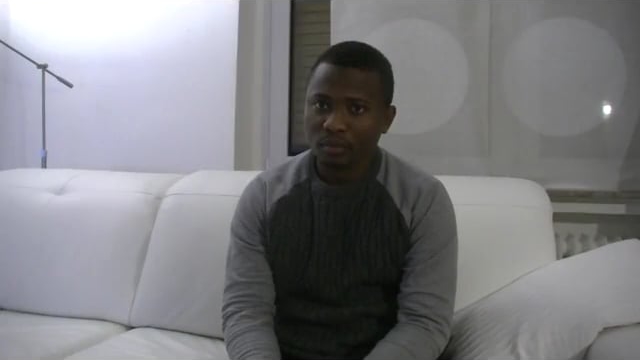
Country of origin: guinea
Year of settlement: 2016
Age on arrival: 17
City: bochum
Gender: male
Language of the interview: Fula
[Music sounds]
[i] Yes, Hello! Welcome to our project “Specially Unknown”. My name is [name]. Today we [name] have one of the ten people we have chosen and he will tell us his life story today. And I will not keep them in tension for long and I will immediately do that Lead word to gentleman [name]. Lord [name] Has Lord [name] I mean, Lord [name] wanted That you have the conversation on Fula and that’s why I would now say everything in Fula. And ask the questions and so it goes on […] Yes, [name], you hear about the selected People, to the ten people, from the Guinean community, who here Tell life story and today [here?] Are you one of the ten selected people. It’s about your life story Starting with childhood, the time as you It was young people how you got here, what it looks like at the moment and how you see your future. In order not to have to speak for a long time Can you imagine first and afterwards Let’s see how we step for Step [that we?] Come forward. Now Mr. [name], You have the word.
[r] Okay, thanks. My name is [name], I am 19 years old and will soon be 20 years old. So, I originally come from Guinea. Since I am here, here in Germany, it is almost two years. I currently live here in Germany, This is how it looks with me, thank God.
[i] Okay Mr. [name], Thank you very much. We could now take a look back on their history. Back in your Childhood and youth.
[r] Hmm Hm.
[i] Could you describe your experiences as a teenager? Could you take a look at your Grant life story in the stories? There were experiences […]
[r] Hmm Hm.
[i] […] which you would like to remember? Memories that you combine with something positive, or things you have experienced in your past that you combine something negative?
[r] Hmm Hm.
[i] And [could you] yours Represent a life story? You can do your family, relate to the country and the place. You have it in your hand whether we start with the family.
[r] Yes, we can with the Family start. Hmm Hm.
[i] Okay, could you tell us something about your family now?
[r] um, my family, We come from Guinea. My father is called [name] and my mother is called [name]. We belong to the family [name] on, who in turn belongs to a family from Guinea and my family comes from Dalaba. Our city of Dalaba belongs to Central Guinea. Middle Guinea will also Foutah-jalon called.
[i] Okay, Lord [name] From Dalaba.
[r] Hmm Hm.
[i] What would your recommendation be for someone who has never been to Dalaba? What would you say to her or him, in your opinion, where do you have to go when you are in Dalaba so that you don’t miss anything?
[r] Hmm Hm.
[i] What is there in Dalaba […]?
[r] There are many sights in Dalaba. I could tell you a lot about it. Dalaba has a place after the fir trees [Dalaba at the fir trees] Is called.
[i] Okay.
[r] The trees form one Unique selling point for Dalaba throughout Guinea. This identifies Dalaba. There is also um […] The climate in Dalaba is unique within Guineas. The climate there is different. If you arrive in Dalaba, you would [immediately] realize that you are in Dalaba.
[i] What is there in Dalaba, [something what you are as] part of the Would describe the history of the country, or [something what you] Would describe the history of Africa?
[r] The story We heard Dalabas. I don’t know exactly, but I was also told the story that a very famous and wise man from Dalaba is coming. The man comes exactly] From the town called Kebali. Kebali also belongs to Dalaba. In Dalaba there is a place in the lower area. And this place will Called Koladhe. The place is located in the lower area of Dalaba and is called Koladhe because the soil there is well suited for agricultural activities. The floor is from steady or loose Rock limited and that is also the reason why the place because of its soil quality and the Composition of the soil is referred to as “Dantari”. The lower area will Called “Koladhe”. Hmm Hm.
[i] Is there something in Dalaba that a tourist would be interested in? For example [something you can show a German who wants to go to Dalaba?
[r] For example, one could show him what I just told. One could show him agriculture Because many work in this area in Dalaba. If the […] [tourist] sees this, and that’s something the tourist can look at. When a German goes there, we will show him what we grow and what we do with us Agriculture is suitable. Because we have a lot of things that thrive well in Dalaba.
[i] Okay, do you have cattle breeding, farms in Dalaba or have you lived in the city center yourself? In Dalaba we had carried out cattle train, we worked on fields with good soil quality for agricultural. We once had that.
[i] What did you add?
[r] We grown rice. For example, I didn’t know my father well. But I heard that he had grown a lot of rice at the time. I was also shown fields that belonged to him. He worked in agriculture and he was also a teacher. He was a Koran teacher. My father had done that.
[i] um. You just said about your father’s activity that your father was a teacher.
[r] Yes, he was a Koran teacher and worked in DE Agriculture.
[i] What about her mother?
[r] My mother was only active in agriculture. She worked a bit in the field and too Home for my father and children cooked for us. Then we ate. She was a housewife.
[i] Was she a housewife and also responsible for education?
[r] Yes, she also took care of the cows. That was also my mother’s activity.
[i] okay, we all start and in this context, If there was something, you have experienced something You remember, And what do you combine something beautiful? Or the opposite when you child, or young people.
[r] Yes, in my childhood, I experienced a thing that I found as nice. Like, for example, when I went away with friends] And we played together there. We went into the forest and played there. We are [together?] went to a place. You know, it looks a little different there than here. We had bushes where we went and where we played. We were in the rivers and went swimming there. And later we came home. We did all of this if we had nothing else to do. So we have with Play the time driven out.
[i] You also could swim?
[r] Yes, in the rivers. Although you say there are snakes there. We were there anyway and we had our fun there. We have not assessed the risk. We only had our goal To have fun in mind.
[i] [?] […] Was there experiences that were not good and were still remembered today?
[r] Yes, there is something that is still burdening me to this day when I think about it. The fact that I broke off with the school because [as?] I started school. I was at school But it wasn’t long there. The memory of this is burdened by me. The fact that I School did not attend.
[i] Okay, does it have to do with not brought them to school or because they didn’t go to school?
[r] I was registered at school But I haven’t visited the school for long. […] Because of the time I have Hinderhue to attend school. [Because things prevented me from attending school?] I wasn’t at school for long.
[i] What was the reason? The reason was that my father died. I couldn’t go to school anymore. There was no one who supported me. My mother was with Busy their cows. And much other. Everything was […] I had to leave school to support my mother. Even if I only had to bring the chickens to the stable. If I can’t do some [others?] Things and so I could make my contribution.
[i] If you can remember if you compare your upbringing with your own upbringing, what could you tell us?
[r] Yes
[i] How did you go? Here they have the People seen and made their own impressions. How the coexistence is and how they protect each other. How people formulate their wishes and how they ask someone for something. How was it with you You think about it today? How do you explain this?
[r] Yes, if I go to them Time when I was little thinking the upbringing we got as little boy is different from what I saw [here]. That you are asked [here?] In the morning What you want, what you are doing. Of course it was done differently with us and the The type of education also differs. Hmm Hm.
[i] Okay, that was with the family and what about religion?
[r] Hmm Hm.
[i] Can you tell us what role religion played in your upbringing? Things you have with the Associated religion?
[r] Hmm Hm.
[i] And now to the upbringing and something that was left for them.
[r] Yes, we all had to learn the religion. You insisted on it that we learn the Koran. In the morning and in the evening. But that brought us a lot of advantages because what we have learned inevitably, inevitably respect and Consideration requires. You also learn How to stand together, who to your peers, Who is one of the younger ones and who belongs to the people who are older than yourself. All of these things were taught us in the time when we learned the Koran. We have learned things like that while we learned about religion. We learned how to sit down how we were eating The same age have to put on how we have to behave when we are older with people who are older than yourself. All of these things were taught us and corrected if necessary.
[i] Okay. What did you do from the morning to evening?
[r] then when it Tomorrow was, sometimes […]
[i] Yes, they continue to tell you if you like.
[r] In the time when I was still at school, I got up in the morning and went to school. When I got up in the morning, I wash mine Face, I have breakfast, take my breakfast with me and then I’m with one thing Bag went to school. When I had breakfast, Did you give me something to take away. Something to eat like, something like sweet potatoes or something else that I then put in my pocket. A bag that you […] Then I went to school We had school there until 12 p.m. Then we went out and then we stayed there Because we lived a little further from school. We had school in the morning and evening. Then we have in the Played near the school. We played football. At 3 p.m. we had school again until 5 p.m. and then we drove back home. At home, in the evening went to the Koran school. Monday, Tuesday […] And Wednesday There is no Koran school in the evening. There is also no Koran school on Thursdays.
[i] okay, you can Place where you once used to tell?
[r] Hmm Hm. Do you mean that Place where we once lived?
[i] Have in City center used to? Or in a small one City or in the village?
[r] No, I lived in the village and I grew up there too. I lived there. I lived in the village. I didn’t live in a city, but we lived with others in the village. Relatives and people with whom we all share the same family name. Some had a different surname than we were. We are told that we are all relatives. Some Diallo are called [name] some are also called [name] And we all lived together.
[i] Okay, Hmm Hm. The Neighbors, how was it with them? What are the advantages and disadvantages with the neighbors? How do you see that?
[r] Yes, there were many advantages with the neighbors. They help themselves with us Neighbors each other, For example when cooking when you find out, that you still need something, for example salt. If something is missing and you urgently need it, Then you can send someone to the neighbor. I still know that my mother sent me to the neighbor at the time and said: “Go to the neighbor and say that I need salt” Or [you] Asked the neighbor for something else. So if I […] If we did something that we were not allowed to, Or if we have come into disputes and want to beat us, then they were Neighbors also for us. They campaigned for us and asked the others to apologize. In such cases, they admonish us that we should stop Otherwise they would no longer work for us in the future. So we lived with our neighbors. We support each other, at Celebrations such as the child’s naming, At weddings, if necessary, the children who can get the water. Everyone makes their contribution. We couldn’t wear a lot of water But we still followed the other. We are our older brothers at Complete water, collect wood or the like. Even if we were too small for that, we just ran after them and did what we could do. So they taught us a lot. And so we could do everything later when the older ones were no longer there. Firewood for the upcoming Get activity and the […] And so we could make our contribution.
[i] So it was like a family, a big family. And the neighbors supported each other.
[r] We supported each other in all areas.
[i] In the case of a dispute, Then how do you proceed? If you have caused trouble. What did you do to punish you?
[r] When I was trouble, I was beaten. I was beaten. Or when I get from the School came, then they asked for me to [_?] Example has to be repeated ten times instead of five times. You then took stones or cornsters and they are then taken as aid to list. I was always allowed a piece [Stone?] Pull out when I was done. If I only had to repeat ten times in the evening, I asked for twenty times. And that should prevent me from making the mistake again. Or if I am at the Forgot to read something, for example if you have repeated me several times and I made a mistake afterwards, then I was allowed to repeat the part twenty times so as not to forget it.
[i] okay
[r] that’s how it is. I then repeated the part several times so as not to forget it. And she threatened me or something else. Such things.
[i] there are still old Friends of back then, which you still do today as the best Friend would denote? Or the opposite?
[r] As friends?
[i] Yes, hmm hm.
[r] Yes, I had friends with whom I played. We went to school together, we ran together and on the way back we have a kind of Competition [made] who was the fastest. We ran and everyone wanted to be the first at home. And we had bicycle rims. We often ran and were able to run faster.
[i] with the bicycle rims?
[r] yes exactly, bicycle rims or what you […] [something round] It is […] So we ran. And so we ran and nobody wanted to be overtaken. So we went to school and we didn’t notice the distance.
[i] there was an experience in Forest, for example with the animals. That you saw them there and found it interesting or frightening?
[r] Yes, when we went, I saw monkeys Small monkeys, they are called “Kula Bhale” there. There are also monkeys that Be called “Kula Kero”.
[i] “Kula Kero” […]
[r] There are also big monkeys, which one calls “Kula Wulen”. But these are big monkeys. But we were afraid of them. We didn’t have one in front of the little ones Fear, but of the big ones. When we alone the big monkeys on a Bowal [Savanna type] met, then we ran out of fear. We ran away from them because we were afraid.
[i] What are you afraid of?
[r] We are afraid that the monkeys beat us or do something else to us. With the little monkeys when we take small stones and try to chase away, they run away. But with the big ones Monkeys who do it […] [laughs]
[i] Yes, okay.
[r] Then made our way home.
[i] Hmm Hm. Okay, let’s stay in the Time when they were still a little boy, there were difficulties that you experienced at the time? For example when playing or playing comrades? Or what did you like to do and how did your parents record it? Were they encouraged or praised when they did what they really enjoyed? Was there anything like that?
[r] Yes, I liked to play football, I liked the football game very much. But our parents had their problems with it. They thought we would not learn when we play football. But if we were still on the soccer field, we sometimes had to look for socks and inside we filled them with towels until then we are on the “Bowal” went to play. We also made balls for ourselves. We then divided and played. But our parents didn’t like that When you have seen us play there. You don’t like that at all. If it were up to them, we would learn instead and take care of the sheep. Or sleep in “Palewil” or support our parents. If we didn’t have a school, we had to read the Koran. We are lucky that we were allowed to go to school, but not our older siblings. They thought that through the School couldn’t read the Koran. However, we are lucky enough to learn both by changing. [i?] You have over Football spoken
[r] Hmm hm.
[i] And you said that you made balls yourself. How did you do that?
[r] We take the liquid from a tree, which we first rub in on our fingers. We put the liquid on our fingers until it gets wet and then we try to pump air in and do it […] Until the ball is a certain one Has reached volume, then we pack even more of the liquid on the surface. Sometimes we rubbed the liquid thickly on the [the?] Belly and when blowing the liquid, which is used with the Time is rubber -like, a shape. We continue to stick it on the ball. There are many of us who get this liquid from the tree. If you scratch the tree Then the liquid runs. We pack several Layers on it.
[i] What is the name of the tree from which the liquid runs out?
[r] Legal Porè (literally = Rubber tree).
[r] We handle the ball as long as Until we get a real game ball. So the ball lasts longer and does not burst so quickly.
[i] Okay, I listen to. It’s about yours Life story and we listen.
[r] Yes, that’s how we grew up there. So we stayed there Until I couldn’t. I then stopped going to school. My father died and I left the place. I couldn’t stay there anymore and am after Conakry driven. I came across relatives. I was in Conakry with relatives. So I stayed there until […] I was no longer at school, I had to Leave school and I don’t have […] You have to pay money for school and I had no one who could pay for me. I had no one there who can finance school for me. I stayed there for the time being and found a place where I could read the Koran. I went there to learn a little. So I stayed until I got a little bigger. Sometimes I drove to my mother to watch if she is doing well. There I supported them with some things and then I stayed?], After that I drove back. Whenever I am there, my mother wants us to be together and spend time together. She spoke a lot to me and showed me a lot. After all, I was the [only?] Boy, from my mother’s children. I still have an older and a younger sister.
[i] Did you also have a younger sister? My mother showed me fields Where my father had worked. She showed me that what my father had done during his lifetime. She said, “Your father liked to do that, he didn’t like that at all. She told me things like that. She continues to tell that my father had given advice to many people. She continued to say that my father felt compassionate with others People were and I should also be like that. She often told me about it.
[i] okay, so you were in Dalaba, from Dalaba they drove to Conakry.
[r] Hmm Hm.
[i] with whom You [in Conakry]?
[r] I was with my uncle, but the uncle and my father didn’t have the same mother.
[i] Why did you come with him?
[r] My goal was to To continue to attend school. There I couldn’t go to school. But I didn’t want to go back and have been satisfied with the Koran. Sometimes I have Bought and sold things. I stayed there and I had […] I went to play. I also played football in Conakry. I trained there. I played with friends, I did all of these things. I have with peers Played friends. I was also in Retail. We have in Madina Small things sold. Otherwise I am also in the center [Kaloum] driven and sold little things there. Sometimes it is the case that we have no electricity at home. And it also happens that I arrive at home and no food is left for me. When asked, I am told that I was working in retail. So I lived until I became around 15. I then moved because we no longer got on. I then moved to Madina and I stayed there.
[i] So you drove from Dalaba to Conakry.
[r] Hmm Hm.
[i] When you arrived in Conakry, what did you notice? Was there anything that was unusual for them?
[r] Yes, when I arrived in Conakry, I lived in Cosa first and there I saw a train that is called Fria train for the first time. Night have a loud noise “Wohhhhh …” belongs from the train. I got up and saw a train for the first time and asked me what that was supposed to be because I have never seen anything like that.
[i] Okay.
[r] There were also many other things that I have never seen before. When I was in Kankalabe with us, Could visit and play everyone. But it was different in Conakry. You can’t visit someone at all times. The system in Conakry was different from Dalaba, where I grew up. But over time I got used to it. There I had friends with whom I played. We learned together, we ran back together and sometimes we collected bottles together and we made cars with it. We then packed the things together and put on the street. We drove with our handicrafts and ran each other around. We collected the lid of Cola bottles and put them along the rails so that the lids are flattened. We played with it. The more you have, the more often you can play. We played with it and football too.
[i] Hmm Hm. And in Conakry, how was the climate compared to Dalaba? The climate was different. In Conakry, if we have rainy season, EST rains a lot. And in the dry season the heat is unbearable. But with us in Dalaba we don’t hot. I was used to Dalaba’s climate. It doesn’t get that hot there. But in Conakry, it will […] In There are many mosquitoes Conakry. With us in Dalaba, there are no mosquitoes and you can even sleep outside. In Conakry, all one and outputs are closed. In Dalaba, where I lived, you can easily sleep on the mat outside. You can see the moon from outside. There was no such thing in Conakry. In Conakry you have to go to the Walking in, no matter how hot it is. It wasn’t easy to get used to it. The mosquitoes […] We didn’t know it there and in Dalaba we don’t know that. We have no mosquitoes there. Hmm hm, it was also the case that otherwise I was in the Time corn, mangoes or oranges had to buy. It was usually the case that we picked and ate the mangoes ourselves. Otherwise we are to the with the help of wooden sticks or stones Mangos came. Then we washed them and ate them. In Conakry you need money. Even if you see them, you can’t eat them. Then it was the case that you none without money Mangos, could not eat corn or similar. With us in Dalaba it was all easy, we just had to pick them. According to the season, you could just pick the fruits such as corn, mangoes, oranges. In the [area] of the rivers you can find enough Manga trees and you could eat as much as you wanted.
[i] Okay, there were enough food.
[r] Yes, there was food.
[i] In the area of Foutah, or Dalaba, what most people eat most? Or what is more expensive in Dalaba in Conakry cheaper?
[r] With us in Dalaba there is a lot of “ndappa” [from corn] Ate together with milk. And especially in the time when the cows have more milk. You can eat that without any problems. But in Conakry you only eat rice. You have to eat that together, from 1 p.m. to 2 p.m. you eat together. In the village, on the other hand, you eat it when you are there. In Dalaba Breakfast in the morning, until 12 p.m. the food is “Tori or Ndappa” finished. Or sometimes there is rice. But it wasn’t that you always Rice must eat. The food was more diverse.
[i] We are still in Guinea and was there something like hope or fear you have prompted you to leave the country?
[r] It was like I started to fall over in the city of Conakry and could [_?] My mother had no money, the cows, that had been left to her have died. I myself had no money for the medication I needed. I then got sick more often and you could not finance the treatment costs. I then decided to go outside the country and see if I can get help there. I suffered from it and I wasn’t doing well. So I decided to go away until I get help or die. I wanted to save my mother to have to look at me helplessly. That would also put a lot of strain on If she would see me like that. It is very stressful to watch How your own child suffers and you are helpless. So I decided to stop, in the hope of getting help or […] I said that inside.
[i] You said that they were not doing well. What did you have?
[r] It turned out that I am a diabetic.
[i] Okay.
[r] My parents are also diabetics and my parents didn’t know that they Are diabetic. They called it “Bhuuri”. In the village they always said that they “Bhuuri” have and have taken vegetable means. There the recommendation will then be given pronounced To use plants as a means of the disease. My father probably suffered from it and died early.
[i] okay, for them he has So stress started?
[r] Hmm Hm.
[i] The disease started to stress it.
[r] Yes, exactly.
[i] What did you want to do, which Measure did you take?
[r] Hmm Hm.
[i] to stop.
[r] The measure that I took […] As I already said I moved to Madina.
[i] Hmm Hm.
[r] I sold cell phones and accessories. One day I talked to a driver about it, this is there on Has been a bus station, he helped me and I drove to Mali first. I was determined to leave the country so as not to risk my life. I had the illness and I suffered from it. So he took me to Bamako. There I tried to get through and it was like that That I was healthy today and sick the next day. Over time, I left the country and traveled further.
[i] Hmm Hm. So, we are from Foutah, or dalabe broke out, then to Conakry. Did you make the decision easy to make your usual one Environment to leave the place where your mother is? After all, they went to Conakry Did you find the decision hard?
[r] The decision was a bit difficult for me, but my mother accompanied me to the bus station. She had bought a few corn on me for me and accompanied me until I took a seat in the car. I was sad that I left my mother and brother. But I also knew that I could come back anytime. The farewell was not easy, but I always knew that I could come back anytime. It wasn’t easy for her either. But the hope that I could continue to school in Conakry was stronger.
[i] You assumed in Dalaba could no longer […]
[r] I couldn’t go to school there. I didn’t go to school often. And the school had all classmates bicycles with whom they drove to school except me. My friends went to school without me and I preferred to go to Conakry. I hoped that I would be supported for school.
[i] You then came to Conakry and made contact there. How was the farewell?
[r] Farewell was very hard for me because I hadn’t said any notice. I didn’t say goodbye to my mother. I decided alone to stop. I still remember that I can leave the day before my decision, so tears ran out of my eyes, When I was thinking. A friend asked why I cry. I said that everything in Order was because I didn’t want to talk to him about it. It’s not easy to say to someone That you want to run away without knowing where. My intention was to go away until I Opportunity to be treated. I was sad and thought if I would ever see my family again whether I would ever see my younger brother again. I wondered what my mother would happen if she learned. But it was that I had to dare to see if I could be treated elsewhere. Then they met with a driver.
[r] Yes.
[i] Hmm Hm. I got to know the driver at the bus station, he took me to Mali. I stayed a bit in Mali.
[i] the driver of Demands money? Or was it in vain?
[r] I didn’t pay any money for it. To be honest, he did not Get money from me.
[i] there was something you as Have provided consideration?
[r] Yes, there was a consideration. At the bus station I have in the Past looking for customers for him. I ran everywhere at the bus station to find clients for him. When I saw someone with a bag that appeared to me as a traveler, I contacted this and Advertising for him [the bus driver]. I explained to the customer that the man is a good one The driver is and that you have no stress with him. Sometimes he gave me 1,000 GNF or 2,000 GNF. So it started until I have one Day told about my concern. He then said that he knows me as a polite person, He has learned and he will see what he can do for me. He continued that he could bring me to Mali and the rest I had to see alone how I could get along. I agreed.
[i] there were unexpected experiences on the Way that you want to tell us about?
[r] Ahh, I have on the Way seen some things. When we came to the border and I was told that I couldn’t continue. I was asked about my ID. The driver campaigned for me and said that I am his apprentice. Such things also happened to me.
[i] Okay, they are then after Mali driven, I listen. Then I left Mali After just over a month stay. Then I’ll be after Burkina Faso came.
[i] Okay. I stayed in Burkina for some time. In Burkina it was the case that I was in one place because of the medication. There I saw children with bottles in my hand who begged. If you then have something to eat and then these children come, then you will be stared at them until you have eaten and if you have something from Leaving food, the children ate it. I then said to myself that I couldn’t feel better here. Then I drove to Niger. From there I came up with the idea of trying to take the attempt to Europe. I was convinced that I would feel better in Europe. I stayed a bit in Niger and went towards Agadez.
[i] Hmm Hm.
[r] I then arrived in Agadez and from then on the stress has become more. But there is [I?] Right for [was ready?] […] [since I have decided to continue moving to Europe. The decision to move to Europe was conditioned by the prekére [?] Camp of the place. I then said to myself that I absolutely have to go to Europe. No matter what needs to be done. My goal was now Europe because I had the hope of being treated there. I spent some time in Agadez. Later I tried to come to Libya. I then arrived in Libya Where I stayed for a long time.
[i] In Agadez or in Niger, were there no difficulties with the authorities? How were they People there to them?
[r] It was not easy. In Agadez it was like that when the police caught you, then say that one was about to kill each other, you go illegally to […] It prevents you from continuing and staying there is not easy either. Yes, the sun there is hot too. It is hotter there than in Guinea. The sun there takes some getting used to. Eating there is different than in Guinea. Life there was different. I often got sick. I stayed there [with?] Others and also worked. There I stayed with someone for about three months. After there was a certain familiarity between us, I told him about my concern. He then said that he will help me. But the responsibility in the event that I should be arrested on the way or I should die, I have to wear it alone. He said he was just doing this to help me. I then said that I agree and if something should happen to me on the way, I am alone. And I added that I made the decision myself and alone. And after all, I got here alone. And if he wants to help me, he should do it and he is not responsible. He then agreed and then I got on a pick-up with his help. In the pick-up was one Libyer and a driver from Niger. I was sitting on the back of the pick-up and there we were around 28 people. We sat behind and the strong outside. And the other little ones like me were placed in the middle. So we drove and it has many Difficulties given. Many problems. We have broken on the way, sometimes the car got stuck, we were thirsty, each of us had a small barrel of water for themselves. If you drink your water empty, there was nothing left. You dealt with it very economically. It was not easy on the border Sometimes money was requested. Those who had money paid for it. And if you had no money], you were beaten up. So we continued until we reached the Libyan territory. In Libya we first came in […] I was last in Zabrada.
[i] Zabrada?
[r] Yes, I stayed there last before my trip to Italy. In Zabrada.
[i] Does Zabrada belong to the capital of Tripoli?
[r] It lies on the side of Tripolis.
[i] Is it on the coast?
[r] Before Zabrada I was called in a city “Ben Walid”, I worked there as a helper. If you refuse to work Then you were beaten up. If you are lucky you get 10 or 15 dins. In that case you had to Add 10 dinar and keep 5. If afterwards he finds out that you got 15 dinar and that you got 10 dinar as income?], Then you will be beaten up for it. You are then dependent on the pity of the watchdog in order to be able to work afterwards. Otherwise you shouldn’t be outside the house, or go the farm to do something else. In the city “Ben Walid” It was very difficult. So it went until I came to Zabrada. [_?]
[r] I was last in Zabrata in Libya. There I was in a house that was fenced with a wall. I thought I ended up in a madhouse. Everyone there was crazy. The people inside looked like crazy people with long hair, many had galen bubbles on their skin. There was no place to pray during the day. There was no place to sleep there. And when you go away and be arrested, you are beaten together and put into prison. If you go out and be arrested, you will be called and asked the family in the Calling home and saying that you need money. But if you know yourself that you don’t have one who you Can send money so that you are released, then [..] They take razor ringing and injure you so that you scream you call the parents. One day I saw it myself. I was really scared that day. I saw an Arab, one grabbed it. [?] He [?] Came with a pistol in the Hand, he grabs a person. Then he has two black ones Young people called. They plunged on the right and left of his wrists and then the feet were stretched up. He then took a metal tube and hit him on his feet. He was beaten several times and the man died two days later.
[i] Did you see that?
[r] I saw that with my two eyes. I sat that day, cried and asked God to get out of it or kill myself to save more suffering. I also saw a lot of similar things. Sorry, hunger […] I no longer spoke of my illness. It went so far that I cried because of hunger. You have hardly seen someone who has something to eat and if someone still has something, then you can only watch him. You don’t dare to go out to search for something. You can see that life there is very difficult and thank God I still persevered. So we climbed a boat with 147 people. We climbed onto the boat. When I tell you how it all worked out, it was difficult without money. But no matter where you are, if you spend some time in a place, you get used to each other. No matter how hard the other is when you meet every day, Then there will be days where he [one?] Is ashamed […] One day when many were getting in and I and others stood in front of the beach. It was the case that if you carry the boat [in?] Your hands, then say loudly: “Allahu Akbar, Allahu Akbar” until the boat is in the water and then people get in and then the journey starts. But in time only those who are entitled to sew on there may. [unclear?] There was one that I got to know well over time. He is called the Senegalese. He is a tractor and we were there together. I often helped him at work. He told me that the day that I should carry the boats with the others and that I could try my luck. I carried the boats with the others and for Thank God the lybia did not see me. You didn’t control afterwards. So we carried the boat and we all have “Allahu Akbar, Allahu Akbar “said and the boat was carried into the water. We all got on and our boat got a leak at the crossing. We met another group that we had hit by the sea. I don’t think someone survived from the group. I would be surprised if some of them survived because their boat had holes. I saw how they went down with the boat. I saw that with my eyes. I wasn’t doing well and I passed out on the boat. There was also an Algerian on the boat who had a juice and he gave me it when I was dizzy. The Algerian was allowed to take a bag with him and inside he had the juice. On the boat we had the blacks, Nothing with, but he then gave me the juice and that saved my life and when the rescuers came, I and others were the first to take it. The boat from […] Had also got a leak and I don’t know how the others made it.
[i] If you speak of rescuers, who is meant?
[r] I think they were from the Red Cross.
[i] Did the salvation take place at the sea?
[r] They came in the middle of the sea and used smaller boats, to bring us to the big boat one after the other. You take people in smaller ones Group and took us to the big boat. They started To distribute life vests. Everyone put on one. Then they took ten people every time, who were then brought to the big boat. And then they came back. But I was one of the first ten that were taken with me. Since our boat had a leak, I don’t know what happened to the others.
[i] You were also sick.
[r] Yes, I was already sick on the ship. Some were transported by the Red Cross by ship. I was on another ship. When I was on board, I was dwell and fell there and water was given to me. I was around an hour and on In the evening we were brought to us cookies and water. The next day they cooked rice on the ship. Then we are around 14 We got on […]. We came closest Day at 2 p. m. [AT THE HARBOR. WE ARRIVED IN ITALY. _?]
[i] You just told violent things you saw, for example in Libya. Are there any things that you have experienced or things that you just saw but have not experienced yourself?
[r] The most violent was that Time in prison in Libya. The prison was not that big. There we were around 30 people that had been detained there.
[i] Did you put you in a small room there?
[r] Yes, they locked us into a small room and it was very hot in the room. I ran on foot in Libya and it was hard and I had never experienced anything like that. I ran there for a very long time. But I am also frozen there I thought it was cold in Dalaba, but what I experienced there was much more violent. From “Ben-Walid” to “Ala Zabrata”, There the route was on foot for a very long time. We paid someone who brought us to one place. And from there we walked over on foot. We walked all night and we slept during the day. At around 7 p.m. we continued to walk.
[i] Did you just walk through the desert?
[r] No, we ran into the [_?]. We were on the Lybian territory, the first city is […] I have now forgot what the city is called, it ends there Sahara and the rest are provided with many dangerous mountains. We are on dangerous Mountains ran.
[i] on the route […]
[r] I was also in “Saba”.
[i] Because of the difficulty such as fear, hunger, long too Run foot […] What did you finish the most?
[r] [laughs]
[i] What was the worst thing for them. You could also form a sequence.
[r] Most of the time people were scared to me. I was most afraid that you are arrested. I know that if you arrest me there, it won’t be good.
[i] Who do you mean exactly?
[r] the soldiers, but you can between soldiers and the Do not distinguish bandits. Nobody had a uniform. You only see that everyone bears a guarantee.
[i] Where? In Libya you can only see armed people. If you are arrested by them, they ask for money and if you have no money, then death is certain. Or if they put you together Then you won’t survive it.
[i] saw someone Because something like that happened?
[r] Yes, as I said it, I saw how they stretched their feet up and how they were beaten. He died two or three days later. They beat vessels from the soles of the feet, here […] The man was beaten and he died two days later. I also saw accidents in the desert. We arrived and saw accidents there.
[i] It was one Car or an accident?
[r] It was a car breakdown and the people sat in the desert. There is no help and without water. The people who were there will not survive without God’s help. They had no water and no help there. If you stay there longer, you won’t survive there because the sand is hot. It is hot in the desert and if you no longer have water […] When the drivers see that they are the goal because of the gasoline or […] Can reach, you can leave the car there and drive with the next car. And the passengers are left alone and should watch how they get along. The route is dangerous, sad. I have never seen what I saw there before. I have never seen what I saw from Agadez to Libya.
[i] When it was bad, they have certain People, for example, thought of their mother or something else? Or do you “only” think of survival, If you feel so bad?
[r] In that time I only had pity with myself. I thought I wouldn’t survive. I thought I mean Mother would never see again. I don’t have that in time Well -being thought of my mother. My concern was rather whether I would get out of life at all. I wondered if my life was not ended here. That was what I saw at the moment. Sometimes, [did I think about it?] That my mother is worried about me right now. I also thought that my mother was worried about me and wondered if I would ever see my mother again. Thoughts whether my life Whether I won’t die here. When I got something to eat, I thought if I would eat again tomorrow. Considerations about what it will be the next day. If I have something today, I think how I can get something tomorrow. Considerations like: “What will happen tomorrow?” Will I be beaten today? ” It seemed that you are in Rooms are located and everyone stands, you have no place to sleep, that’s hard.
[i] In the time there was moments when they would have wanted a return trip home? If you take into account the hurdles they mastered?
[r] Oh, when I was in Libya and came to Zabrata, really, I would have met someone [? ] In time, I would have agreed to me that he could bring me home to my mother. But there was no possibility.
[i] According to the motto, now only “look ahead” and continue. OK.
[r] I did not have this option and that The possibility I had was the crossing by the sea. That was much more realistic Die than the way back. I didn’t know what was still going to happen when I continued the journey. But I know exactly what to expect If I decided to get back.
[i] Does the hope that it can’t get worse?
[r] I only thought that when I was either saved or that the boat gets a leak and goes down. But on the other Page, I know what’s going on. I know what I got behind. That’s why I preferred to go on.
[i] Okay. So from Guinea to Mali, then Burkina, Niger, Libya.
[r] Hmm Hm, then to Italy.
[i] Yes, then to Italy and how did it go on?
[r] In Italy
[i] Arrived without shoes. We got some there. We showered, but before that everyone got something to eat. We were registered and accommodated. We were asked to hand over our clothes and they were burned. The clothes were thrown into a trash can and then burned. We got cream and clothes. I had pimples on my whole body. Later we were accommodated in the city called “Bari”.
[i] What’s the name of the city?
[r] Bari.
[i] And that belongs to Italy?
[r] Yes, there I was in the hospital and told me that I am not doing well and that I also have a headache. In the time when I lay down, I had the feeling of falling into a hole. I could hardly sleep and I told you that. I had pimples and I got ointments from them. My pimples got thicker.
[i] Okay, what does your daily routine look like now?
[r] My daily routine looks as follows: I have two days, Monday and Tuesday internship and Wednesday, Thursday and Friday I have school. The school looked for the job. That means I go to school five days a week.
[i] Do you have a hobby?
[r] Yes, I like to play football and at the beginning badminton played
[i] Ah badminton.
[r] Hmm Hm. I played that. But I always played football at home and I still like that and I go to play often. This also helps me for integration because I can exchange ideas with the others there.
[i] there are places here in Bochum or Places where you like to stay? Or the opposite?
[r] Yes, here in Bochum there is no place where I am afraid, but near the town hall, where the judicial building was, there is a place where you can sit down. I go there more often. I sit down and think about the time when I came again. Sometimes I sit on the benches that stand opposite the Bochum main station.
[i] Where the Bicycles stand?
[r] Yes right there. Yes, I go there too, but in the last I go down more time [to the town hall].
[i] If you are there What do you think about?
[r] um when I’m there I think about a lot.
[i] At the train station is the entrance, you can see people in and out.
[r] There is est and left restaurants, but I don’t go in, but I’m on the bench. In the time when I was still in […] [?] I had a bike, I was with mine Bicycle passed there. At the moment I continue to live from the place But to this day I still drive until then.
[i] Now it’s about eating habits here, how was that for you?
[r] [laughs] In Guinea I’m used to it every day To eat rice and when I came here […] There were spaghetti and other things in Libya. Here with the food it works and I have got used to it now. Pizza, kebab and the like were unusual and I didn’t eat something like that in Africa. There are things that I just don’t know.
[i] um, let us talk about your illness diabetes and my question would be whether you knew anything about it before? Did you know something about them Sugar disease or did you have other information?
[r] I only knew that I had an illness but I didn’t know that it was about diabetes. Yes, I knew I had an illness.
[i] Did you find out about diabetes earlier?
[r] I had already heard of diabetes and you describe it as a dangerous illness. And many have died. Yes, I knew that. I knew that I had an illness But I didn’t know that I had diabetes.
[i] What do you know about the disease of diabetes today?
[r] Yes, what I everyone I have to say diabetics […] If you have diabetes from birth, then you should be careful and listen to the doctors and adhere to the instruction. Before I arrived here in Germany, I was burdened by the disease. I had a headache and I am [was?] Very irritable. It was the case that I once trembled with anger. Sometimes it gets shaky for me, sometimes the values rise. But if the values are stable, you would not notice that I have the disease.
[i] What about it at the moment, are you trembling?
[r] At the moment I feel good, I just have to be careful that the values do not go down or up. The value should be between Level 80 and 150. If the value is wiping, it can stay for two or three days and I wouldn’t even notice that I am a diabetics. But if the value is outside, it is not good. My advice would be to stick to the doctor’s instruction. With diabetes you have to know what you eat and how you eat. That is the secret of the disease.
[i] let us speak with the experience with people here. Your experiences with the people living here, the Contact, for example. What is different here than with us? What did you experience or what help did you find out?
[r] Yes, the people here are calm, you need an appointment here before talking to each other. Without prior arrangement, you won’t let it depend. And if not, you will be with the Greeting doesn’t even greet you back. In Africa, on the other hand, it is the case that if you pass the humans without greeting and if they turn to him afterwards, he will not pay attention to them because they did not greet him beforehand. Here it is the case that you don’t necessarily have to welcome yourself without an appointment if you meet. I stated that here.
[i] You have successfully done here, for example to go to school. Did you also experience the same thing with people from Guinea? Was there support from people from Guinea who live here? Support on the part of the Guinea mesh community?
[r] yes, I got that, here [I have] A lot Get support from people of my ethnicity. When I came up here, there was none that understand my language. Thank you for your help I was able to understand important things. At the beginning I didn’t understand the locals, even if you “hello, how does it go” I don’t know what you want from me. I needed someone who helps me there. In my first year here there were German courses from a compatriot, an association [Guinee-Coop e.V.]. We went there. There we were after school to take a German course. It was with you. The association is called […]
[i] Guinee-Coop e.v. Or still somewhere else?
[r] Yes, Guinee Coop.
[i] Were only you and your group there or other nationalities?
[r] I saw many from Guinea there. There was always a teacher per day, A teacher who was waiting for us there. The teachers were very patient with us and explained everything to us. Some of them still recognize me When we meet on the street. I also had contacts through the course.
[i] Was it a teacher?
[r] It was a teacher, but I forgot her name.
[i] okay, let’s say in a few years, then will be You found a family here and get children. What role does the home culture play for you? How would you raise your offspring What language would you speak to you?
[r] If I have offspring here, I would like to teach him my home language. It will learn the language Fula so that he can always combine with culture. I would like to teach him my language Because here he will speak German anyway. I assume that he or she Reading and writing German will not have. So I would teach him my language.
[i] The question of the Home is often put. Today they live here in Bochum. Where is your home?
[r] You say yes, you say on Fula: “No matter how long a tree stays under water, it will never turn into a crocodile”. But a person where he is where he lives where he works, where he goes to school, where you spend your childhood, your home is there. But it doesn’t change the fact that I am a Guineischer citizen. I am an African from Guinea. I show certain characteristics, my skin, mine Name […] that reveal my origin from Guinea. But I’m also at home here. Here it feels like a home Because I live here, I get big here. Here I spend the time of my youth. If I have children, they will grow up too. If I have children, I also want them to stay here.
[i] Here in the city of Bochum, what about the community? How strong is it Guinee community here? How is the community at the Cooperation to the city? Comes the community in touch, in contact with other organizations? What do the feedback look like? According to my own observation, many people from Guinea live here. Many people live here from Guinea and the number of young people is remarkable. But to say that they are not familiar with others. But I don’t know if you are doing something. But I know that there are many people from Guinea here. I don’t know what to do. I didn’t notice anything. To say that we do this or that or we meet in […], I don’t know anything like that. We have no place where we can gather or organize meetings. We don’t have that. Places where you would say: I don’t know today on Wednesday or Thursday in […]. I don’t know a place where we can maintain our language.
[i] Hmm Hm. What Do you do to change that? Everyone from Guinea should meet and if there are clubs, The people from Guinea help, then I ask for support. With the aim of making our culture known and giving us the opportunity to do something here and make a contribution.
[i] It is said that North Rhine-Westphalia compared to others Federal states are known for its openness and hospitality. What is your experience?
[r] Yes, that’s how it is. I know Germany all over Europe and in all of them I know Germany North Rhine-Westphalia or Bochum. I have never experienced here in Bochum, North Rhine-Westphalia, That you [someone] Do something for someone because they are black. I see that people are helped here. Here is: “If you go to Want to go school and are still a child, then you will help. ” In that case, you can go to school and learn a profession. I don’t know what it looks like with adults, but the minors will be supports. When I came at the time, I also found the support.
[i] Did you have experience with prejudices? Prejudices related to you? There are cases where many Germans, when they see you as black, they immediately think that you do illegal things. And that’s not right. There are cases on the train, You can see someone to offer a place because the person is a woman or older. Then refuse to take the place. Sometimes when the inspectors come in Then the blacks are the first to be checked. And that doesn’t correspond to the Reality, most have their tickets.
[i] We have already spoken about many topics regarding their person and now they have the last word. Can you tell us your last word at the end? You can also formulate an apeal. What are your future plans and [can you?] Tell us where you see yourself in five or ten years. Could you tell us something about your current plans and tell us where you see yourself in five or ten years? Where are you today?
[r] Yes, if everything goes on like this, in five, or ten Years I will be able to assume more responsibility because I determined until then Skills will have acquired. I will have completed a profession [a vocational training] By then. I will be able to do something, to pay a contribution. In five [years] I will be able to take care of myself and others. I have school until then and would have Profession [vocational training?] Completed. I would then be in professional life. That would be my dream, I would like that.
[i] Thank you very much and good I wish you success.
[r] Okay, thank you very much.


