Country of origin: guinea
Year of settlement: 2008
Age on arrival: 14
City: bochum
Gender: male
Language of the interview: German
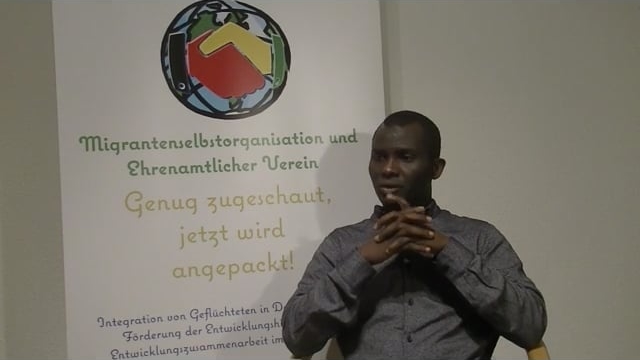
[i] Yes, Hello, good day. [Name] is my name, from Guinee-Coop. I am a field worker for ours Community from Guinea. And my job is To interview ten people and today I have one of them and it also comes from Guinea. Guinea is a country that belongs to West Africa and Guinea is divided into four regions. We have Lower Guinea or Maritimes Guinea, Futadjalong, Ober-Guinea and Wald-Guinea. Guinea has around 13 million inhabitants and an area of 245,857 square meters. Lord [name] is our guest today. We selected them. And… Because we also find your story interesting, very interesting and would also be briefly imagined.
[r] Yes, thank you very much. [Name] is my name. I come from Dortmund, originally from Guinea. And I’ve been living since 2008 in Germany. Yes.
[i] A connection, Dortmund to …?
[r] Oh, yes. I have a good connection. That means such a good connection as between Guinea Coop and I and a few young people in Bochum here and there. And we are so active everywhere. And then that also means we do between Bochum and I am often here because I only have so many, four young people here. Those who work together with me are welcome to work with.
[i] Okay. How long have you been living in Bochum? No, in Dortmund. Excuse me.
[r] Oh so, I’ve been living in Dortmund since 2008. Since 2008. But I’m often in Bochum. Dortmund, Bochum is still about 20 minutes.
[i] Okay. What are you doing at the moment?
[r] Oh, the time, yes. I ended such an apprenticeship. And I work as Fanti sensor in logistics. And for that, yes. I’m such a full -time worker now.
[i] Okay, that is, they have Your training ended?
[r] Yes.
[i] And also work in the same company or elsewhere?
[r] Yes, in the same company. Yes.
[i] They were practically taken over.
[r] Exactly.
[i] Okay. Yes, maybe I would like to Because it is about her story, I might be flying back a bit in the past. Yes, we stay in the past. Her youth when they were much younger or in childhood. Can you tell us something?
[r] Yes, I can still have a little bit. From the youngsters in Guinea I have it that way with the family. I come from one Polygam family. Polygam means like men and two women. Yes, I’m the third child. So the mother. And then, yes. Yes, we have, the atmosphere was okay, good, I think. Because I, we did so many things together. And yes, and yes, for that I only have, yes, That is what I stayed like that. Of course about the speech, yes, yes, I can still remember a lot of things. Yes, it was in Conakry. I raised there in Conakry.
[i] Okay, now, we’re talking about the memory. Did you bring us something What do you connect something?
[r] Yes, that’s how this is my card.
[i] The card, yes.
[r] yes, that’s mine, That’s my … ID? Exactly, the ID. This is so in …
[i] Tottenham?
[r] In Dingsley, yes. Here is in football team, I would say, a team, a street team. We all made such a card and then that we can only play together against the other teams. And then we did it for that, the card.
[i] Okay.
[r] For me. Yes.
[i] That means they were in a team.
[r] Yes.
[i] And that is more a quarter team, Or is that a club, a real team?
[r] No, no, one Quarter team. So in a quarter, almost, did a team built there? Exactly. When the children are there, we do one Team and then they play together. And then everyone gets a pass that the …
[i] structured so that the players were known and all ID have, right?
[r] Exactly.
[i] Okay. Yes. That is about football.
[r] Yes, that’s it.
[i] That looks passionate. Do you like to let football?
[r] yes, gladly, gladly football. I like to play. So far, but at the moment I’m a little like that, yes, the end of the career almost, I would say.
[i] Okay.
[r] Yes. Now, I have, I work as a full -time worker. And then I don’t have that much time for it. That’s why I have with that Football not so much to do now.
[i] Right. And that was, it was her Dream, football, right?
[r] Yes, that’s it, that’s it like all other young people. Yes, football was my dream. So I got like this, even here in Dortmund, here, much integrated on it, I played in Eintracht Dortmund. That was still a very high level. We have that Westfalenliga played.
[i] What?
[r] Yes. From there I invested so much. And then that worked, I would say that, really worked. And then yes, I come to work and the club and things like that.
[i] Okay. Yes, football in Germany, also in Guinea.
[r] In Guinea, yes, in Guinea too.
[i] let’s stay in Guinea. Yes, want. Yes, now in everyday life, How was that in Guinea? In the family. With friends.
[r] The atmosphere in the Family was mediocre. Not quite good, not quite bad, but mediocre. Sometimes it is like every family. Is still a dispute between young children and parents. And I had everything. And yes, my parents were so exhausting with the children. But… Yes, they still have many Made things like this. And we are also in the hollidays drove with us in the village.
[i] with us in where?
[r] Oh so, in Guinea, Conakry.
[i] Where did you live?
[r] Oh, how do we live?
[i] Grew up?
[r] I was born and grew up in Conakry.
[i] Conakry is the capital?
[r] Conakry is that Capital in Guinea. OK.
[i] Yes.
[r] And I raised from there. And then … Sometimes so when we are still at school … Because I still have School attended. And when we are on vacation Then we drive in villages. With us in Middle Guinea. In Guinea that also means French. OK. And then from there … Mamou is our big city. And then we drive only 25 kilometers from Mamou. That means in Balais.
[i] Okay.
[r] Our village.
[i] Okay. And again. Is that in Balais? Or there is also a small …
[r] There is also a small …
[i] Exactly in the village? Can’t that be the name?
[r] Marca. That means. Dune. Or Marca.
[i] Okay.
[r] Yes.
[i] And the stop?
[r] stop? Stop? Dulais. Balais. Mamou. What’s it called? I would say that … The stop is Lingnion.
[i] Lingnion. Lingnion Lingnion. Lingnion. Exactly.
[i] Okay. Lingnion. And is that a tree?
[r] Yes. An ancient tree.
[i] Okay.
[r] The over …
[i] there is one History about this tree? Or…
[r] Yes. I also heard that there is a nice story. But that’s a Tree that is so strong. They tried all of this to cut the tree like this. Or so dirracon. But they didn’t do that. They tried all things. With the tractor. With the picture. With lots of things … but if that comes Then the things … the machine breaks. And then the tree is still there.
[i] A little mystical.
[r] mystical. Exactly. It’s like … I can’t … Nobody can tell that properly. But we found it that way. And is still like that. It’s still there.
[i] Okay. Then we stay in Lengiung. Or Maraka what we did here. Yes. Your everyday life. And how did that go?
[r] Oh so. Yes.
[i] If they were there.
[r] Yes. I was there every now and then. Not several times, but in the time I was there. It was so very nice. I think. Because. Yes, that’s right. There is still … It is a big difference between Conakry. And further … in Lengiung. Or…
[i] So in the rural area. So in … state dinneries.
[r] Exactly. Lengi … Because there … we have no refugees and … We have this current If you don’t … yes.
[i] But what do you have?
[r] Oh, we only have … yes … We have this nature. Yes, nature. We managed. We have so many Nature … food.
[i] Food too?
[r] Yes. That’s so … yes … Is that not so loud.
[i] Okay.
[r] very quiet. And that’s how you hear How the birds sing. Or you can see it that way … This is so … everything you can find grew up so by nature. No chemistry at all. Is nothing. We only have mangoes. We have … We have … I would say in French … I can call it because I can’t do it … we just have no. We have oranges. We have … potatoes. We have sweet potatoes. We have … we have bananas. And we have so many things that … But with us in the village, ours Specialty is this sweet potato. So that means you The village is known for …
[r] For the sweet potato.
[i] Okay. This is only known.
[r] And then from there we have … We only have so much … The farmers … It invests … The investments on it So many things. Because the … it produces that … and then … Sell that. Continue in the … Into the wholesale market. Wholesale market. And we also have … Flea market. Once a week. Is that too … If I know exactly I would say … yes. Every Thursday. Every Thursday is only in the flea market. In the flea market we find everything you have collected all week. Is shown in the flea market. And then … A few things are exchanged. A few things are sold. And then … that’s how they live … Together like that … do you have it? That needs that. And then you can also exchange it. And then we did. We have that too … I survived that too. And then …
[i] Experienced, right?
[r] Yes. I have that … yes. Experienced. And… And yes. And … and we also have … Together with the children … We went to swimming. Uh … now …
[i] this now refers to … this … This … weekly market or now? Everyday life now?
[r] Everyday life.
[i] Okay. Now… In the village.
[r] In the village, yes.
[i] Okay. Yes. Yes.
[r] with the children … We play football too. As always. And then we … we could … go swimming. In a river. This is such a river where everyone can swim. And then … Everyone can go there and swim. Although all of this is not so … Perfect … clean … water is. But we still have. There … it was … Always… Yes… How did you Film further called? Or … yes … The one who wants to take a shower, Can also take a shower. And that’s the Things because we too … Just like that. I also have … What I just … so … Like to do. In there.
[i] So … that would be during the day. That means… There were certain things that they did in the morning … lunch … everyday life.
[r] Yes. Yes. In the morning we always have breakfast, that. After breakfast we should learn the Qur’an. We learn that and then after that Qur’an. And then we have a little. .. so we do that from 7 a.m. to 10 a.m.
[i] So, ok. And then from 10 a.m. to 4 p.m. playing time, where the children like that with the Parents can do. We collect the holster by walking or going.
[i] That is too Collect holster. To cook? Do you cook that then?
[r] For cooking. To … yes to … for example … We have something together every evening. We make a fire. And then we make such a circle.
[i] Beamfire?
[r] Campfire, just like that. And then we could make a circle where we should all sit together. And then to tell history about our families or about our … ours Family or our … Government. Government. Our high parents. How they all did. Or a nice one Fairy tale also tells. The story between the animals.
[i] So fairy tale?
[r] Fairy tales And then we loved doing it. That’s until the Children who are tired. A couple went asleep so quickly. A couple are just a bit there. And then it is told that way. Until everyone is so tired. And then you notice that. And then we stop. And then we go to bed. And then everyone goes to bed and until tomorrow. That is this routine things what we always did. Yes.
[i] Yes, that’s that Life in the village.
[r] In the village, yes.
[i] Acquaintances or people who You can really remember immediately. Neighborhood.
[r] Exactly.
[i] Can you do something … or …
[r] Yes, yes. Yes, I can tell. Because that’s how it is in the village … everyone knows … so we know each other. That means that everyone knows who … So everyone knows who he is.
[i] Everyone knows each other. Everyone knows each other, everyone. Everyone. Exactly. Everyone knows each other, everyone. Because there … yes. It comes from uncle or grandpa, parents.
[i] They are the relatives.
[r] Exactly. Quite, completely relatives. The whole family, big Family. She doesn’t have a family at all. Is so big. They did the whole things together. And then everyone only has their own house. And then that’s … Everything belongs together. Yes. Yes, and that … we live together. We only have this beautiful life.
[i] That would be in old age in the village, But even if you are on vacation.
[r] Exactly.
[r] That is when we are on vacation.
[i] And then?
[r] And then we welcome everyone. Yes, if you come so cheeky, you all have to … welcome the uncle. Aunt, Grandpa, Grandma, Grandpa, Welcome the whole family. And then, yes, you know, you can go everywhere, it’s all the same family. So all of them. Children, cousin, uncle. And then we all stay together in one place. Made with cross. Fire on it. And a bit together. Tell something. Fairy tales, history and something like that. This is all the whole family. Yes.
[i] And, yes, if the Holidays are over.
[r] And then we go back to Conakry. And with us in Conakry, This is the municipality of Matuto.
[i] Community Matuto.
[r] Municipality of Matuto, yes. That is the third, the largest municipality from here. By Conakry. Yes, the greatest. There, yes, in Matuto, we have … Yes, I still have so many good colleagues. With that too … Oh, this card that I just showed you. With those who did it. We still have friends there. Because everyone goes to their villages on vacation. And then we come back. And then we’ll meet again in Conakry. And then, yes, let’s start again, our activity. Sport. School. And with the … To work together with the others. Yes. Yes.
[i] And … Friends? Outside the … How was your everyday life too? Is that … can you compare a little bit with life or time in the village? Or is that a bit more exhausting? Or less time?
[r] That’s the way … you can’t compare that. Because in the village you have so … Example in the village you have no electricity. We don’t have a television at all. And then we have, we have nothing. And against Conakry, in Conakry we have TV and the electricity, everything. So it’s not everything, every day every day. If we have a TV … If we have electricity, we watch TV. You can watch it on TV, Or hear beautiful story too. We also look on TV. In radio … television. So, there it is the case that in the morning to school and in the afternoon we play together again at work and then, yes, we often do tasks, Experience and then with the parents a few tasks, over a few Speak tasks and then from the buddy … We go football and then at 5 p.m. 6 p.m. and then 7 p.m. we are all at home again and then before television, yes, let’s see TV and then what goes to the man.
[i] What do yours have Made parents professionally?
[r] So, yes, professionally …
[i] or do what Your parents professionally?
[r] So, yes, professionally, my parents are sellers who are sellers.
[i] What do you sell?
[r] Food. Food and … They only sold food and then we also live on it. It’s not so nice, but just, we have to help because we help that … They get life on the journey.
[i] How was the upbringing of your parents at home?
[r] Yes.
[i] What role did religion play? So with religion?
[i] Yes, the education in general.
[r] The upbringing in general, yes, So we are such a Muslim family. And that we … That means, yes, not exhausting, but so, yes, the Muslims have to read it in the Koran first. It’s absolutely one in the Koran.
[i] That is mandatory.
[r] mandatory. Does that proceed. And read after the Koran, then you have to pray this prayer time, you have to do it all.
[i] Five times a day?
[r] Five times a day.
[i] Okay.
[r] Yes. Five times a day. And then, when Ramadan is, you have to fast. And, yes, you don’t have to complain or treat other people so badly. And, yes, there are many things that we are not allowed to do. Yes. And then when there is a dispute between us … yes. Sister and me. And then that is regulated with that, the father, If that’s not there The mother does that. She tells me what I shouldn’t do and what I should do. And then we all live together and we behave as, yes, brother and sisters. We are always like that, we stay together, no matter when a problem is, but we keep it all together. That is the thing that can stick to the things that you can, yes, about it.
[i] What is your most beautiful Childhood memory?
[r] Ah, play football. In Guinea. Yes, that was where, yes, where you think it is, yes, that’s all you have here. You can’t …
[i] Expand and …
[r] Exactly. You don’t need that, none Fear and something on. No matter what is there, that’s the best time when you are childhood and in school, So go with friends. So, yes. After the school playground, lots of things, Many in this gimmick run back and forth. Yes, that was my hottest time, I think.
[i] And what role did the neighborhood play for you?
[r] Oh, neighborhood. The neighborhood is so plays an important role because the neighbor can also decide If the parents are not there. The parents of the neighbors could also decide what you should all do.
[i] That means in the event of a dispute …
[r] In the event of a dispute or … [snoozes] Excuse me. Thank you very much. The… Yes, so, yes. They are also responsible for If the parents are not there. And then, because that all belongs together with us. Say. Yes, yes. And the neighbor is like his own parents.
[i] How did society … How did you have that Perceived land? Now they are here.
[r] Yes.
[i] In Germany.
[r] Exactly.
[i] In Dortmund.
[r] Yes.
[i] If you now have one Make introspection. How do you have your own Perceived land?
[r] Oh so. That’s me now … yes.
[i] And maybe button. NO? What was great there? Or not good? Or better where you …
[r] Oh so.
[i] what you have prompted Then to leave the country too.
[r] Yes. Oh right. That there was … that … Since it was better …
[i] Do you have that … Experienced the country? How did you see that? Socially? Or… Environment?
[r] I would say that this is a country where you can do everything you want to do. It is a country without rules. It is a country without rules. And you can’t compare it as here in Germany, because everything is structured here. Structured. That the … all people only have such a duty. And what you have to do. And what you can’t do.
[i] And how about Guinea …?
[r] Yes. Yes, you just do everything so much … although … Sometimes this Repression is so very strong …
[i] Forgiveness. OK.
[r] Exactly. If … Example like this … I want … I can’t even … In Guinea … That’s … yes. There is no perspective … no … Really so we have no future for the children. The children have no future for the children. Because… If so … This is such a group … who have the country in … in control. Only … the … and their children … exactly. That in Guinea so … I would say … yes. Because I miss the word. But… Politics said … these are … the people who … Only the government … should process.
[i] Should I say that? But not based on your will? Or gives the law … hm. That then … be followed? Or the weaker …
[r] Yes. This … yes. They are the officials … The one … um … The … the … those of these laws … Mentioned. No idea. It can change that. It can do that too. How they want to do that.
[i] Sun. They put it out as you want?
[r] As they want. That’s … that’s why … with us … yes. They have it so … Arranged. I was so young. I can’t do everything like that … Remember how they did all of this. Or when or how. And for that … I don’t see any Perspective from the children.
[i] You … Said earlier … yes. That you have come to terms with it. Do you mean … There is no longer any protest? No resistance?
[r] Protest … but. Protest always gives. People always get … It always protests. But that … that doesn’t help that much. Is just like that Killed. With police officers. They shot on the Manifestan … on the strings.
[i] Demonstrators.
[r] Demonstrators. Exactly. Falls the word. Demonstrators. Shot the … and then … Yes. And then it will be again … When it starts shooting again and then people walk … mutual.
[i] In all directions?
[r] In all directions. Everyone … who should hide like this … can. And then he does that and … yes. And then there is still a strike. To this day. This is such a … for ten years. There is always strike. Always. But it is only like that. Yes. What you even heard. So hundred people. It was killed in Guinea. Hundred -thirty people. Today … we are in 2018. It still hasn’t gotten that better.
[i] A lot of unrest.
[r] Exactly. A lot of unrest. In any case. Has still not gotten better. Has only gotten worse. I want to say. Also. Yes. Because…
[i] Did you suffer from this? Personally or acquaintances? The directly from any Were reprisals affected? Did you see or hear that?
[r] Yes. Buddy. Yes. Yes. Back then. Yes. Buddy. Many killed again. But now. Because… I… I don’t know anyone … Because I don’t have that much contact with them. Where … in the time where I am here. I don’t have any Contact with them. Then I would … exactly. I only find out more on the Internet. What I see. And what is … That tells in our radio. And then they say what I have. Or they interview people. And then we hear everything. What they say. Because of this. And otherwise… I can’t even say what they did. At the moment.
[i] may be another question. Yes. Was there certain professions where she said I will … I want to advertise that tomorrow. Only dream.
[r] Yes.
[i] What was that? Because today … they worked in logistics. You don’t know where I am right now.
[r] Oh so.
[i] Yes.
[r] And my own History after … From Guinea she says, right?
[i] Yes. At that time. They definitely had in the … I don’t know. I can also say that they didn’t think that far at the time.
[r] Oh so. I thought so … yes. Why am I not an official either, right? To work for the government that all things that are unfair to change. The how to deal with the country. That many things …
[i] But logistics was for you …
[r] So I have logistics …
[i] Back then?
[r] No, no, no. Wasn’t that my plan.
[i] Okay.
[r] I just wanted to … What’s it called? Economics and Studied social studies. I want to. And then … Back then the … But logistics was not on my bill. I am right here in Germany, I told … Logistics is also a good one. Because everything is almost logistics, right? What you do everywhere at the moment. Is this order side. What you do now. Logistics is that. How to prepare all of this that things are to be sold. And what is already possible, what does it take in the camp.
[i] Yes. And… That means at some point …
[r] And then we have so much … In the children’s office we have this strike. That was so … very hard strike, Because we were all followed. And then yes, for Help from my uncle. Then I flew to Chechnya and from I drove to Germany.
[i] Okay. That is, before you Have left the country, what hopes or fears were for them with the Decision to flee? What fears would have She? Or hopes?
[r] No, hopes were only strong. I was afraid because I was persecuted. I had that in the newspaper. My picture was in the newspaper. And that’s why my uncle discovered it directly. He told me that I should leave the country. And then he arranged it that way. I didn’t know how it all worked, but he asked me that directly in Chechnya.
[i] Okay. And now when you are familiar The environment leaves and somewhere in a country where you don’t know anyone, how were the difficulties in terms of farewell? You say goodbye. You enjoyed playing. You had a lot of friends Football played and suddenly … So, the injuries complete.
[r] Yes.
[i] How do friends or one have Family reacts the decision? Did they notice that? Or was that tacitly just …
[r] No. My family didn’t notice that. That was so under uncle and me. And then … because he was an official. That’s why … that was only among us. And then I knew myself What this means. Then I just flew in Europe. And without knowing What this means. And then I thought, yes … He still said that here is a safe country. Then I saw myself, yes … see everything like this … you see it like this … they are okay. Nobody only talks to the other. Everyone only does their own things. And then I said, yes, okay, then maybe nobody can see me here. And I experienced something like that. And then from there I have … so far I have no contact with the buddies. The… I always had so much fun with the people with them. I don’t know what they are. Many have only died in this strike. I didn’t know. They were lucky enough that they leave the country. Before that got. Many repression from the police.
[i] And then, as they said Then we are over Eastern Europe.
[r] Yes. Then I’m here in Germany.
[i] Oh, Germany. Yes. Okay, how … What were your first Impressions of Germany? The Ruhr area. Bochum, Dortmund.
[r] Oh, I’m directly …
[i] Arrival. Impressions.
[r] First impressions. My first impression because I didn’t know what was where. I am directly … That was a bus. Got out in Dortmund. And then I said Yes, directly at the train station. And then I’m for Police officers went. They only have … I just asked, yes … I showed them my ID. They saw it that way. Yes, a billionist has to accompany them in a home. And they only accompanied me directly in Bonifatius Heim. And then they got me like that … I only have mine Application there. And then I stayed in Bonifatius. And from there I also started doing the language course in school.
[i] Okay. And that means they came … You then have Experience support …
[r] Yes, from …
[i] … through the structures, that is available here?
[r] Yes, I mean by Caritas, no. Yes, it was from Caritas. Bonifatius Caritas Heim.
[i] And then … there was still Contact with the family?
[r] No.
[i] Okay. There was no contact. And friends here?
[r] Friends …
[i] How was it Your arrival here now? How did you find this integration? In this game at school? Do you have positive or negative experiences?
[r] Yes.
[i] So with the Integration … Integration in school? Integration in the team when Did you continue playing football?
[r] Oh so. Yes. So, I had no problem with the team.
[i] Okay.
[r] I had no problem with the football team, and I didn’t have any insults. In school. But, yes, if there is discrimination if you are so acidic, then you say something like that, but you can’t take it seriously. Because, I would say that, yes, that was so under nervousness or poorer.
[i] Education.
[r] or upbringing. From the others.
[i] That means you always looked ahead?
[r] Exactly. Exactly. Exactly. And then I have it that way, yes, I’m to School went to school regularly, went to school regularly, and then I did my language course after class 9, I have the rule … The class … the rule class 9 graduated, and then according to class 10. And then I have after class … yes. Then I have mine, uh, From my colleagues, I can do it the same way, Konrad Kleppins, I have my F.O.R.
[i] technical college Kaiserslautern?
[r] technical college Kaiserslautern, Pfeiffer.
[i] Yes.
[r] And then I have my, um, specialist-a.b. also made. And then I, uh, have the things here, Um, started an apprenticeship, as a specialist and logistics, I did it in three years.
[i] And maybe a question at this point.
[r] Yes.
[i] If you … If you had the choice instead of Training if you prefer to The university would have gone if They had this technical college entrance qualification, or was that from the Integration or from your status to get better chances for your status to get residence permits, this was a consultation where you then suggested, that the training is better? Was that more a tactical decision? Or just, yes, I actually wanted that.
[r] Exactly. It’s like yesterday I remember, because after the upper school qualification, I am with mine Teacher went to my lawyer. We asked him so much, what perspective is there to get one of those active. And then he said, yes, a better one Perspective would only be looking for work. I said, yes, okay. And then that means I put the studio on the page first. Because I have to work so that I can still get stays. And then I said Yes, okay. And then he told me directly, then search You a training technician. And then do that. And then, after the training, you are automatically a qualified employee. And then they become so that You get a stay. And then I did that too. And then, that was the choice between the university and the training. I have that Training.
[i] Okay. And this, So did you advise?
[r] I said goodbye to the ABA.
[i] And you are also happy with the decision?
[r] Until now …
[i] … not yet. Happy with the decision?
[r] What decision do you mean?
[i] training.
[r] Oh, yes. I am very, very happy with it.
[i] Okay.
[r] Oh so, I just got along so wrongly because I just thought with the Decisions of the authority. I mean that. So, yes. With that, yes, I am like that, yes, I’ve already finished the three years. And then I’m still a full worker. Employees. And then I feel so comfortable. Because yes, the Atmosphere is the same. Yes, it’s not always nice But mostly I want to. People are so correct and good.
[i] That is life.
[r] Yes, that’s the way it is. Yes.
[i] And the living situation, Neighbors, how is that? After all, they also lived a different culture and now they are here.
[r] Exactly.
[i] How about the neighborhood now?
[r] Yes, that’s …
[i] What experiences have you had there?
[r] yes, if you are so young, if you have come so much young in Germany, that’s not that much dramatic, Like the people who are so old. But I want to say For me that was so easier because I always with the youngsters, I have to do with young people. I have a lot with To do young people.
[i] Okay.
[r] I had a lot to do with the young people that we always did things together. And that, we have a sports field together, for example. That helped me so much with my integration Because we only played football together. Yes. We weren’t at all Africans at all. No more brilliant with who I can speak with. Should I give myself that too that the German language to get to know.
[i] That means if you here in Land is a lot with the …
[r] with the Germans or something.
[i] So Germans, who just speak German fluently.
[r] Exactly.
[i] And that feels that Integration better.
[r] Exactly.
[i] That was helpful for you.
[r] Helpful. And with me in Boniface is the same. I gave myself, the supervisors always say that they are so proud of me. Because I actually gave everything. I learned a lot with them. We did a lot together. I was just … I had so many contacts with the young people who are there. Because my goal was only like that, learning, playing football. I only had one goal. Learn, play football. Learn, play football. I always did the two.
[i] Earlier we spoke of everyday life. How is that in Germany now?
[r] Oh, yes, exactly. That is such a big difference. Very, very big difference. Because here you can see that the way I got. That such a calm person with buddy sometimes wants to walk into the city. After the work. Because now … So earlier … We used to have the place after school … Oh, the place was like that … After school in Bonifatiusheim.
[i] Okay. School, at home, Quasi in Bonifatius. Exactly, everything was clear. Boniface was my home. Since we live in a room for two. Two boys. We have after school … At home. And then lunch. And then tasks.
[i] Homework. To do homework. After doing homework, I have it at 4 p.m., I have free time. Either when I still have sports, I’ll go there. If not, I’ll go to the hall with my friends. Because we only have a small hall backwards where you can play football. And we always played football there. With the roommates. With the roommates and such. Or do we have it … sometimes we are in the circle in … We went that way. We have scored so many animals To see how it all is there. Or we are also in Phantasialand. We have so much in our free time. We have so many Things too. Even during the holiday season, I mean that. We were still on vacation. And then we still drive in Sauerland. Or in Holland. Everywhere. Next to it. We are still building our cell. This is such a nice … That is the best time.
[i] memory.
[r] Memory here from … in these times. Have spent. The lake. Netherlands. We also have so much with the chambers. What’s it called? With the… We also have this lake. What’s it called? We have many … We have many Things brought with you. What we built together. And then with that we went into the lake. That a bit … What is that called? I notice the word. Was that with breakdown? Yes.
[i] What did you do?
[r] with the … La Pirogue. In French that is called Pirogue. OK.
[i] That is a … yes. Canoe.
[r] Canoe. Exactly. In canoe. We had so many cannons there.
[i] Okay. Pannen. Yes. We have … yes. We have everything, many Things participated.
[i] Okay. Yes. That means you have settled in well here. Yes. And… Or are there also activities that you also combine with your own culture? Or lack it … On such activities?
[r] Oh so. Yes. I also have it with … with … With the kine coop. Back then in Dortmund too. Lots of activity. And here in Bochum then also. I remember from there in City center and something like that. We also did so many activities and so with the boys, with the children. We have in town … prepared many things. And that … we have … yes. I assume. We also participated in so many things.
[i] Yes, many have Activities made. What is for you now … so that means you were always active in the clubs, even on the go, did a lot participated?
[r] In the beginning it was also the same with the Halibras, I was very active there too. And then we gave everything that has not worked so far. And that’s why we said ourselves that we should turn the case. And then we take our own and then we have Guinee Coop. I am also very active for that. And then there with many things we can participate.
[i] Now you’re here. Is there really commitment Always there? What is in terms of bureaucracy now? What experiences have you had there?
[r] Oh so, with the Bureaucracy here? In Germany or with the …
[i] Yes, in Germany.
[r] Oh, yes.
[i] you are also welcome to one Make comparison, but in Germany. What was there …
[r] Yes, in Germany everything is bureaucracy here. Many … yes, you have to write everything out and have to prove everything you do. Example, when I go to the authority, has to prove what I did all the time. When I went to school, I should go there with my students. They see that. They copy this and put it on my file. That means what you do here, you have to document it.
[i] Documented.
[r] Are documented, yes. In Germany. And then too Things that we … Where was that too? If I’m there too, in the Immigration authority, then I should also get such a certificate for my employer. That means that’s so … This is a Step of step.
[i] step of step.
[r] Yes, it works. If you do a, then you have to do what you between A and B did, you have to prove it that way. It’s such a good thing.
[i] What religion does that offer for you?
[r] Oh, yes.
[i] What religion do you have?
[r] Oh, I’m Muslim. I said at the beginning.
[i] Yes.
[r] Religion … Religion plays a very big role for me. Yes, because I feel so comfortable. Because, yes, with the religions, If you say that, helps me that what does that mean that it forbids me to do many worse things. That forbids me to be an evil person. The religions bring … My religious bring me like that … How I should do it all So that I should be a good person. That’s so. I must never insult the others. I can’t handle the others so bad either. How, as always. That’s what I did.
[i] Yes, maybe I still have in relation to Bochum, Dortmund and Germany. What do you like? What do you like?
[r] Oh so.
[i] or what do you not like?
[r] Oh, okay, yes. I like it in Dortmund I like everything like normal. Example so, positive things there. I have so many Many, many friends there. And in Bochum too, I still have many good connections in Bochum, in Dortmund. Bochum here is such a quiet city. A student city too. And so. I think it’s all there and beautiful. And what I don’t like I don’t actually have. Maybe wait on the bus. Wait buses?
[r] Yes. Or what else. Yes, if the tram can no longer continue. And so in Dortmund. And yes. All of Germany, That’s the way, yes. But what I don’t like that This ex-radicalism is.
[i] right.
[r] right, oh, yes, this one I mean extremes.
[i] Yes, that is radical on the right.
[r] Radical on the right, the Demonstration for Nazis. Exactly, I like that. That scares me a little too. Example like that, who knows, where you can meet the. Or with the so … Because I don’t want to have anything to do with him. Yes, because, yes. I think it is so because, Nazism or something like that, things are so necessary for me.
[i] Okay. [around… These are necessary things, yes.
[i] What do you think of society? What does society do? Or how did you experience it when you do something that scares you? Maybe there is from the Society, movements? Structures? Or, I don’t know, groups, who do something about it? Or, from me, clubs?
[r] Yes, I even have that … when was that? That was last week. I heard it on the radio that, as is called that that are percentage against Nazis.
[i] the left?
[r] No, not that Left, just like that … Punk, the punk.
[i] Okay.
[r] Demonstrates against Nazis.
[i] Okay.
[r] I don’t know how many It was the same. That is also the thing that I don’t think is so good, so this demonstration. Oh, that against … I don’t think so … So, I don’t like the Nazis at all, but the left show us so that everyone here in Germany feels comfortable. That they are this perspective, If you have such a job, everything … A paid tax and so on, yes, is completely integrated and it’s like at home. And then for that … They are against the Nazis. Because the Nazis fight for the foreigners get no work at all. But there are so much worse workers What the Nazis would not like to do. That if that … Either clean streets, clean it … yes. And fill garbage, Garbage men and so on. Don’t they do that? Like not. Only the foreigners do that. They do that. If that’s okay, until then they make his taxes. I think it’s all right.
[i] And calms them that there is something like that? Or … what do we say? The fact that there are movements which just take the radicals on the right. To say, stop now. We are not all like that. And we don’t represent your opinion. We are in the present and say we are against it. We demonstrate for integration. For the people they want to use as an alibi. To make your hatred public. What kind of feeling is that? Soothing? Scary?
[r] that’s so Calmening, I think. Because… If we post as well as Foreigners, let’s say, stop here. We are foreigners. That’s correct. Let’s go. This is us. But we are at home here. Because we give everything What there is in Germany. That means we pay our taxes. We work reasonably. We do our tasks. We do it like everyone else. That means we should all fight against racism. This means that we as a foreigner should also work together in this way. To make away these fears. That we fight.
[i] How long life You in Germany?
[r] 10 years now, I would say.
[i] 10 years of life They in Germany. The term … Hometown.
[r] Yes.
[i] What is … Germany. Is Germany home?
[r] Oh, yes.
[i] What is that? What can you tell?
[r] I would give a definition for myself what a home is. A home is for me, for everyone Person where you find yourself. Example, originally I come from Guinea. Guinea is my home. And as I said, from fatherland. But I’ll be so from Germany adopted. And then I come … raised. And what I learned here I only learned from Germany. That means Germany is my second home. Home. I am actually a French colony. France is not my home. Because I’ve never been there. I’m not interested in that either. For that I got myself for Germany decided. How do I live here in Germany? Then I’m still … You can see it more colored. This is not a German at all, but I feel like a German. I’m at home. I feel very comfortable.
[i] With this we conclude our interview. And thank you for coming. Germany is our home. Exactly, I think.
[i] And Meda should also develop here. In positive. And all the best for you. And thank you again. For participating.
[r] I also thank you for this interview. And then I would like to … If something is, then I’m always grateful. All to participate. Thank you very much. Bye.
[i] Thank you.


