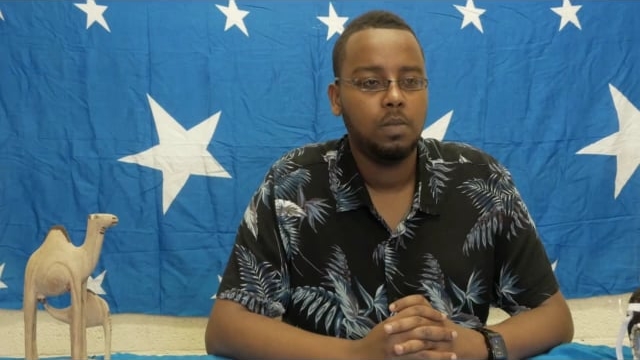
Country of origin: somalia
Year of settlement: 2014
Age on arrival: 20
City: antwerp
Gender: male
Language of the interview: English
[i] Hello.
[r] Hello.
[i] Good day.
[r] Good day to you.
[i] Can you tell us your full name please?
[r] My first name is [name] and my last name is [name].
[i] Welcome [name]. Where did you come from originally?
[r] I came from Somalia.
[i] You came from Somalia. Can you tell us about where in Somalia?
[r] Actually I was born likely in the capital city of Somalia Mogadishu. Other than that I was raised in in the countryside of another district that’s called Misra. Yes that’s where I grew up in Somalia especially.
[i] Okay you lived with your parents I guess?
[r] Yeah. I lived with my parents.
[i] Who are they, your father and mother? Can you tell us more about them?
[r] I could say they are the two most beautiful angels that could ever live in this world. They are the best parents I have ever seen, I could say. Happy and friendly and caring.
[i] And what did they used to do in Somalia? What were they professional?
[r] Back then when we had government, my dad used to work with the UNICEF and stuff like that. And then when the civil war broke up, when we moved to Misra, then… Yeah, just a normal life, hustling, just doing whatever you can for your family. More like a shop and transport stuff.
[i] So he used to do that before the fall of the government in Somalia?
[r] Yeah, before the fall of the government, my dad used to work with the UNICEF.
[i] With UNICEF, okay. And after the fall of the government, how did you… guys get money or how did you…
[r] Oh yeah, we were lucky to own a shop back there. And also my dad used to work with the foreigners and stuff like that so that you could live. To support us, yeah.
[i] And your mother was…
[r] Oh yeah, she was a shopkeeper.
[i] She was a shopkeeper. How many sisters and brothers do you have?
[r] We are ten in my family. Five-five now.
[i] Five…
[r] We were eleven, yeah. We were eleven, but now we are ten.
[i] Five, you mean five girls…
[r] Boys, five.
[i] Five girls, okay. Five boys and five girls. And are they still back home or are they all here? We are here nine… actually eight, so we don’t know. One where she has gone and the other one she must… We were told that she traveled to come around, but we’ve never seen her yet.
[i] Oh, you guys are still looking for her?
[r] Yeah, we’re still looking for her.
[i] Is she your elder sister?
[r] No, she’s my younger sister.
[i] Your younger sister. And how long did you lose contact with her?
[r] It’s been long. I can’t just record right now, but it’s been years.
[i] Years.
[r] Yeah, we’ve been trying to find her.
[i] Did you, when you were in Somalia, did you go to school?
[r] Yeah, I’ve gone to school, finished my primary and secondary school.
[i] Okay, you know how to… and did you also do some work?
[r] Yeah, I worked in the same school that I finished studying. I did… I worked as a teacher to teach the basics of some science and also as an administrator.
[i] Okay.
[r] Yeah.
[i] You used to… you was a teacher?
[r] Yeah. But that was for six months.
[i] For six months. And you said you moved from Mogadishu to other districts in…
[r] In Somalia.
[i] In Somalia. Was that far from Mogadishu?
[r] Yeah, very far.
[i] Very far. How many hours?
[r] I don’t know really because usually it takes about a day, I think, or something, yeah. Because of the road, the status of the road, so it’s not good, so it takes long.
[i] So when the people travel from Mogadishu to the place where you used to live, they travel by car or by plane?
[r] Plane option doesn’t exist, so it’s by car.
[i] By car. And how is the life in that district?
[r] Yeah, way different than life here, I could say, in Belgium, it is. Just really the countryside, really, really the countryside of the country. So just, yeah, as they called in Dutch, dorp, so yeah.
[i] Okay, village. It was more, if I think, it’s more green, greener.
[r] Yeah.
[i] More trees.
[r] Yeah, more trees.
[i] More natural, the earth and everything.
[r] Yeah.
[i] And was there war there?
[r] I think we have lived with peace for even the fall of the government. We moved there. But sadly in the years of 2007 and ongoing now, there have been some terrorist attacks and so, yeah. But before that, we lived a healthy life and happy life, I could say.
[i] So what was the terrorist that came there? So I guess you have different name of the… of the group they call terrorist in Somalia, I guess. They did have a name? They…
[r] Yeah. They, yeah, they are called Al-Shabaab. So, yeah, they, yeah, they are more like the terrorists that we have there. So they just come over, try to force people to join them in the process of making them want to do things that they want them and force them to give their belongings and take the woman by force and stuff like that.
[i] So they are still in power of… Is the government, the government in Somalia trying to stop them so that they will not have the control in Somalia? Do you know the situation in that district of… How is… Do you know the situation now back home?
[r] Yeah, I hear a little bit but, yeah, the government is trying their best to do that, to get power, but it’s still ongoing process.
[i] And did your parents born there or… Because you say, I was born, if I’m right, you say you were born in Mogadishu but you went to to move to other district. Are they… Are your parents from that district or they also from Mogadishu? Yeah, funny thing you ask that because in my country it’s not like here that we mostly ask about where your parents were born or when they were born or… Yeah, but I could say that I’m sure that my mom was born there in the district where we grew up. And my father, I think he was born in Mogadishu. So, it’s a bizarre thing to ask in our country, that question. And you hear it but it’s not that much of an interesting topic.
[i] So, you mean it’s a bizarre thing to ask because I don’t understand because everyone is born in different city. And then… So, you can… So, can you explain us how is that bizarre in Somalia? []r Well, all I could say is it’s just like a… It’s not an interesting topic that people come over or come together and ask about that. But yeah, I was told but…
[i] So, it’s normal. So, the country…
[r] It’s a normal thing, yeah.
[i] Everyone… So, it doesn’t matter where you come from as long?
[r] Yeah.
[i] Oh, okay. You mean like that. So, how long did you go to school? How many years?
[r] For a period of ten years I think.
[i] Ten years. Did you have… Do you have a strong connection with your family back home? Not only with your parents but, I mean, the family of your father’s side and your mother’s side. Is there a strong connection?
[r] Yeah, there is a very strong connection. I miss them every minute, that goes by. We have a great connection because we live door to door.
[i] Okay, so in your area, all the family live there. So is it a normal thing in Somalia that all the family live in the same place?
[r] Mostly, yeah. It’s just your neighbors by nature, I think. Something like that, yeah.
[i] So actually your neighbors are your family?
[r] Yeah, most likely.
[i] Do you have a strong traditional, yeah, strong traditional, Somali traditional things that they do? Can you tell us about what are the traditional in Somalia? What is the common thing like in the household?
[r] Okay. First is something traditional. I think because for me, everything I see, I’m always with my family almost. So I think what I see is just normal. I don’t see it as a tradition, so I can’t recall it exactly. But yeah, eating on the floor, yeah. And eating also together. It’s more like a tradition. Like the same plate, I mean. And drinking milk, maybe.
[i] Drinking milk? What kind of milk?
[r] Yeah, I mean like milk that is like the yogurt. Because it’s kind of salty milk.
[i] Okay, so that thick milk.
[r] Yeah.
[i] Okay. And so it’s very important. It’s very important eating together in one, out of one plate.
[r] Yeah.
[i] Okay. That’s a beautiful tradition. Was the community life in Somalia very important for you?
[r] Yeah, most probably, yeah.
[i] So what do you used to do with the community in the area where you lived?
[r] I always had a passion of trying to… reconnect people. So I was always like the contact guy. So trying to help people talk together if I could. I mean more like I mean friends on these issues. And also myself when I have issues, I used to go for help to ask more information from elders. Or maybe someone who’s older than you by a year, maybe knows more also. So that’s why it’s important for me.
[i] Okay. The community, they used to also do activities with the…
[r] Oh yeah.
[i] With the… for the people who lived in that area. Or it’s just when you have problem, you can go there and then they can help you? Or is there other way they teach the people? So I don’t know.
[r] Yeah. We have a get together like almost in every Friday. So we have a special prayer. So that happens on Friday. So after that then families come together, eat together. Then ask about how things are going on and what’s new. And how they could… one could help the other. Yeah. That’s one of the activities I remember.
[i] So tell us about your childhood in Somalia.
[r] That’s a big story. Yeah. Okay. Yeah. I was born in Mogadishu, brought up in Misra. And I’ve lived some beautiful moments. And also some hard moments when the terrorist came over. So yeah. I used to be just a school guy. Someone who likes to study. And having fun. Going out. Just taking walks for hours. Moving from one city to another by foot. On foot. That’s like three hours. Rest for 30 minutes maybe. Then move on. Another three hours. Never been scared of the wild animals. Not really. Never scared. But not that much of just traveling in the dark. Just some… it has some brave moments that I had. Which I wish I could now. And some fun moments also being with the family. Growing up together with your brothers and sisters. Your siblings. So those beautiful moments. And then when the terrorist is coming over. So those were the dark moments for every young person who lived in Misra. Being scared to walk out. And everyday being forced to come over and join them. Or having the risk of being shot for no reason. Yeah, some dark moments like that. But yeah, we’re still alive.
[i] So tell us the one thing from the beautiful moments that still you have with you till today.
[r] Oh, a special memory.
[i] Yeah, a special moment.
[r] Yeah, I remember traveling with my big brother. Who was somehow stubborn. Yeah, we traveled together from Misra to another district. Not district really, but a little bit to another… I don’t know how I could say this. Again, just a place that was a bit far from where we lived. So… And the funniest thing that we had trust on earth. That it will feed us. We took no water, no nothing. And we were just sure that we will reach there. And then there came the sun was too hot. So we got really thirsty. And what we did was… We tried to take some water by force by two… I don’t want to say it, but by two old people that were traveling also as well. We asked it polite. They said no. Then we tried to go by force. Then one of them taught us a very beautiful lesson. That there will come a time that we will face the same thing. And how our reaction would be. Just that question that she asked the old woman. And yeah, that made us a little bit think about it. And yeah. Just we put ourselves in their place. And just… It was a hard thing. So then we asked in a polite way again. And they gave us. And yeah, we moved together. We went on the same route. So we reached there. We got food from them. And so… It was funny and also scary and stupid thing that we did.
[i] So where were you and your brother traveling to?
[r] We were moving from Misra to… Another district called Dinsar. But…
[i] For what?
[r] For no reason. Raw. Just being young.
[i] Okay. And did your parents know about the travel?
[r] Um… No. Hm. I think… No. They… Somehow we explained it. But not the way they thought and the way we were going to do it. So it’s two different things.
[i] And they were worried, worried I guess.
[r] Yeah, worried but…
[i] And how did they find out that you guys were in the other city?
[r] Actually we did not go all the way to Disars, somehow along the way we were met by one of the family. We were brought back. And we received some lessons, some punishment.
[i] So it was a quiet journey, adventure. So did you have a lot of friends also?
[r] Yeah, I had a lot of friends that I grew up with.
[i] And are they now, still back home?
[r] Yeah, all of them.
[i] All of them are back home. And did you have contact with them still?
[r] Oh yeah, now life is different because of the internet and everything. Now we get in contact.
[i] So they are still… and how is the situation, their life back home?
[r] I think the same. Nothing more has changed.
[i] Tell us about how the house looked like, the house you used to live.
[r] Yeah, mostly it was made of… How could I say it? We called it a jinget. So that’s a piece of metal, I don’t know. I forgot the word for English. Yeah. It’s iron.
[i] It’s like iron.
[r] Yeah.
[i] Yeah, they made it like that. You have some houses.
[r] Yeah.
[i] Okay, I understand.
[r] Yeah. And it’s still covered with some leaves so that it doesn’t get too hot.
[i] To cool it down.
[r] Yeah.
[i] Was it big enough for the whole family?
[r] Yeah, actually it was. It was enough for us to sleep together with all the boys. It was a big room. The girls were in a big room. Parents and the newborns in one room.
[i] Did you have water, electricity? Were there any internet connection? Or were there lights? Electricity, I mean.
[r] No, there was no electricity. The only light we had was from the sun, so we had light only during the day. During the night, we used to have something like a torch that made from just the lamp itself and batteries wrapped together with something. Then, yeah, we used to have that. And fire, maybe.
[i] So there was also street light or there was not?
[r] No.
[i] It was dark.
[r] Yeah. There was no electricity around.
[i] Where did you flee from your country?
[r] It’s a hard question that reminds me a lot of things that I have gone through. I was kidnapped by Al-Shabaab in the process of trying to make me work for them, which I did not agree. And I was sentenced to… to death. So I was told I’ll be out to dead if I don’t join. And we were in the jail. And I remember just nights before my sentence, they took one of the boys from the room and we were all brought out. And he was slaughtered in front of us. Just… To make him as an example. They… So… They slaughtered him in front of us with… Out… And seeing him as a human, just like a… goat. And I remember… fainting and… then… I woke up… Around… Some time. After some time then… The boy’s head was kept in the room. And his body was taken away. Just to… to keep him as a reminder in our room. And… That’s when I decided that… either die with a bullet in my head or… Or survive and live a free life. And… We tried… We planned and… We ran away from… the place. We were shot. But luckily I was not hit. Then… My family planned for a trip. Then I was… Then I… I ran away and I flee. That’s how I came here.
[i] So… You escaped from the… From the kidnapping.
[r] Yeah.
[i] And… How did your parents… Make sure that you… Flee? Where… Where they… get the money or… The place where you have to go? How they… How did they arrange all that thing?
[r] I ran away from the place. And I hit somewhere around. And then luckily I got… this road that everybody knows. That passes… comes and goes out of the city. So… Somewhere around there. And I met a guy that I knew. He was a smuggler. So I talked to him. In the process of hoping him to take me away from Misra. Maybe… To another district or something. So I never had this imagination of… Coming all the way here… And living a free life. So… And… He talked to my family. And… They talked together with my uncle. And… They got some money from my uncle. And… He was promised some money. So he took me all the way to Nairobi. And brought me to Kenya. Uh… Kenya, Nairobi. Then… To Istanbul. To… Greece. And then… Here. To help me meet up with my grandma. Who lives here.
[i] Your grandma… Where… Where did… Where did she live?
[r] Then she lived in Verviers in Belgium.
[i] Oh… Verviers. So you came to your grandma.
[r] Yeah. He brought me all the way to my grandma.
[i] So, you travelled alone?
[r] Yeah.
[i] And, did you have the chance to say goodbye to your parents?
[r] No. Because, uh, at that moment I, I was someone who did not exist. Because I was someone sentenced to death. Yeah.
[i] So, did you say by phone? Did you tell them, um, goodbye?
[r] They only talked to the man. I talked to them but I really don’t remember what I said or what they said to me.
[i] How much it cost for you to come to Europe? How much your parents paid?
[r] It’s money that I don’t know. I was told around $8,000-$9,000 US dollars.
[i] So how long you have been on the road then from the time you flee from Somalia and you road to Turkey. How long you take the journey?
[r] I think about five, four months I think.
[i] So you had to stay in your room for a couple of months?
[r] No, days, but I stayed long in Greece.
[i] In?
[r] In Greece.
[i] Where is that?
[r] Greece, Griekenland maybe you call it.
[i] So you stayed there how long? A month?
[r] October, November, December, around three months.
[i] Three months. And it took you five months to come to Belgium?
[r] Yeah.
[i] So you knew you was about to come to Belgium?
[r] Totally no idea. I never knew. All I knew was that Europe was Europe. So when they told me I would meet up with my grandmama, then they told me maybe Belgium.
[i] So in that time did you stay in contact with your family, with your parents back home?
[r] Yes.
[i] How did you stay in contact?
[r] By phone.
[i] So what was your first impression when you came to Europe? What was your first impression when you came to Europe?
[r] It was a different thing. Actually I came around winter. It was cold, raining with ice, there was snow. It was a different thing, a different experience. I felt freedom. I felt that I was in a place where I could restart my life and live the life I could and I would want. It was a happy thing. It was a new experience.
[i] So you was happy because of the safety?
[r] Yeah.
[i] But the weather was not…
[r] No, the weather was not on my side. It was too cold for me. I think I never wore a jacket that big in my entire life. Never.
[i] Okay. So the time you came to Europe, what was the first thing… How did you ask for asylum? The man, the smuggler, left me at the train station. I don’t know. I’m not the only person, but everyone was treated that way. They always bring people all the way to the station. Train station, that is. Then they say, okay, I’ll go get you something to eat. Then there are ghosts. From there, there are ghosts. You never see them again. So I stayed around. I was told, yeah, go there. Stand in front of that door and tell them you are new. New to what? I was told, yeah, you are new to this country and you need asylum and safety. Okay, I stood there. Then I went there and I stood in front of that door until eight in the morning. So then we went in. I was welcome. Then began my happy life.
[i] So in Brussels, there was a long line where you stood to get, to apply for the asylum.
[r] Yeah, it’s a big line.
[i] How long you stayed there? Because I guess that some people, I don’t know, sometimes it takes too long, sometimes it depends.
[r] Actually, the time that I came, there was not too much asiel [asylum] There were not a lot of people asking for asylum. So I think I stayed there for 15 minutes or less, I could say, because in total you are less than 30 person, I think.
[i] So from the first day, you get help?
[r] Yeah, I got help.
[i] And then from there, so where did you go?
[r] I was given an address and ticket. To go to the centrum somewhere around where my grandma lived. So I got help from people. So mostly I am from Somalia, so people from my country are always helpful to one another. So someone came with me all the way there, bought the ticket for himself. And he took me all the way to where I was supposed to. Then… He called the number, then came by a transport taxi from the centrum. So I was taken there. I was given a cup. And one fork and one spoon. And a towel. I think four slices of bread. Jam. Brush. Shampoo. And a slot, a key.
[i] So the day you came there, which time was in the daytime?
[r] No, no, I arrived at the centrum at 17.38, I think.
[i] It was late in the afternoon.
[r] Yeah, it was late in the afternoon. It was already evening because it was winter.
[i] And there was no food, only they give you bread?
[r] Yeah, I was given bread, slice of bread.
[i] So which time they eat in the centrum? Which time?
[r] They eat at six o’clock. But what happened was I came at that time. I was not registered. And we had to get… I stopped from the train at 17.35, but I was… I arrived at the place around six or seven, I don’t know. Because we were waiting for the transport taxi and stuff, yeah.
[i] So you came there and is there a room you have to share or you get your own room?
[r] No, then from there I was transported by one of the workers there, employees. So he took me to another place, there was a room where I had to share with the two boys, I remember. No, one boy was the other one was his friend. His name was [name], something like that. So I was told, okay, this is your bed, this is your… So I opened, I put my stuff there and then I began life.
[i] So how your first months in Belgium, how did the bed tell us, first three months?
[r] It was funny, awkward, surprise I could say. Because it’s just a new thing, a new people, a new culture. So the act of eating with a spoon and fork was something that we… Maybe one in maybe 300 in our city maybe used to eat with a spoon and fork. This is not something that people see as an existence. If someone is doing it, he is just doing it because he wants to, maybe, or I don’t know. The first thing that surprised me was that I was told 9 o’clock 7 o’clock, come there, stand in this line, give the number of your badge, they register it, then you eat from there. So I came at 7 in the morning, stood there in the line, I saw a lot of people in the line, so I stood there, waited. Then I spoke no French. Batch number. OK. Then I started giving it in English, and I was like, no, in French, I told them no. I have zero knowledge of French, zero. Then, yeah, he told me, the guy, OK, OK, in English, no problem. Then he spoke with me in Arabic, which I speak little. I told him, yeah, I’m new. So he said, OK. So… with time, you will learn it, I told him. Hopefully yes, I will. So I was given again the same thing for a slice of bread, milk in my cup, and… jam, I think, so I was surprised. There was a lot of people in the room, eating the same thing, busy. I was asking myself, who’s going to wash all this? Luckily came two boys who were in the center room, who were from Somalia. They came to me and they were like, hey, you’re new, yeah, okay, welcome. And they explained to me how things go by there and everything. Then I got along with the centrum. Then came the outside life. I went out and came to the bus stop. So we had only one bus that goes from where I live Fraipont, that was Liège. One bus, so I got into the bus. It’s a long journey. An hour, I think, it takes, so I reached the center in Liège. Wow, it was big and beautiful. People here, people there, cars, noise, too noisy. Because where I lived before was not that much noisy. So crowded, so people with jackets, so it was bizarre. It’s beautiful, so it’s interesting.
[i] So the day you met your grandmother, how did you feel? How did you feel?
[r] I felt great. It was, yeah, I don’t know. It was unimaginable. It was beautiful, happy, surprising. And also the idea of knowing that, yeah, you’re going to live free, happy. Some other thing, so…
[i] So how long did you not see your grandmother?
[r] Long, very long.
[i] So how old was she the last time you saw her?
[r] Under the age of ten, yeah.
[i] Did it take you a lot of effort to adopt the culture in Belgium?
[r] No, no. I would say no, because I was always open-minded. So it went fine with me.
[i] So where do you live now?
[r] At the moment, this day, I live in Antwerp, Deurne. Actually, I live steps away from the mayor of the city.
[i] So did you saw him?
[r] Yeah, the guy’s ghost. Yeah, I saw him once, I think. I saw him once, but the rest is ghost.
[i] So did you greet him when you saw him?
[r] No. I was on the other side of the road and he was coming with the car, so… which was already past his territory. I mean, the entrance of the first door. So… I couldn’t cross also there.
[i] What are you doing currently?
[r] Currently, I’m working as an electronic repairman.
[i] So you work full-time?
[r] Yeah, I work full-time.
[i] You have a full-time job. And how is the Dutch?
[r] Well, that’s not the question. Yeah, not fluent, but I can use it. I can go along with it.
[i] So did it… was it difficult for you to learn a new language?
[r] No, no, absolutely not.
[i] Because I guess you speak very well English, so…
[r] So yeah, it went good with me.
[i] So how long are you here in Belgium?
[r] Well, I came in December 2014. So five… almost five years now.
[i] Five years.
[r] But I lived… I’ve lived in the Wallonië, the part where we speak in French, for two and a half years.
[i] Okay, so the rest you live… you live here in Belgium.
[r] In Antwerp.
[i] What are your plans that you want to do in the future?
[r] Well, I… My plan… my plans are a lot. But those that are my goals are that I want to work as an actor, to make a film. And also I want to… okay, in the very coming future that I want to be an ICT web developer.
[i] So did you go to school to study that, or…?
[r] Mostly I do self-study for the basics. Now I don’t. And maybe in the future I’ll try to do it, to follow an opleiding or training course.
[i] You said you lived in Deurne. How is Deurne? How is the neighborhood? Do you feel welcome today?
[r] Yeah. In Antwerp, I think it’s more open city than… because there’s a lot of foreigners already. So most… yeah, I think most of my neighbors are foreigners as well. So, yeah, I feel welcomed. I don’t feel different.
[i] Do you think that you get enough opportunities here in Belgium?
[r] Yeah. Not all that I want, but… so that I can. Yeah.
[i] So what kind of opportunities did you… would you like to have, that it will be easy for you to get?
[r] The way I want in life. Hmm. I think… I mean, nothing has faced… nothing has came… faced… I mean, nothing has came the opposite way of my… goals here in Belgium, so… I think… there’s no specific opportunity I’m looking for now.
[i] Did you ever been confronted with racism? A form of racism here? At work or at school or…
[r] Yeah, yeah. I… yeah.
[i] Can you tell us more about it?
[r] Um… But to me, first of all, I don’t believe racism as a… as a normal thing. Just I believe that most likely it’s a… mental thing. And sometimes it could… it could… be that maybe the person is having a bad day and… maybe he will regret it. Or maybe someone is mentally ill. That too will go… racism. So I was at the train station in Brugge. So I was trying to buy a ticket and… and I say… Good afternoon and the guy just told me shut up. I was… told him… What happened? And he was like just shut up, don’t talk to me, go to the next one. I said okay, um… did I say something wrong or… do you have an issue or do you know me from somewhere? I told him… He told me no, just go. I told him okay but… would you at least tell me what I did to you that’s wrong? He told me shut up and go. I told him okay, just have a night day. I will leave. But um…
[i] How did you feel that moment?
[r] Um… To be honest… the very first time I got anger, my body almost shivered. Then I remember okay… he doesn’t represent all Belgian people so… because just hours before that I met with a very old lady… who was very nice to me so… we talked, we laughed. So it was just a bizarre thing that happened… just hours after that. So I thought… I just let it pass. Because… maybe he was having a bad day or maybe… he doesn’t… like foreigners coming into their country… and thinking that we are taking all the opportunities… or something so… I didn’t let it stick onto me so… I just left it to him.
[i] So you let it go?
[r] Yeah, sure.
[i] Describe your circle of friends. How does it look?
[r] Simple. Little.
[i] You don’t have a lot of friends?
[r] Because I’m trying to achieve a lot of goals… and all that so… just… I have friends but… we have friends in… you have friends in level so… I don’t have… my close friends a lot… but I have friends.
[i] So your friends are they only Somalian… or are they a little bit mixed from different…
[r] Yeah, it’s mixed.
[i] Are you still experiencing the culture of your country here?
[r] Somehow, yeah. Sometimes, yeah. So when we have a get-together or something… yeah… or when we have… there’s a special months… that something happened in our country. yeah… like Independence Day or something day… yeah.
[i] So you still own a certain tradition or parties in here… that is in your culture. So like you said Independence Day, you still celebrate that, and… and what kind of other tradition do they do the Somalis people have that you still celebrate?
[r] Now Independence Day and some other… few months, more like… I can’t recall it right now… a lot of questions. Yeah so, yeah, a lot of things that I can’t even… because we almost around the… Independence Day… that’s what’s sitting in my mind… so that one
[i] Yeah, it was the first of July
[r] Yeah.
[i] And before that there was a Ramadan so…
[r] Yeah Ramadan, that’s more like religious thing, yeah.
[i] In what way… in what way… has everything that you have already experienced made you the person you are now today?
[r] Yeah… You know I think… this… that happened… didn’t… that did not kill me made me strong… and… there’s that… there are some that taught me lessons, we experienced. So, I would say most of the mistakes that have happened, that I’ve made, just made me be a better person, a strong person.
[i] Do you often think about your flight?
[r] Yeah, almost always. It’s a horrible moment. Thankfully I don’t have PTSS, I think it’s called. But yeah, it comes into my mind a lot.
[i] So, how did you give that experience a place in your life? What you have been through?
[r] It’s just a story, a dark story in my life, in my life, in the book of my life. So, how to use that? I didn’t give it any place, but it took some place in my heart, yeah.
[i] Are you married? Are you single?
[r] Yeah, I’m married, blessed with one boy.
[i] You have one boy. How old is he?
[r] At this very day, he’s one month, I mean one year and one month and twelve days.
[i] Yeah, counting. That’s good. What values do you want to pass on to your child?
[r] The best ones, I think, that he can do.
[i] What are those values that you would like that your son will have integrated when he grows up?
[r] To be responsible, to be someone who likes to learn, to be innovative, creative. Those are the values that I would like my baby to have much more.
[i] Do you sometimes feel homesick?
[r] I used to, a lot, but now, since I have almost all my family here, Belgium is becoming almost my home.
[i] What are your dreams for the future?
[r] To see people of my country coming together and having peace and living a peaceful and happy life.
[i] Do you want to stay in Belgium for the rest of your life, or do you want to move further, or do you hope to return to your country of origin? Here feels, to me, home now, but I don’t know what the future holds. It could take me to another country, it could take me back home, it could let me here for the rest of my life, but in my future, in my planning for the future, I think I’ll be staying here.
[i] I think I don’t have any more questions. Do you want to say something?
[r] I just want to tell people that those who travel from their countries, they don’t just bring themselves along. They bring something, just like Albert Einstein. He was a foreigner, just like me, from Germany to America. And we know all the physics and rules and everything that he brought up to this world. So, we leave something big behind, and we come with something. So, always positive we are, hopefully. Thank you.
[i] Okay, thank you, [name].
[r] You are welcome.
[i] Thank you very much.


