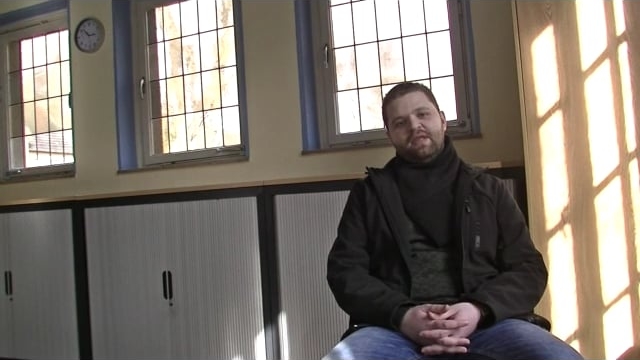
Country of origin: syria
Year of settlement: 2015
Age on arrival: 24
City: bochum
Gender: male
Language of the interview: Arabic
[i] Welcome Mr. [name] here, in our premises of the Middle East Association. Today is the March 1, 2018, my name is [name]. I would like to thank you for conducting this interview today may. Welcome. Tell us a little about yourself.
[r] Thank you Ms. [name]. I am [name]. I am 27 years old from Syria, Damascus the capital. I arrived in Germany around the 28th. Since August 28, 2015, about two and a half years ago, I’m here. I’m married, but now I live alone here in Germany, my wife is still in Syria. We are in the process of doing the family reunification, we are waiting for it, God willing. I’m still waiting for her visa, thank God. She did her interview at the embassy. We are waiting for your visa. Then we live here, Thank God. I currently live in social housing with three boys. In the beginning we were at home. At first there were six of us. Then someone left us because his family came. With his family. Another has found an apartment and moved in with his family. The third moved to another city as soon as he received his residence permit. In the end there were three of us left. But now, for 15 to 20 days, you have brought us another new man. We were all about the same age. At the beginning we were all from Syria, the first three of us. All Syrians, but each from a different federal state. There is one with us, each from a different state. One is an Arab, the other is a Kurd, for example. Then the new man came. He is young, around 15 years old and from Palestine. He also lived in Syria, about a year ago. I got my residence permit exactly three years ago. After about a year and a half of waiting, I got my residence permit. I went to school, learned in a school. I attended a language course and did an internship. An internship as a tailor with a Turkish tailor for a month. In Syria, my father had a machine, a cutting machine [sewing machine]. He taught me how to dress. I learned the trade completely from him when I was about eight or nine years old, every summer. Every summer I went to the workshop with my father. He taught me what to do. That’s how I learned everything. I sewed everything and learned the job well. After that, in Syria, I tried to do other things. After I learned to sew, I tried to work on something other than sewing. I worked with a colleague in Syria. He brought office furniture from Turkey, such as chairs. We opened a showroom and sold desks and chairs. Kind of like a furniture store, but only with tables and chairs. Then office furniture. He had a machine for pickles, where you can make pickles like cucumbers and carrots. All varieties, we worked with them too. Thank God we had good orders for export to Iraq. We distributed this in Syria. We worked for a bit and then unfortunately, thank God, the riots started. When the war started in Syria, in the place where the workshop and showroom were, a lot of problems happened there. I was forced to quit my job and do something else.
[i] Where was this place?.
[r] This place was in the Cham and is called […]. After that I did another job, through my aunt’s husband. He had restaurants in Cham. He called me and offered me to work for him. “I want you to work with me.” I started over and worked with him. I was like a manager in the restaurant. Afterwards I worked in a new branch. It didn’t achieve good sales and was then closed. He then transferred me to the headquarters as manager. A while later I moved again to another job. There I did everything from billing to management. Then unfortunately something exploded in the main headquarters. We sold very little, people were afraid to go there and we had to close. Afterwards I went back to him, but this time he had to close everything.
[i] What year did this happen? What period was that?
[r] Around 2013. Then I go to headquarters. But it wasn’t all manager, I wanted to learn a profession. With the men there. We made pizza. I learned to make the dough and the sauce. We learned how to prepare it, how to serve it, everything. Then I learned to make western food. Such as schnitzels, skewers, fahitas and Mexican food. I learned western food and then worked directly in service. I made sandwiches right in front. In this shop I learned to make sandwiches and how to deal with customers. After that I moved into the shawarma [meat] area. He taught me how to marinate the chicken. How we prepare the kebab skewer, marinating chicken on the skewer. How we make the chicken on the spit, grill it, everything. At that time I had a deferment of my military service. I didn’t want to join the military yet. Then the time came where I had to go. I couldn’t put it off any longer. I was forced to leave work for a while until no one left arrest me or do something to me. Anything to protect myself.
[i] [name], thank you for the important information. You are very motivated and have a rush. Tell us about the topic “Army”? How did you protect yourself so that you didn’t have to serve in the army? Do you have siblings or are you an only child?
[r] No, I have two brothers and two sisters.
[i] Are you the oldest?
[r] I am the oldest.
[i] Are your parents still alive?
[r] Thank God they are still alive. I am the oldest. I’m 27 years old, like I said. I have a younger sister, she is about 24 years old, she is married and has two daughters. She lived near us, next to my parents. She studied until the ninth grade, after which she got married. My cousin asked for her hand in marriage and she married him. I have a brother, he is younger. Now he is around 21 years old. He is currently studying at the university. He is studying accounting. There were still vacancies at the university where he was learning media. Um […] I have a younger sister. She is now graduating from high school. This year she has her final exams. She is about 17 and my youngest sister. The youngest is around 14 and is in the tenth grade. My two brothers and the sister who is doing her high school diploma live with my parents. My oldest sister is married and lives in her own apartment.
[i] Where? In Damascus, in Cham. Cham center.
[i] Are you in contact with them?
[r] Absolutely! Approximately every other day. I call her every three days. I communicate with them. Sometimes we talk with voice and image
We are in contact.
[i] Tell me what the situation was like when you decided to leave? What were the reasons that made you leave? Tell us.
[r] I have the reasons at the beginning told. Like I said, after I stayed at home so I didn’t have to go into the army. A law has come out that can be postponed. I did it and put it off again, 20 days before the deadline. Or more, about a month and a half before I was at the university, registered at the university. This meant I was entitled to postpone my military service. At my age, I wasn’t allowed to postpone, even though I was at university. There was an age limit law. When you get older you can no longer take advantage of it. I studied French literature in my first year. I didn’t pass the second year. That’s why I had no right to postpone it any longer. If I had stayed at home, I would have had to hide. And that is impossible. I had no option: stay hidden or I have to leave the country, flee.
[i] Did the situation in the country also play a role in fleeing or not?
[r] Absolutely. The situation in the country forced me to flee.
[i] Tell me about the war.
[r] The war.
[i] We heard that you are a contemporary witness from your country?
[r] The war in Syria was destruction. Destruction for everyone. I lived roughly in the middle of Cham. The center of Damascus and the places around us were greatly affected. We were affected. My father’s workshop. We also had another shop besides the workshop, in a different location. She was in a suburb of Damascus, a suburb of Cham. The place was bombed.
[i] What is the name of this place?
[r] His name is Jobar. Was bombarded with rockets.
[i] Jobar is a commercial area?
[r] Jobar? In any case.
[i] There were factories there?
[r] The largest shopping center was there. A large shopping center, two commercial areas. We had a shop there. It has also been bombed. The shop is gone. Nothing is left for us. Neither the store nor the goods. The workshop was near the shop, it wasn’t bombed, it wasn’t bombed. We were forced to leave because it was in the forbidden zone. There were snipers there who were always ready. We didn’t dare go there anymore. The bombs came almost there. We were afraid to go there. Even my father was home for a while. There was nothing to do and he couldn’t go to the workshop to work. Now, thank God, my father had a university degree. He was a teacher of French literature. With his certificate he has worked at various institutes. He also tutored at home. Until the situation in front of the workshop became safer, then my brothers and I went in to get the machines. They were our machines and we left before the place was destroyed, they were stolen or something else happened. We got them out there. I had her at home for a while. During this time we worked from there. From home with the machines, we distributed in Hamediya City. A friend of mine had a shop there and we worked for him. We sold him goods until the end, thank God, my father found a shop in Hamediya City and rented it. We got everything there and, thank God, were able to work again. The day I went to get the machines with my brothers, I was walking on the street. It was like a ghost town, I was alone. Nobody was there on the street. I went in. As they say: you have taken control of your life. We went in and got them. Later, for example: I was sleeping on the street where we lived and suddenly I heard a very loud crash. I was scared and immediately got up to see what was going on. A bomb had hit the buildings across from us. A diesel canister [generator] exploded. The diesel canister flew into the air and came down on the buildings and almost the entire building burned. I immediately got dressed and went to the other building to help people. Then the police, the security troops, the fire department and the ambulance came to save the people who were inside. On the last floor there were children with their mothers. We got her out. This is what I saw. I experienced the horror. I had a friend that I worked with. He lived nearby. We were very, very good friends, like siblings. We were together every day. The destruction began in this place. The tanks, the bombs, the rockets and weapons started there. Everything. A child has come. He had to leave his apartment. His family, his mother, father, siblings and wife had to leave the house. When he left his apartment he called me. He said: “[name] I’m on the streets now. I have no place to go with my family. I have no place, I ran away and went out. I didn’t even take clothes with me, neither for myself, nor for the others. I got in the car and drove straight away.” I said, “It’s okay, it’s no problem.” I said, “Come to my house, to my parents’ house, immediately. You leave your parents there. I’ll come straight away and meet you in front of the apartment and we’ll see what happens.” I emptied the apartment. Sent my family to my sister’s. They then lived with us for about a week and I looked for him an apartment. I rented it, he lived there. When he moved, the man only had what he was wearing. He wanted to get things with his parents. Here in Syria you will find the same name. For example: My name is [name]. There you will find two or three that happen to have the same name. The same coincidence was a similarity of names. His name was on the barriers. No matter which checkpoint, they see his name and he is immediately arrested. He wanted to get things from his apartment because it had become a little quieter in the area. He just wanted his things, he said the situation was like this: “If I leave, they would catch me immediately.” There was a name mix-up. He was 23 years old and the man he was looking for was 50 years old, but no one was paying attention. They might only notice it after a month. I said, “No problem. I’ll take your car and drive to your house. I’ll get your stuff and everything else.” He said okay. I drove in his car with his mother and sister. They rode with me in the car. I arrived in a town at the beginning of the Cham. Jobar, it was quiet there. So I moved on. There were army checkpoints there, I kept going. There was a place behind Jober. His name was Zamalka. There was also an army checkpoint there. After I drove through there, I came to Erbil. There were weapons there too. But not from the government, different situation. There was another army there. I arrived at the checkpoint and he saw my ID. He said keep driving as I drove in. I was driving his car at the time, it was a Honda Jazzera [?]. At that time it cost 2,300,000 Syrian lira. That was an expensive car that I drove in there. I went to his house and took his clothes and blankets. He had just bought a new television and I took that with me too. I loaded everything that cost a lot of money into the car. Packed it well so nothing happened. Then I had to go to his parents’ apartment to get things. As I walked out I saw a jeep on the path behind me. Fumée, all in black, no license plate, no driver. He flashed behind me and I swerved to the side. So that he could drive past, I took the right side and he drove. Then he stopped in front of me and two men got out. They came to me wearing hats and armed. They asked, “Are these your things?” I said, “Please, why? Who are you?” They wanted me to identify myself. He replied: “Give me your ID, it’s better for you.” I said, “Yeah, I’ll get my ID. Please, this is my ID.” They believed me. Anyone who is from Cham, who lives in Cham or is from there, is for the government. If they see someone who comes from Cham, they have fled. They either have to rob or even kill. I could either get out of there dead or in one piece. He saw my ID and asked: “Are you from Cham?” I replied: “Yes, from Cham. Even if I come from Cham, what about it?” He said, “Get out of the car!” I said, “Please!”, “We want your car.” I said, “What do you want with my car? What do you want with the car?” He said: “We have to get the injured.” I tell him: “There are so many cars on the road. Haven’t you found any other than this one? Do you want to use this car to fetch injured people? First of all, that’s not my car,” I said. “This car is in my care. I came with it to get things for my friend. Why me of all people and why do you want a car like that?” He said: “You are from Cham. You from Cham are for the government.” I ended up saying, “I’m not getting out. If you want this car, you have to kill me first. You kill me and take me out. There’s no other way I can get out. This car is in my care.” At the time I said something like that. But, how can I tell you, my heart sank, I was shaking. It wasn’t a normal situation when this happened. My friend’s mother and sister started crying. They said, “Please God give you happiness, this man is my son’s friend. This is my son’s car. We’re not from here.” Then they asked for their IDs. I asked, “What do you want with the women’s IDs?” Only when he saw the ID and realized they were from this town did he let us go. He said: “Grace is love because of which I set you free. Next time don’t come alone. Don’t do that anymore.”
[i] Was that one of the reasons that made you leave the country?
[r] Absolutely. When this story happened to me I wanted to go on to my parents’ apartment to get my things pick up. But his mother said: “I don’t want anything more. Please let’s go away. I don’t want anything more.” I said, “No, we’re driving.” I told her we’re here now, let’s do this. She said no. I shot there and I drove back immediately. On the way back, not far from me, about a kilometer, I heard an unpleasant noise. When I looked in the rearview mirror, was about 600 meters behind me, or even a kilometer, a rocket came down. The whole area exploded. I said, “Thank God, that I left.” If I had stayed there, I would have been hit now. I would be dead and the people in the car with me. On the way, as I drove away, I wanted to drive into a street where there was a government checkpoint. They had weapons and new cars. My friend’s mother and sister were scared when they saw the checkpoint. This barrier was empty, no one was there. They were very afraid. My friend’s mother begged me: “Please go back! Let’s take another road.” While she was telling me that, I stopped. Then the soldier had seen me in this barrier. He whistled for me and said, “Come here. He asked, “Why did you stop?” I didn’t tell him, I was getting things from the apartment. There was electricity there. I had to lie to him so I couldn’t show him that I was afraid. I had to get past there or he’ll do something. I was at home, the power was out. I had forgotten whether the power was off. He said, “You’ll come another time.” I said, “Okay. Please, this is my ID.” He controlled him. Read it and returned it. Then he asked, “What do you have in there?” I said, “What you can see.” I said I have clothes, things. He asked: “Do you have other things? So that I don’t check in vain.” I told him I have a flat screen television. My friend’s mother and sister sat behind and in front next to me. I had bidon gallons of olive oil, five gallons is about 20 liters. He’s having fun with me. “What are you smuggling, Diesel?” he laughed. I said, “Yes.” “Yes, what should I do,” he said that’s enough. He didn’t control us and I kept driving. Since I was in this place, I have never returned. Never. I saw death then. I was done. I was dead. I didn’t expect to get out alive. Thank God. After that I’m gone.
[i] [name], tell us, what helped you get out? How did you make the decision to leave your family? And how did you get here?
[r] In the beginning, was at university. I had studied, as I said. After that, I could no longer postpone my service in the army. Either I join the army or I have to leave the country. Of course I chose to escape, that was better. The one in this war who doesn’t know who he’s killing! I didn’t want to die or kill anyone. I don’t want anyone to put that in my throat and I never want to put that in their throat. We are still young and our whole life is still ahead of us. I’ve had this decision for about a month and a half before the suspension of my service ended. That was enough for me to have to leave the country. That it has an end. I made the decision and booked with a travel agency. At first my father helped me. He had helped me. He had a little money put aside in case you need it. I borrowed something. My father also borrowed something. When I had the money together, about a million lira, I booked it at the travel agency and was done. I wanted to leave and there was no turning back. I booked, that was it. I left the country about 10 days before my deferment ended.
[i] Where did you book to go, what was your first destination?
[r] The first goal, even before I had all the money, Before I came to Germany, the goal was to leave the country. Only as far as Turkey, for example. What I can work on The tailoring and sewing is excellent in Turkey. I can work with that. Then when I saw that I had all the money: “Thank God.” Everything was prepared and I was able to continue [traveling] to Germany. I said to myself, I’d better not stay in Turkey. Here in Germany, I was told that people help people. Life is better in Germany. There were even people who recommended Norway or France to me. I heard a lot of good things about Germany. It is the best country to survive with support. Everything, simply everything. They accept the refugees. It is the country that has taken in the most refugees, migrants. In Germany it doesn’t matter where you arrive. Maybe you can meet your fellow countrymen and communicate with them. As we heard, Germany supplies Austria. I’m going to Germany, everything is available. The life, the food, the education. The situation is secure in Germany. I have decided, my direction is Germany.
[i] Was the journey difficult or easy? How were your first steps? You said you bought a ticket. Did you fly here? Or were there other stations?
[r] There were many stations. I left Cham first. From Cham I booked to Beirut. The plane ticket from Cham to Turkey was in Beirut. But there was a transit to Beirut. I’m from Cham. I remember getting on the plane at about 12:30 p.m. About an hour to Beirut. I arrived in Beirut. I have about eleven hours and 30 minutes at the airport Waited until the second plane came so we could continue. We took the second plane to Turkey. We have arrived in Turkey. To Adana, the city was called Adana, I got off there. We knew that when we got here we had to go to the sea because that’s where people meet in the city. In order for the people to cross the sea, they go to the city of Izmir. I took the bus from Adana to Izmir. I was on the bus for about 14 hours. When we got there, it was about seven or eight in the evening, after Izmir. On the way I met two men, also Syrians. They were also traveling from Cham to Germany. They knew a smuggler who was supposed to take them from Turkey to Germany. I had met her and we agreed that we would go together. They said, “We’re going to the smuggler’s house now. We’ll sleep with him and see what happens tomorrow.” I said, “Okay, no problem.” I didn’t know anyone in Turkey. I was alone. Even in Turkey, when you book a hotel or go to a restaurant, you know that you can only communicate in the Turkish language. No matter what you want to do, there is only the Turkish language and we didn’t know the Turkish language when we arrived. We found the smuggler in Izmir. He was waiting for us there. We went to his house. I spent a night with him. Afterwards my brother-in-law called his friend, who was a smuggler there. He had already spoken to him that I could go with him. When I spoke to him he said “you take this number and talk to this man. So that you quickly communicate with him and leave”. I left on the second day. I left the men there with the smuggler. He said they knew him. I went and spoke to the smuggler who knew my brother-in-law. I went and met him and sorted everything out. He said “now I will take you with me”. He had taken me to a hotel until the date came when we could travel across the sea. I stayed in the hotel for about three nights. I didn’t spend the last night there until the end. At about eleven o’clock at night he called me. He said, “Prepare yourself. Now the sea is calm, you can go. I want to send you now.” I said okay. I went to him and he had for me reserved. There were three buses parked there. We started to get in. There were standing about 40 people. The car They were closed, with no windows. Everything was closed thus the police and the Turkish Jandarma doesn’t see us. That was forbidden. They would take us to prison immediately. We drove standing, approximately The journey took two hours. 40 people standing, no one could move. We have arrived. The car stopped right on the beach. We stop. We got out. The smuggler and his people had already prepared something. They had prepared the boats. Apparently every balm could accommodate a maximum of 30 to 35 people. I swear They had put the Balm boat in the water and started putting people in it. So many people until there were 53 of us on the boat. “Who should drive?” asked the smuggler. Because I knew him, he knew my brother-in-law, he asked me. “If you If you drive the Balm, I won’t charge you an entrance fee for the trip. That’s $1100 or $1200. If you drive take I don’t get any rent or money from you.” I said, “No, I can’t be responsible for that. If something happens, if people sink in the water or die, I won’t do it.” He said, “Okay. Okay, whatever you want.” Then they brought in a man who had no idea. He can’t drive it, he can’t do anything. They said he would drive. We said “Okay, no problem”. We went by boat. 53 people, the children in the middle and us around them. He turned on the boat, supposedly they had taught him how to drive. In which direction he should go straight. They showed us a light that was far away and told us “you should go there”. We said okay. The young man who took over should drive. He couldn’t do any of it. He couldn’t drive at the beginning when we set off. We drove about 50 meters when part of the engine broke. He didn’t know what that was. We sailed on the water for about 500 meters and then the engine stopped. We tried everything to get it to start again. But it didn’t start. We called the smuggler and told him. When we called and he said “I’m coming to you”, the waves had swept us back about 200 meters. He came, looked at it and turned on him. No idea what he had done. We drove about 500 meters again, the engine broke down and we called the smuggler again. He came again, for the second time. After about ten to 15 minutes he came swimming. He didn’t come on a boat. He turned it back on. We drove and he said: “Nothing can happen to you now.” After about one and a half kilometers the engine stopped again. We were in the middle of the sea. We spoke to the smuggler. He got another boat and came to us. He had brought a part with him, saw that it was necessary and installed it. We drove on. I had been at sea for about five hours. We were 53 people. In the end we were forced to throw the things we didn’t need, what wasn’t necessary, into the sea. So that the weight becomes smaller. As we drove, the water poured into the boat. We took the boat for about five hours, five and a half hours. Then we arrived on an island called Samos in Greece. We arrived at a Greek island. We got out after we got there. I was with two men who were with eight men. There was a man with his son and his friends’ children. They were gone too. I met her. They were also from Cham and told us to continue on the path together. From where the boat stopped to the place. It was about four hours before we reached the police, the Greek police. We called the police. We told the Greek police that we had crossed the street. We don’t know what to do, whether they should please pick us up. They said: “Yes, we’re coming. But it will take us about three hours to get there.” We were wet, as if we had been swimming. We said, “It’s okay, we’ll come alone.” We walked along the path and asked people. People didn’t dare to take us because it was forbidden to take anyone there. They weren’t allowed to take any refugees, or any strangers, with them. If they caught someone, a taxi, or any car, it was forbidden to help anyone. When we asked they said the path was there. We kept walking. We walked, taking breaks along the way. We ate something, drank and we continued walking until we reached the police headquarters. We stayed there for about an hour until the people who took our photos came. They recorded our names. All so that they could give us a piece of paper with which we could move around Greece. So that we could continue on our path. Later, after they gave us the note. Taking photos at the beginning took about an hour. Afterwards we waited about three hours until we got this piece of paper. After this note, I went to the travel agency and booked a ship for myself and the men I met. I have booked a ship. That was at nine o’clock in the evening. We have made the last booking. If you don’t book now, you’ll have to wait two days for the second ship to return. The ship came and we got on. The ship was full of refugees. People on top of each other. We went in tired. We were at sea for five hours and walked for about four hours. We were tired and our nerves were frayed when we got on the ship. I lay down on the floor. We slept there. We drove until around six in the morning. We arrived in Athens. After we arrived in Athens, we searched there too until we found someone. An Arab, also a smuggler, who is giving us a lift. From Athens to the border with Macedonia, a bus stops to Karnak. A tour bus took us to the border of Macedonia so we could continue. We made a deal with him. We arrived at the Macedonian border around ten or eleven in the evening. We hadn’t slept here yet. We only slept on the ship, on the floor, for about two or three hours. That was all our sleep, our break. When we arrived in Macedonia he let us get out. The bus left us about three kilometers from the border. There was a hotel there where we waited. Supposedly we were supposed to wait there until four in the morning for the sun to rise so we could walk through the trees in the woods. We were afraid that bandits or smugglers would come towards us. We were afraid that someone would stop us. At first we were told to wait, but then we agreed: no, we’ll go and continue immediately. I said, “Okay, let’s move on.” We carried our things and left. We were traveling on the highway. We were walking and the cars were coming towards us so they knew where we were going. At the end of the path we met a Greek police car. You showed us the way. The car accompanied us until just before the Macedonian border. They said: “You have to walk about a kilometer across the train tracks. The railway tracks were broken and no trains ran on this route. We said okay and ran. We walked about a kilometer and then we reached the Macedonian border. The Macedonian army was at the border. The press and media were there. But they treated us very, very badly. If someone pushed or someone tried to push themselves forward beat her, scolded her. It was almost like torture. Afterwards they told us: “You have to sit there”. We sat on the floor until about six in the morning. At six in the morning a train came. Such an old train like in old times. We should with that drive immediately from the Macedonian border to the Serbian border. We were not allowed to stop in Macedonia. We said okay. They divided us into groups so we could take the train. We got on the train. There stayed no free space. I was sitting on the train. I had opened the door, my feet were outside. I was only halfway in and there was this man sitting across from me who was driving with his son. We sat on the floor, the toilet door behind us, the smells, people on top of each other. During the journey I was tired, I couldn’t take it anymore. I was exhausted and sleeping. I sat at the door and my eyes closed. The man sitting at the door in front of me took my hand so I wouldn’t fall down when I woke up. I slept a little. He held me tight when I fell asleep. Otherwise I would have fallen down. Thank God. He told me: “Close the door.” I squeezed myself and closed the door. We sat very, very close together. I slept for about half an hour, then I couldn’t take it anymore. I opened the door and we stayed like that until we reached the border. When we arrived in Serbia, the Red Cross and the… Serbian army was waiting for us. When we arrived they gave us cookies, Juice and things distributed. They checked whether someone was sick and needed treatment. Afterwards they took us to a camp with tents in a forest. You stayed there for a day or three days. I don’t know how many until it was my turn for her to come to me Capital or not brought to the capital. First into the city so I can get a note for the stay. We also looked at it in Serbia. The situation was cruel and very difficult, perhaps we have to stay there and wait for a long time. Two or three days, as we’ve heard from other people. I escaped the camp with the men. We ran away when the sun was still shining. We left. We were walking and didn’t know where to go. We walked until we reached the train tracks. Where we got off the train. We kept walking and walked into the forest. Later, on the way, there was a hole in front of us, like a dry river. We had to get through it and get to the other side. We saw around 30 other people there. Families who also fled the camp and wanted to continue on their own. They also had children, small children. We thought we would all go together so that there would be a lot of us in case something happened along the way. In the end we walked together until we reached the international highway between Serbia and Macedonia. On the highway we walked on the side of the highway. It was about 10 p.m. at night and the sun had long since set. There was nothing left. Cars surprised us on the way. Normal cars with four people sitting in them. He told you: “Taxi, I’m like a taxi.” It was packed so we couldn’t go. They were robbers. They stole from people and took their money. Then they threw them onto the street. All together there were around 30 of us. Each of us attacked them whenever one came near us so that they would become afraid. We ended up hiding until all the cars were gone. After that we continued walking. We reached the highway around eleven o’clock. We walked until one or two o’clock. We reached the first exit at around two o’clock. The first city in Serbia. We had arrived in Serbia. There was a kind of rest stop and gas station right there. There we went in to the owner. The owner’s son was at the rest stop. We talked to him and the boy called his father and told him: “There are a lot of people here.” He came straight away. He welcomed us. It was cold at night. It’s gotten cold. He said, “Bring the kids in so they can sleep inside, in this room. We’ll see what we can do. The man wanted to help us at the time until we knew what to do. We told him okay, just like we communicated with him. He said: “I could organize a bus for you that would take you straight to the capital. But it takes a little more than the normal buses. Are you alone? The person in charge at the camp who gives people the papers to get to the capital and the director of the camp are my friends. I could talk to him. He can help you quickly. ” We said no problem. Then he was gone for about an hour. When he came back he told me: “I spoke to the camp director.” He told me: “Now I will take you to him.” When we were standing at that gas station, there was one of the mafia guys with the cars on the highway. He saw us there and wanted to go into that gas station. He wanted us. The owner kicked him out. He said, “They’re with me!” The man, God bless him, went with us. He took us to camp. Even with him on the way, the cars that were driving there wanted to stop us. But he reacted immediately and sent her on her way. We arrived at this camp. There were also tents there that were completely overcrowded. We went in, sat there for a while and in the morning they gave us the papers. Then we left. We took the bus and went to the capital. We were very tired. We decided to stay in the capital for two days until we recovered. We stay for two days, then we wanted to move on. We booked a bus and drove to the Hungarian border. The bus let us out at the border. We had to walk there for about two hours too. On the way there was a road we could walk on. At the end of this street the Hungarian police are waiting and then you go to prison. They take your fingerprints, sometimes they even take your money. Or we could go through the woods so we could reach a highway and no one would see us. There we take car and go. Smugglers found us in the middle of the way. He said: “I’ll get you out of here. We have cars outside. They’re at the station and we can take you to the capital immediately. We’ll take you to Budapest, the Hungarian capital. We had a deal: 100 euros per person. They had taken us to the cars. We got into the car before the driver came in. There were four of us in the car, three in the back and one in the front. Before the driver got in, one of the smugglers came and said, “Give me the money. Give me the money so the driver can get in.” My money was in my pocket. The others had hidden their money. I got out 1000 euros. My friend has 200 euros. So we had €1200 for four. He had 200 euros. He just wanted to tell him: “Here you go. There’s the money.” He snatched the money out of his hand and ran away. I lost 1000 euros. The car doesn’t belong to them. They left us in the car until we men gathered together afterwards. Then a second car came. There was an old man who looked correct. He gave us a lift and took us to a hotel. We arrived at this hotel, I forgot what it was called in Hungarian. Afterwards we waited for the cars at the hotel. We waited for two cars to take us to Austria. There were nine of us. The cars came and we drove to Austria. There in Austria, we booked a train and drove from Austria to Germany. Then I went to Nuremberg and went to the police.
[i] Your first stop in Germany was Nuremberg?
[r] My first stop was Nuremberg. After we get there we are went to a camp. Someone who was friends with one of them had told us about it. We stayed there one night. We got there at midnight. We stayed in camp until 4 p.m. the day after next. There we received a medical examination. They then moved us to another camp, in a place called Ruth, which is part of Nuremberg. It was like a former military airport. They had set up hangars and tents there. We were in this camp for about 25 days. The camp was in the middle of the forest, at a military airport, but Everything was there. They gave us towels, soap, champoo, brand new mattresses, new blankets and beds. The [camp] was air-conditioned. Everything was air conditioned. The toilets were also excellent. They also had a restaurant that was part of the camp. It was a Turkish restaurant because the food was different than other camps. We stayed there for 20 or 23 days. Afterwards we had a transfer to the city of Unna. We stayed there in Unna for one night. They divided us into rooms. The journey from Nuremberg to Unna took around twelve hours. From one train to another, even with a change. We didn’t know anything. That was the first time we used such a train. At one stop we didn’t know what to do, not even the young people. There was a Moroccan who wanted to help us. He said: “Yes, I’ll show you how it’s done and book you a ticket.” But he asked for money for it. We had no option. We had to pay him to help us.
[i] Up until the end, money played a big role on your way to Germany.
[r] Absolutely.
[i] Wouldn’t this have been possible without money?
[r] Absolutely not. Without money you get stuck, you don’t know what will happen or what to do. After we arrived at the camp in Unna, they sent us on the second day to Arnsberg. They took us to a school. We were in a school class. A large room, but there were none there beds. Only fabric beds, like stretchers. The area to lie on was just as big as you were. The weather there was very cold. The rooms were not air conditioned. We suffered a lot there. We stayed there about a month, on a stretcher. If it broke, you could get a new one. But no beds. No matter how much I talked. That was that, what they had available, nothing else. We stayed there. Thereafter They brought us to Bochum with a transfer. They also welcomed us here in Bochum. We then went to the social welfare office, where they gave us papers. Then they took us to a camp that was in a school gym. A volleyball hall from a school. They had a separation with tents in it. Divided into rooms, two or three beds in each room. I stayed there for about three months. Three or three and a half months in this camp. I suffered a lot there too. Mostly because the air conditioning was broken forever. It was so, so cold in the winter. No matter how thickly we dressed, we couldn’t get warm. The air conditioning was broken. We complained and discussed a lot. After that, thank God, we got an answer. We were able to move into an apartment provided by the social welfare office with six other men. I told you about it. I told you, we were all Syrians from Cham. We lived there together. Until now I live in the same apartment.
[i] Do you still live with the same [men]?
[r] There were six of us. Two of them moved out. Three left. The family came from one. The other moved into an apartment alone. After that the three of us stayed. Last month, about 20 days ago, they brought us a new young man. Now there are four of us in the apartment.
[i] Has everyone started a life in Bochum, is everyone trying to find their family so they can start their life over here?
[r] Absolutely. Everyone. We are here and we will stay in Bochum. We started over here. We do everything here. Some time ago I even talked about moving to the city where my sister-in-law and brother-in-law live. After that I visited them two or three times. But I felt lost there. I swear I walked the streets there and the streets were all empty. In the city of Oberhausen the streets were empty. I’ve been to them three or four times and each time I stay there for two or three days. The paths were empty. I felt no life there, no soul. I said to myself, if I leave this and go, if you just walk into the street […] . There are people there, all sorts of things, even. Here in Germany, I once stood on the street and ate a kebab. A lady walked past me, an older lady, she smiled at me and wished me bon appetit. I even told her thank you. Everyone you look at is smiling. You feel welcome. There is even a German She and her husband supported us a lot. She was a volunteer at a school here in town. My friend learned from her. She met him. She visited us at home and helps us when we need something or want something. No matter what problem we have, she tries to solve it. She took on conversations that we couldn’t have because our language skills were still weak. She communicated with companies, with offices, with foreigners. No matter which office, she always helped us. She was very nice, very personable. She visited us often. We went to her house two or three times. We helped each other. If she needed something, she called us. Some time ago she wanted to move. In the same house, but on a different floor. Here in the city she is alone with her husband. Her husband’s parents live in another city, as do her parents. She knows us, that’s enough. She knows exactly that we are helping her. She called us to see if it would be possible that we help her. We went to her and helped her. We taught her cooking Syrian and Arabic food. She learned from us. We cooked for her when she came to visit us.
[i] I felt that you were very happy. You have integrated yourself and feel comfortable in German society. It gives you joy. You talk about it in a relaxed manner and grin. Do you feel close to German society or far from it? Are you moving away from your culture? If When you think about your integration, do you feel like it’s difficult? You couldn’t leave Bochum even though you haven’t lived here long? Two, two and a half years and you feel very connected to Bochum.
[r] After I got used to Bochum, It doesn’t matter which city I would go to. I wouldn’t accept them like Bochum. I have friends here and many colleagues. I know the entire city. I know every street in this city. I can use the VRR. I know how to go and come. I learned the schedules of buses, subways and trams. I know everything here. We were treated very well by the German people. We would like to integrate. Deal with them so that it is a life. A long life. We have to deal with it. They should love us. We love her. Friends become like a family, a community, a culture. When I first came here, I knew there was a different culture here. But I had to get to know this culture first because I will live in this country and start my life again. This is my life, this is where my life began. I spent 25 years in Syria. 25 years are just gone, as if I hadn’t lived them. Everything in Syria is gone. There’s nothing left. It would be better if I went back to Syria. But I definitely can’t go back to Syria, I would have to do military service. If I were to go back, I would be arrested right at the airport and would have to go to the army from there. Complete. My life is here now. I won’t leave this place. Just as they have embraced me here and given me all the support and help, helped me with everything, I have to accept their culture and their help. I’m getting used to everything here.
[i] Do you feel like the language is difficult for you to learn?
[r] Now this language. All languages are difficult. German is not a normal language no international language. Not all people speak this language. Nobody except the Germans and the foreigners who have lived here for a long time. They can speak German. But no one else cares about it. Based on my knowledge, I can speak a little German. I learned English and French at university. It helped me a lot that I speak other languages. That helped me. I love languages, but I had problems at the beginning. I found the German language difficult. After that I liked her. When you learn the language, it is a beautiful and good language. The problem is when you don’t feel comfortable. And if I’m not psychologically relieved, then I can’t learn anything. If I don’t feel good, I can’t learn. I can’t learn the language. There’s nothing I can do about it, that’s the difficult part.
[i] I see an engagement ring on your hand? Is your family here?
[r] No, my family is not there. My wife is still in Cham. I’ve been separated from her for about two years.
[i] Are you engaged or married?
[r] On paper I’m officially married, but I’m actually engaged. Before I left Cham, I prepared everything and came here. My fiancée and I knew each other for about three or three and a half years before we got engaged. We love each other. Ever since we got engaged three years ago, I knew I would leave the country and come here. I’m going to fly there, I love this girl, I want her [with me]. I didn’t want to leave her. The best thing was that we got married before I flew so I could bring her with me and live with her and do everything together. I didn’t like it and I couldn’t just throw away three years of relationship. Together, love and everything, everything passes without anything. The best thing was to get married immediately and get the papers ready. Afterwards we even had an engagement party, before I left the country. A day before. One day before I left the country. I celebrated my engagement party, got the papers ready and left a day later. That means I escaped. All of us are forced to do something like this sometimes.
[i] To save his position? To save oneself from the situation
[r] To save oneself from the situation. Now I expect to save the situation. I’ve been waiting for about two and a half years. I’ve been waiting for the bureaucracy for about two and a half years. Until she can do an interview at the embassy and get her visa. The procedure is difficult. There are a large number of people waiting here waiting for their families. Now, thank God, she had an interview at the embassy. She has been waiting for the visa for four months. Now we wait. As soon as the visa comes, she will come here immediately. We will be together again. When you think about the old times when we were together. We knew each other before university. I met you and then we studied together. We were at university together every day. I picked her up at her apartment and brought her back. We went for walks, did everything together. We were together like that for a while. When I think about the old times and see myself now waiting, I feel a pang in my heart, I feel pain. But there is hope. We’ll wait until she gets her visa. We will meet and establish our lives here.
[i] You said a beautiful word there: hope.
[r] Whoever has no hope loses his life. When there is no hope left, it is the end. But as long as there is hope, thank God. You’re always thinking about how to develop yourself.
[i] You have great ambitions and, God willing, you will realize the family reunification with your wife. You have achieved a lot on the difficult path.
[r] Absolutely.
[i] Are you waiting until your family comes?
[r] Definitely. God willing.
[i] You’ve come a long way, tell me a little about it Bochum. What happened to you. Were you able to get all the papers? How was the treatment in the offices and authorities?
[r] Now, thank God, we have everything. I was in court in Düsseldorf because of my residence permit. After that, all the papers came here. The treatment at the immigration office was very nice. You didn’t have to know the language well to be able to communicate well with the officer. He knew one, two or three words, so he could understand me and I could understand him. My papers were processed quickly. After my interview at court, I remember, after a month and a half, I got my residence permit. I got a residence permit for three years. Then, as soon as I got the residence permit, as soon as I had the notice… No, not when I had the notice after I had the interview in court. At the beginning we only had a white piece of paper. There was information about me there. When I got the notice, I immediately showed it to the immigration office, so I can get the papers ready. I needed the interview and everything else so that I could get a new ID card. I was lucky. There were people who went there and only got an appointment after a week or ten days. I showed him the papers and he took me on it straight away, that same day. It was my turn, he gave me my ID and got my papers ready. He gave me an appointment a month or a month and a half later so I could be fingerprinted. No, earlier. When he gave me the ID. After a month and a half, I received the decision with a positive answer for my asylum application. I immediately made an appointment to give the fingerprints for the passport and ID card. The treatment was very nice and respectful. Nobody does you wrong. You walk in and the employee smiles and tries to help you. For example, when I submitted an application to the job center. I went in there and she had an Arabic translator. We didn’t know the language, not yet. I went in and the employee was very personable and nice. He tried to get me a translator, but couldn’t get anyone. Everyone was busy. He tried to communicate with me differently. In English he asked: “Do you know English?” I said, “Yes, I can.” We communicated in English. I gave him all the information in English. We talked and he was very friendly and very respectful. He entered everything for me and got the papers ready. I did everything. He gave me addresses so I could enroll in a school. So that I could start a language course. The treatment was very nice. Thank God. I haven’t experienced anything bad with the employees or the authorities or anything else.
[i] [name], are you thinking about continuing your life here?
[r] Now I’ve arrived here. I count again. I have now come into the world, now I have begun to live. My life will now happen here. My wife is coming soon. My fiancée. We start a family, have a house. I would like to start a job here. Here is my life. Beyond that, there is no turning back. Returning home is difficult, even because of the army. It is forbidden for me to go back. My life is here.
[i] Communication with your parents and family is a good thing.
[r] Of course. I want it so much, I swear. The thing that hurts me the most is the distance between me and my fiancée. I miss my family very much, especially my father. When I remember my father, I feel so much pain and I feel very uncomfortable. I wish to see him again.
[i] You will definitely see him again.
[r] God willing.
[i] Of course you will see him again. Your life doesn’t end here. It goes further, it is freer. Maybe he will come to visit you or you can visit him.
[r] God willing.
[i] In your home country, the word hope that you used in the interview is very beautiful and very important. You are an ambitious person.
[r] What keeps us alive is optimism and hope. When there is hope, there is life and you can think forward. Maybe I can work from next year and then I’ll have saved some money. Then I can meet my family in Lebanon or in another country. No matter how I can keep in touch. I’ve been here for two and a half years now. This is the first time in my life that I am separated from my family. Sometimes I left my parents for a week or three days. I went to a colleague’s house for four days, but I was in the middle of Syria. In my country, that wasn’t a problem. But now I’m here. You wish you were with them, but there’s nothing you can do. Thank God, there is hope that I will see her in the future, I can meet her. This story takes some patience.
[i] God willing. Is there something nice that you do with your life? What can you distract yourself with? Do you have a hobby, something that keeps you busy and distracts you from your worries and problems in the future? How do you spend your free time?
[r] I swear I have trouble distracting myself. My problem is that when there is something in my head that always bothers me, I think about it all the time. Until it clears up. My big problem now is that my fiancée is coming to me. I can find an apartment. I’ve been in this public housing apartment with the men for about a year now. Since I got my residence permit, I have been looking for an apartment. I’ve been looking for an apartment for about ten months. So far I haven’t found anything. I’m already scared when she gets her visa. If my fiancée comes, where should we live? I haven’t found an apartment yet. This is my biggest problem now. When I have problems, I always think about it. You don’t feel like doing anything or doing anything. Is always upset and under pressure. I feel a lot of pressure when I don’t do anything. I’m under a lot of pressure. I don’t know when I’ll reach these two steps. When I find an apartment and my fiancée is here, life opens up in front of me. Then I can do whatever I want, thank God. I have ambition, I want to keep learning, keep learning the language. I want to work, I want to do everything. I don’t want to stay at home. The city provides our bread. No! I’ve been used to working since I was eight or nine years old. I don’t want to stay here like this. I’m not used to it. I’ve been here for about two and a half years. I’ve been at home for two and a half years. This is very stressful for my psyche. Stress… I did a language course, but the pressure meant I couldn’t continue. I have reached A2 level. I didn’t finish B1. This pressure. Afterwards I completed an internship. At a tailor, in my area. I have an internship for a month with a Turkish tailor in the city, made in Bochum. After that I have a second internship at Middle East e.V., a club, made. Thank God, I was very relaxed. The first internship was my job. The owner was very nice and terrific. He was very happy. I was happy with him. I finished a month with him. Then I have the second one made at Middle East. That was good for me, thank God. I met new people, a new way of communicating. I got to know many new areas. I learned a lot. How can I deal with people. I know how different things are done. How I can maintain contacts and get along in life, apart from the help and support.
[i] You are a volunteer in the social sector. You can fill your time with human things. You give back something of what Bochum has offered you. From what the German people gave you. Especially knowing you. You’ve done good things in this short time. You helped schools. You supported the city. You have helped and are trying to keep yourself occupied with positive things. This reflects your person and your soul.
[r] I did that. Like you said, we give something back. For the city that supported me and gave me everything. I think that’s special. My first hometown is Damascus and the second is Bochum. The first home is Syria, the second is Germany, my second home. Just as everything has been given to me, I want to give some of these beautiful things back. You have to do something from what you brought with you. Also to fill your free time and always be among people. I consciously do things like this to distract myself from the enormous pressure. When I go to events, the kids and people make me feel better. This is how I bring change into my everyday life. I communicate with people. I did something good for the city that helped me. That relieved me of what was involved, thank God. I’m not bored. The pressure is also reduced.
[i] Yes. Bochum is known for its diversity. All nationalities live here. The openness of this city is what sets it apart from all other cities in this region. You’re lucky you landed in Bochum. That helped you a lot. Where exactly do you live in Bochum?
[r] In Bochum I live behind the university. Opposite me are the university accommodations. There’s also, what do you call it? A language café is also opposite. I have visited it several times. I went to the language café with my friend three or four times. We tried to find contact there, including with other nationalities. In the language café you will find Koreans, Japanese and Africans. All possible nationalities. We tried to talk there to strengthen our German language and to communicate more. This strengthens our social networking and our social engagement with people who are foreigners like us here. There are the others too. We try to get along well with everyone. And walking hand in hand with people.
[i] [name], your social commitment is positive. Do you have difficulty communicating with your family and parents? Or is it possible because of the internet and WhatsApp?
[r] Now, with the Internet and WhatsApp, we mostly make phone calls with picture and sound. If they need something or I need something, whenever I feel like talking to them, I can call at any time. That also makes it easier. Without this media I wouldn’t know what you could do. You are separated from your family. Far away from his parents, his friends and everything else. Without communication it would be very difficult. It’s good that something like this exists. You can keep in touch. We see our families. That calms you down.
[i] Do you feel safe here in Bochum?
[r] Yes, thank God. We are safe here. This is a country with laws. We are safe. Nobody does anything bad to us. I live in safety. But there is also security in the family, in the parental home. With his siblings, with his father, his friends. You feel more safe there. Here too, thank God, everything is normal. The safety in Syria was that you were with your family. But you didn’t know when you were going to die. You don’t know when a bomb will fall on you falls. Maybe you’ll die from a bomb or a gunshot. Safety is only at home with your parents. There is no security outside. Living here is home. We are safe, no one will harm us. If something happens to us, there is a place where you can complain and we will be protected. There are many ways.
[i] The law.
[r] The law is excellent, something special. The law is our protection and our security.
[i] Does it matter to you whether you live in a democratic country or a dictatorial country?
[r] Certainly it makes a difference to live in a country, a democratic country, where you can do whatever you want. You can do anything, you can say anything. You don’t have to hide, you don’t have to be afraid. In Syria we were very afraid. We didn’t dare do anything there, say anything. But here? Here you can do whatever you want, with limits of course. Everything has a law, with respect. Simply everything. No one is above the law. Nobody is above order or does what they want here. No, that is forbidden.
[i] Do you wish for your parents and your family that they live here in a democratic country or that there is democracy in your country?
[r] Would you return to Syria if there was a democracy there? This is still my country. You live in your homeland, in its atmosphere. In a democratic country it is open. It is certainly modern where democracy reigns. I want democracy for my country. But if they don’t exist in the country, we want to live here. They should come here and experience democracy. See what people are like, what everything is like. How people work here, live here, do what is good for them. You have an opinion, you can speak openly and you are not afraid of anything. Everyone lives in protection here. Nobody can do anything or harm them.
[i] What also sets Germany apart from other countries is its health insurance and medical assistance.
[r] For sure. We are medical care here. No matter when I get sick, I just go to the doctor. I have health insurance. If I have to go to the hospital or the doctor, I go. I am insured, I am safe. I do everything. For example, if I have to go to a doctor in Syria, for example a dentist, I have to expect that I will have to pay money. Even if I have to remove a tooth. This tooth costs me 5000 lira. If I have something else done, it costs something different. If I go to another doctor I have to pay. No matter where I go, no matter which doctor. We don’t have what health insurance is. Wherever I go, I have to pay. Everything is at my expense, in cash. Even if someone is very sick or goes to the hospital. For example, some time ago, two months ago, my uncle came out of the hospital. He was there for two and a half months. He paid around 2.5 million lira for the hospital. He has diabetes and developed inflammation. They had to amputate his leg. He paid a lot. Two million lira for just a hospital visit of about one and a half months.
[i] It’s hard, but we want to end the conversation with something nice. I would like to thank you very much, [name], for the lovely interview. For the calm and composure with which you spoke. For the good logic with which you participated in this project. You have given us a lot for our program. Thanks. Thanks for your time. I hope we talk to you soon about other topics that are important to you. You won’t get bored with you.
[r] Thank you. I am glad that I took part in this project. Thank you very much and all the best.
[i] You’re welcome…


