Country of origin: turkey
Year of settlement: 1994
Age on arrival: 40
City: bochum
Gender: female
Language of the interview: Turkish
[i] Today is December 19, 2018. We are at home with [name]. I would like to do a short interview with her. Dear [name], you are taking time for me today. Thank you for allowing the interview.
[r] With pleasure, my companion.
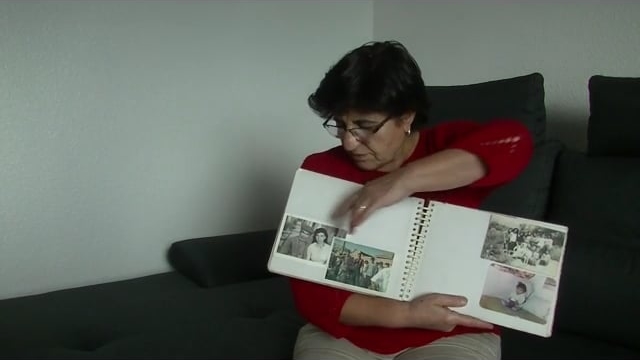
[i] When you arrived here you had a memento with you. Let’s start with the memorabilia.
[r] Let’s get started.
[i] Hold the picture into the camera.
[r] Yes.
[i] And tell us about it.
[r] These are my children. I am 1994 after Germany came. And I brought the picture with me, because they are both very important to me. I have two children, both are very valuable. I’m illegal Germany came. I hid this with me and came to Germany. I sought refuge here. My asylum application was not immediately accepted. I was referred to a home. I stayed in the home for four years. My life in the home was not easy. I had nowhere to go.
[i] Tell us about the picture. We’ll get to the other things later. Tell us about the picture. There is another picture. How old were your children? Tell us about your children.
[r] My children were nine and ten years old.
[i] Why did you leave her behind?
[r] I have them in Turkey left behind because I experienced a lot in Turkey. I was forced to leave her there. I left and came here.
[i] There is another picture, which is meaningful to you.
[r] Yes, that is the picture of mine brother and his wife.
[i] Where is your brother?
[r] My brother is in Hatay now. He lives in Hatay. He is, like us, got older.
[i] There is another photo below the picture.
[r] It’s from my other brother. He sent me a congratulations card. I added these. It’s from my other brother. I cut it out and because I love him very much, I cut out his greeting card and added it.
[i] That’s nice.
[r] Yes.
[i] There is another photo album.
[r] Yes, that’s right.
[i] Do you have pictures from your youth?
[r] Here are my photos from the Youth time. Memories of the time. Here I was new in Germany. I cried, it was him Anniversary of my father’s death.
[i] What year was that?
[r] It was 1994.
[i] This picture was taken in Bochum?
[r] Yes. Yes, in Bochum Stiepel. My daughter is there too. My daughter. The one in the middle is my daughter. This is all my family. Please forgive me.
[i] Can you please take it on your lap so that it can be seen by us?
[r] We came young, Now we are old, soon we will be gone. We have grown old. This is me in my village. This picture, [name]. I was very young then and had two children. Maybe you can’t recognize me here. I’m the one in the middle. My son and daughter are also on it, on the hands of friends. This is my uncle [paternal side]. God have mercy on him, he died. That’s the way it is. We experienced a lot on the way.
[i] 1994 you are after Germany came. Tell us about it. Which city in Germany did you arrive in?
[r] I arrived in Wuppertal. I applied for asylum in Dortmund. I lived in a camp for four to five months. I’m back from the camp Bochum was transferred.
[i] Which part of the city?
[r] According to Stiepel. There was a very large [residential] home. Maybe lived there 1000 people in it. We continued to live there.
[i] How many were you?
[r] We were four friends. Each from a different country. You don’t know the language. You don’t know anything. You just live with instructions. With Instructions you live there.
[i] There were four of you in one room?
[r] Yes, there were four of us in the [residential] home. Yes, four friends in one home. I mean, we lived in the same room together.
[i] And each one was from a different country?
[r] Yes. One was from Afghanistan. One, no two, were from Iran and I am Kurdish. A Kurdish woman from Turkey. There were four of us in one room.
[i] How long were you there?
[r] I was there for four years. Home life was not a pleasant life.
[i] What did you do there, for example? Tell us about your everyday life.
[r] We couldn’t do anything. What should we have done? Neither could speak the language, nor anything else. One came during the week teacher for two hours. He should us Teach German. We looked stupid like turkeys. We looked at the pictures. That’s how it was. What should you do but sit. There was an old one, small TV. Someone had left it there. I looked at him and he looked at me. I looked at the pictures. What could we do? We weren’t allowed to go further than 30 kilometers. It was forbidden. “More than You’re not allowed to go out 30 kilometers.” I couldn’t go any further than Essen. It was forbidden. We were questioned. “Why were you there, who did you meet there? Germany is, in and of itself, a very good country. But from our perspective it wasn’t so good, it restricted us a lot. It wasn’t that easy as the Germans say. To get this far wasn’t easy. We have many Hurdles overcome.
[i] Do you have relatives here?
[r] I didn’t have anyone here. Not even a bird. I came here all alone.
[i] Why did you Germany elected?
[r] Why me chose Germany? It was said that Germany is a democratic country. So we came here. It was depressing. For four years we had nowhere to go. We were not allowed to go further than 30 kilometers. Again we experienced bans. There would be freedom, they said. But in Regarding us, there was no freedom. Until we get these rights, we have many experienced difficulties.
[i] You stayed there for four years?
[r] Four years.
[i] Why four years?
[r] Four years because I don’t have any had a residence permit. I didn’t have any Residence permit. We only ever received a residence permit for six months. That’s why we stayed there. We were forced to stay there.
[i] You weren’t allowed to leave without a residence permit?
[r] Sure. You’re not allowed into an apartment. I lived with four women for four years.
[i] It was all of them Same women time?
[r] It was always the same women. Two or three years later one went away. One got married. There were only two of us left in this home.
[i] What was life like with the other residents in the home?
[r] I got along with everyone. I can adapt. You need to. Try not to conform. If you don’t adapt, you will have a bad time.
[i] After four years you received a residence permit?
[r] Yes, after four years I got a residence permit.
[i] Did you then leave home?
[r] I left the home and my children came to me.
[i] Where did you get one? Taken an apartment?
[r] In Bochum. I rented an apartment in Bochum Hamme.
[i] How many years later did you see your children?
[r] Actually, I was able to after two bring my children to live with me for years. After four years I was able to get her father.
[i] Did you take her with you?
[r] Yes, of course. Because the children were small, I was automatically allowed to take them with me. Yes, that’s how it was back then.
[i] Wasn’t it difficult? Two children, with two strange women? How was that?
[r] Sorry. When my children came, they took two women out of the room. One stay with us until a place is found for her. After they found a place, she was taken out. She left and I stayed with my children.
[i] After how many years were you able to bring your husband to live with you?
[r] After 4 years.
[i] After 4 years? Was your husband allowed to come to you too?
[r] He wasn’t allowed to come to us straight away. He first had to apply for asylum in Dortmund. He was assigned to a camp. He was then referred to me.
[i] You want to as a Bochum resident [be counted]?
[r] That’s right, you can say I’m from Bochum.
[i] What were your first ones like? Impressions in Bochum?
[r] Actually, it was good everywhere. But I didn’t know anyone and everything was strange. You don’t know anything you don’t know anything. You look at pictures of trees. Look at pictures on TV. For me everything was the same. After a while you get used to it. We’ve also gotten used to Bochum. Even if you don’t speak the language. My hearing has gotten used to it. Bochum was good for me. Since I’ve been here, I live in Bochum.
[i] You say that you, since you’ve been living in Bochum, Do you feel like a Bochum resident?
[r] Bochum is for me, it’s my second country [laughs]. Because no matter which one city in Germany I am, I would always choose Bochum. For me it is the most beautiful city. Because this is where I woke up.
[i] What hurdles did you experience in Bochum?
[r] I have many experienced hurdles. Whenever I received a letter, I searched the streets for a translator so I could learn the contents. “What does it say?” I asked myself. Whether our application was rejected or whether the application was approved? Whether we had to leave or were we allowed to stay? I have experienced this type of difficulty many times. We were allowed to settle down. Have many experienced difficulties. You have no one. It wasn’t exactly easy. I speak for myself, for others it may have been easier.
[i] What do you like? Bochum is best.
[r] What did I particularly like about Bochum? Everything. Bochum is my second home. I know mine Neighbors, the people. And the people of Bochum are good people. I love Bochum.
[i] You say Bochum is your second home. Could you say yours? Children grew up here? How old were you when you got here?
[r] My daughter was twelve, my son nine.
[i] How were they here?
[r] I have them on the Schools registered. I took her to school in the morning. I enrolled her in courses. There were free courses back then. Two hours here, two Hours there, then to school. You learned German very quickly.
[i] Children learn quickly.
[r] Yes, I tried very hard for my children. My children are educated. Have learned a profession. We had a hard time, but in the end my children are doing well. They work, they do well.
[i] Where do your children live?
[r] Both are in Bochum. One lives in Gerthe, the other in Wattenscheid. My children are fine and I live between them. I’ll go here and there.
[i] They work, are you married?
[r] Both are married. My daughter has two sons. My son has a son. Your son’s name is [name], he is one year old. My daughter has two Children. I have three grandchildren. We have grown old, we came young, we go old.
[i] Tell about your husband. After four years he came along.
[r] After four years he came. I rented the apartment. I have mine Got a driving license.
[i] Have you or your husband gotten your driver’s license?
[r] I have that Got a driving license. I started working in a hospital. Worked and saved some money. Then I opened a shop. I worked in the store at the same time.
[i] What kind of shop was that?
[r] A snack bar.
[i] Where did you open it?
[r] In Bochum, Alleestrasse. We worked together. I had two employees. After 15 years I became ill. I had heart surgery. The heart valve was replaced. I had to close the shop. Then there were family tensions. My husband has one Took an apartment. Without my knowledge. I am with my children. There are no problems, I don’t cause problems.
[i] Are you separated from your husband?
[r] We are not divorced, but live separately.
[i] Since when?
[r] How long, ask She? For three years. Not that long, three years.
[i] What is the dialogue between them?
[r] When it comes to issues regarding our children, I of course call him. He me too. We didn’t have any big ones problems. But sometimes… It was little things, but the children didn’t agree either.
[i] You used to work.
[r] Me?
[i] Now you’re sick and can’t work.
[r] Yes, I worked a lot. Because of the illness I can no longer work.
[i] How do you spend your free time?
[r] I spend my free time with my grandchildren. I spend two hours with one, two hours with the other. I get tired when I do this. Then I’ll rest at home. I go out and visit friends. I have a book and am trying to learn German. I hardly watch TV. Television is not attractive to me. But sometimes I do watch TV. I get along with everyone. I don’t have such problems. This is how I spend my days.
[i] Do you participate in cultural events?
[r] Sometimes I go to demos or meetings with friends. Listen. Sometimes I go to the Alevi club. This is how I spend my days.
[i] You mentioned that you are Kurdish, your [mother] language is Kurdish. What music, what dances, what clothes do you like, do you like?
[r] Although no dances, as an Alevi I do like Turkish folk songs. As a Kurdish Alevi woman, I dress modestly. Is that how you say it? I don’t have anything else.
[i] You say you are in contact with a lot of people in Bochum. If you see the people in Bochum, with those where you come from, compare which ones Do you notice any differences?
[r] They are warmer when you ask someone something in Bochum. Regardless of whether it is German, Turkish or… is Kurdish. For us there is no difference. You will get an answer. Elsewhere they turn around and move on. That’s why I feel that way People here are warmer. The Bochum people. That’s how I feel. Maybe it’s just me who feels that way.
[i] How to react Bochum on you? Do you feel accepted or do you feel like a foreigner?
[r] Of course I’m a foreigner. But I don’t feel excluded. We have to adapt to their culture. We can’t look for our own here Build your own culture with ideas. Because we adapt, we are liked. We obey the laws.
[i] Good. You heard about the problems in Heim says it was difficult. After that you’re in one Moved apartment?
[r] Yes.
[i] Was it easy to find an apartment? Tell us something about it.
[r] I’ve been looking for one for a year Looking for an apartment, it wasn’t easy. After a year I found the apartment and we moved. The school was nearby. That was pleasant. The children had an easier route to school. I started in to work in hospital. It became easier for me. The home was so isolated. Here, in your own apartment, it was easier for me. The children got their own rooms. I owned a couch. A place to sit, a table. We haven’t always lived like this: with a table, with a sofa. Actually, even when I laugh, I don’t really laugh at it.
[i] How was it with the neighbors?
[r] I like my neighbors. I get along with everyone.
[i] Who were your neighbors?
[r] My neighbors were always German. There were 15 apartments in the house. All neighbors were German. No Turks, no Kurds. I lived there for 22 years. I can adapt very well. There were never any complaints about us. We didn’t complain either. That’s how we lived.
[i] Home from work, from home to work?
[r] Yes, sure. I got up at four in the morning, prepared breakfast for my children and packed their bags. I said goodbye to her at seven o’clock. Then I went to work. There was no lazing around.
[i] You came here as a young girl?
[r] I arrived here very young.
[i] You were so young. How did you decide to come here?
[r] I had to make this decision because I couldn’t cope there anymore. Without me having done anything, I was called a terrorist that I would distribute information leaflets. They accused me of being involved To socialize with subversives, to take part in demonstrations and attend meetings. I was three days in taken into custody.
[i] Which city did you live in?
[r] I lived in Mersin.
[i] In Mersin. What year?
[r] 1993.
[i] 1993?
[r] Yes. I was in taken into custody. For two or three days. Then I was released. I got scared. At night they stormed into my apartment. They stormed into my apartment at night! With two children, this really scared me. Then I decided: I have to go abroad. But I didn’t know which country yet. But my decision was clear.
[i] How did yours Family taken in?
[r] I didn’t tell my parents so that they wouldn’t be sad that I was leaving Turkey. Sure, they were sad afterwards. A young woman, 32 years old… She’s gone, what country is she in? She has no one there… Neither in Germany, nor in We had relatives in France. None of us have ever been abroad. Neither from ours Family, still from the clan.
[i] Where did yours live? Parents?
[r] In Hatay.
[i] You lived in Hatay?
[r] Yes.
[i] What’s wrong with yours Husband said that?
[r] When I did decided, no one could talk me out of it, because I don’t do anything pointless. He didn’t question it. I can’t deny that. He didn’t stop me. I said I’m leaving and I left. I’m about illegal entered ways. The path was very difficult. I had a very difficult time but I did it.
[i] And the separation? What difficulties did you experience during the separation? as a woman with two children?
[r] [name], please don’t ask me about it. That was very bad. That was very bad. Sure, there are 25, 26 Years have passed since then. It’s certainly hard, but only my daughter said anything when we parted. She is older and felt it. She looked at me, just said “Mom”, nothing else. I have one for my son 5s or 10s given into the hand. I distracted him with money. He was happy and went outside. “I’m going to spend my money”, he said. Then I left. Don’t bring me this time in memory. They were small. Her grandmother, God rest her soul, took care of her and took care of her. She washed them, took her to school. She took care of them. My mother-in-law also took care of her. God protect her. No matter what, she took care of it. She looked after my children for two to three years. This is what they looked like when I left. These are children! Very small children.
[i] True. He spoke to them on the phone since you came here. Were you, what did you ask, when was the trial…
[r] As soon as you knew where the Phone booths are. How to call, how to pay. With card or with Money? How do you call? I learned all of this. I went to the train station. There were many telephone booths on certain streets. So I could talk to my children. Believe me, I saved on food and drink and put everything into making calls. Have you arrived, are you at school? Where are you? Are you on time? Are you up? I spent everything on it. I spent every penny on this, I gave on this Telephone off. Our life wasn’t easy. Our life was difficult.
[i] Tell about yours Youth, where were you born?
[r] I am in Elbistan, Kahramanmaras was born. I lived there for about five to six years. Later my parents emigrated to Hatay. Then they went back to Elbistan, Kahramanmaras returned. As you know, we Alevis, Alevi Kurds emigrate. We have nowhere to settle. This is how our lives are structured, this is how we continue to live. Later, we lived in our village. We got married there, have grown up.
[i] How old were you when you got married?
[r] I was very young, [name]. I was 16 years old. 16 years old. We girls weren’t asked back then. XY’s son looks good, is good […] it was said. Because they were relatives, they had us “given” [to each other] without our consent. Whether you saw him or not, you were forgiven. It was like that back then. Our life wasn’t particularly nice. We have in ours Youth experienced nothing. I [spent] my youth in efforts. That’s how it went. As I got older it was just as difficult.
[i] Where did you work?
[r] In Turkey?
[i] Yes.
[r] In the summer my Father and my sister picked cotton. We went to work in the spring. In the fall we picked cotton. We were always working. We sowed in our village. We have plucked what was sown. We had one or two trees. We looked after them. We had a garden. Our life was like that. We haven’t had an easy life.
[i] Did you go to school?
[r] I’m five in the village went to school for years.
[i] And after primary school?
[r] It was a luxury to go to primary school. Not everyone could go to school. Only two girls in the entire village went to school. My mother didn’t want to that I go to school. She almost beat me to death so that I don’t go to school. She cut my hair so I wouldn’t leave. Still, I went.
[i] Why didn’t she want you to go?
[r] She said, “Don’t go. Girls don’t go to school. Look, “no other girl goes to school. ” That’s what she said back then. My younger sister didn’t go to school. She wasn’t allowed to. Let me put it this way: I wasn’t naughty, but I was a little unruly. She beat me, I accepted the beating and still went to school. I said, “I’m leaving.” Today I say to myself: “It’s good that I prevailed. At least I could read. At least you know what it’s about. Good thing I went.” Even if I’m not in mine I learned language, I could read. Even though it was Turkish, I could read and understand something. And I’m grateful for that.
[i] When are you after? Migrated to Mersin?
[r] I came to Mersin in 1989.
[i] You were already married then?
[r] Yes, and I had two children too.
[i] Why go to Mersin?
[r] I got married in the village, as I said before. The revolutionaries came to the village. We helped them. Not just us. They almost arrested us. That’s why we went to Mersin. Mersin is a big city. Nobody knew anyone.
[i] What difficulties did you experience in Mersin? Everything was strange there, you didn’t know anyone.
[r] Yes, how did we do it there? We rented a house. My husband was unemployed. We had two children, mine Husband looked after the children. I went to work. I did housework. He looked after the children.
[i] Didn’t he have a job?
[r] He had no job. He didn’t have a job and he liked laziness. It was more comfortable for him. He liked it that way. He preferred to be at home. I have looked after both my children, as well as worked and earned money. That’s how I was. There’s nothing you can do about it. That’s life.
[i] How did this affect the children, that the mother works and the father looks after the children.
[r] As a rule, the mother is the one looks after children and the father works.
[i] True.
[r] For me it was the other way around. The father stayed at home and looked after the children, I went to work.
[i] How did the children receive this?
[r] What could the children do? They were already bigger. He prepared tomatoes and served them to them. They did their homework. He went to sleep. He couldn’t do much at home. What should he do, I ask you. In the evening I went to work. I took my wages and did the shopping. Then I came home and checked on my children. That’s life.
[i] Nice. Back when you came here, there were hardly any Kurds here. But if you look at Bochum now, there are many Kurds and Turks here.
[r] That’s it.
[i] Do you come into contact with them?
[r] Sure. At the beginning there weren’t that many Turks or Kurds. If there were any, I didn’t know them. I was self-employed for 15 years. I have a large circle of friends. I know almost everyone. Now it’s different. Although I have language difficulties, but I don’t have any other problems. I can mine do errands. I can go to the doctor. We couldn’t do that back then.
[i] What does it mean for you today to come together with your people? Is there a difference? Do you say to yourself, “I have to once a week, be in contact with my people every month”? Do you have such an urge?
[r] I don’t feel compelled, but of course I go to events and demos from time to time.
[i] There are weddings?
[r] I go to weddings, for condolence visits. I’m visiting friends. I don’t sit around at home feeling sad. Just because I had a hard time doesn’t mean I’m sitting around at home feeling sad. I can’t do that. I am a fighter. That’s the way it is. If I don’t find anything else, I go for a walk with my children. Take her to the Park to play. Then I’m tired and come home to sleep. I don’t sit around at home. I have a large environment. I can go to meetings go anywhere. I don’t differentiate between Kurds, Turks and Arabs. No matter who, I talk to everyone.
[i] What dreams did you have when you were young?
[r] As a teenager I had beautiful dreams. Unfortunately, I couldn’t do mine Not realizing dreams. When I think I haven’t achieved anything, I realize: I have achieved something. Of course I had nice dreams. Sometimes I didn’t live my dreams.
[i] For example? So which one?
[r] For example… Of course I wanted my dreams to come true, to grow old with my husband. My dreams. I wanted to raise our children and have grandchildren with this person. Do something together. As a young girl I had dreams like this. Get a driver’s license, have a car […]
[i] You have one Driver’s license and a car.
[r] Yes, I fought for that. Nobody made it possible for me or helped me. I worked for it. I saved up and got my driver’s license. I continued working and bought my car. After the home, I rented the apartment. After renting and that Set up, I opened the snack bar. I managed the snack bar for 15 years. It wasn’t easy to get here.
[i] You could say that you were able to fulfill part of your dreams.
[r] I was able to realize part of it. But some is left. And that remains unfulfilled.
[i] You are still young! You keep saying you’re old. But you are still young. You can still dream for the future […]
[r] No, [name]. From now on, That’s all I wish for the future Health. At least to be healthy, spend time with my children, to help you. They should go to work. They should have a nice life. What else can you do from now on? I think there’s not much you can do from now on. What we invest in our children is ours Merit. We can’t do anything else. I wouldn’t be happier even if someone gave me a plane. I needed it when I was young, but I don’t need it anymore. That’s how it was, dear friend.
[i] How did your daughter’s marriage come about? Who did she marry?
[r] My daughter married someone from our village. She has two children. She decided for herself. She made the choice.
[i] She chose herself?
[r] Of course. If I had made the choice, it would have been wrong. She was the one who got married so she had to decide. Both my daughter, as well as my son! My children were allowed to decide for themselves.
[i] You have been in Kurdistan for almost 30 years, lived in Turkey. You have been living in Germany for almost 25 years. If I ask you about home, what is home to you? How do you answer this question for me?
[r] When you say home: Of course I think of my home with longing. I miss my home. Of course I like it here too, my children are here. Of course you love, you miss your home more.
[i] Is there anyone else there?
[r] My whole family. My siblings, my mother, my late father. All of my family, except one brother, are there. Everyone is in Turkey. We are a big family.
[i] How many Are you siblings?
[r] We are ten siblings.
[i] How many girls, how many boys?
[r] We are four girls and six boys.
[i] Two are here and everyone else is in Kurdistan?
[r] Me and a brother are here, everyone else is in Kurdistan.
[i] Do you see each other?
[r] Yes, sure. You are my life. I see her every day. Of course we’ll see each other. Mine Mother, my siblings. I see you.
[i] Can you drive to them?
[r] I used to be able to go three or four times. Now only once a year. My financial situation has changed. Now I only go once a year, for two to three weeks.
[i] Do you like this one? Difficult to say goodbye?
[r] Of course it’s difficult for me to say goodbye, what a question. You leave your family, you leave a part of yourself behind. It’s a part of you. Siblings are one Part of yourself. Your mother gave birth to you. You leave her there and go. Until I get to the plane, even in the airplane, my gaze is directed backwards. And I am the oldest. That’s why I have one of these with them Feeling like they were my children. For me they are still as small as they were back then. We are good siblings, have respect for each other, love each other, listen to each other. When I saw all of them, my siblings, nieces and nephews, left, into another I came to the country I missed her very much.
[i] Have you ever thought about going back there?
[r] I can’t decide. Here are my children. My grandchildren are here. If I go there, I’ll leave a part here. If I stay here, I miss her. I can not decide. The decision is: to fly back and forth. As long as we are healthy, we will fly back and forth. Nobody can know what will happen later.
[i] There was no one in the home Language course, you said. A teacher came for two hours?
[r] For two hours.
[i] What was it like after you had a residence permit. Did you take a course after that?
[r] I attended a course for six months. I haven’t been able to record anything in six months. I didn’t know anything. If I had had as much knowledge as I do today, maybe I would have learned something. Back then I was just present. Yes, that’s how it was.
[i] Can you say German was too difficult? Or couldn’t you understand it? Did you worry too much?
[r] I was worried. Of course, German is also difficult. It is not an easy language. It is a difficult language. As a Kurd, I even have problems with Turkish. And then you come here and learn German. German is a very difficult language. In our country we at least learned Turkish. As Kurds, with Kurdish Native language, we learned Turkish. But no Turk has learned a word of Kurdish. You can’t. We learned it. So we are smart. But I didn’t make it here. It’s a difficult language. And the role models were missing.
[i] You talked about correspondence. As we know, Germany is a country with a lot of bureaucracy. A country with a lot of bureaucracy. How was that for you?
[r] It was hard. The first Time was very, very difficult. Whenever I received a letter, I searched every street for help. So I explored the whole city. Looking for someone with black hair, whether male or female. When I found someone, I asked: “Are you Turkish, Kurd? Can you help me.” Then I showed the letter and asked who it was from, what it says. But now it’s not so difficult anymore. Now, I’m going to the club. I have friends who I can call and ask if they have time and can look at my letter. Or I suggest going. To get it done. I can do a lot of things myself. With the tax office or employment office. Even if I can’t speak well, I can do this myself. I’ll take care of it. But it was hard back then. At the beginning, it was very, very difficult. I was on Kortumstrasse, here in Bochum and had two letters received from the district court. With the letter in hand, I was on the Looking for someone to explain it to me and crying. I didn’t know anyone. Talked to someone with black hair. Asked: “Are you Turkish? Kurd?” He spoke Arabic. An Arab, he spoke Arabic, Or another language. Oh man, he’s not a Turk either, a Kurd. We’re like something out of a movie. If I have one If we made a film, it would exceed a film. Not every black-haired person can be a Turk or a Kurd. I looked for the solution in black-haired people. A young man once said to me: “No.” I asked: “Are you Kurdish?” He said no in Turkish. I said: “But you speak Turkish.” He replied: “I am Alevi. I said: “But as an Alevi you have a language? Are you Turkish or Kurdish? Do you see? You are Kurdish.” He replied: “I am an Alevi.” Oh, what’s the point.
[i] Didn’t you say that you are also an Alevi?
[r] I said: “You see, I’m Alevi too. I speak both Turkish and Kurdish. But you have a language.” That was on the train, I will never forget it. I didn’t have a car back then took the train to work. There was a lot that made you laugh, and a lot that made you cry.
[i] Do you have any German ones in Bochum? Attended cultural events? Theaters or museums?
[r] I visited museums.
[i] Which one?
[r] This one in Bochum. I also visited the museum in Essen.
[i] The mining museum?
[r] Yes.
[i] What did you think of it?
[r] It was nice. It gave me joy. I like that sort of thing. I like looking at something more than just walking around. Learn something. I also went to the theater often. I like doing things like that. I even went to German funerals.
[i] If you look at Bochum now, there are a lot of foreigners in Bochum.
[r] A lot.
[i] If you compare it?
[r] Yes, sure.
[i] Please compare the years 1994/1995 and 2018.
[r] Now it’s like my village. In my village we didn’t have a hard time. There were: [name], [name], [name]. It’s the same here. I call: “[name], I’m sick, I need help. Send me someone.” I can ask for help like in my village. At that time we couldn’t even call the ambulance. You suffered, you couldn’t even call the ambulance. It was hard. I had a very difficult time in Germany.
[i] You say: “I have now settled down here.” How do you feel about it?
[r] Sometimes I tell myself that I was very lucky. It’s good that I was assigned to Bochum. I worked here, my Received a residence permit, met good people here with whom I get along. My children have one School leaving certificate, a job. What can I say? I like it here.
[i] Is there anything you don’t like about Bochum?
[r] No, there’s nothing I don’t like.
[i] A district, a street?
[r] I look at it this way: If you’re good, things will go well. Then all people are good.
[i] Which part of Bochum do you like the most? You have to answer this question for me. For example, tell me a street or a District.
[r] For me, Bochum Hamme is very beautiful. I moved, but have Can’t leave Hamme. I even found an apartment. But I couldn’t leave until I found this apartment in Hamme. So I like Bochum Hamme the most. I like the whole city.
[i] Why? Because there are so many foreigners here?
[r] There are many Kurdish families here. You can understand each other. The neighbors are Kurds. I don’t actually differentiate between Turks and Kurds. I have an environment here, that’s why I like it here. Here I have neighbors and much more. I have been living in Bochum Hamme for 25 years. I couldn’t go anywhere else. I couldn’t even move to another street. Even though I found an apartment, I didn’t leave.
[i] Where does your live? Brother?
[r] Nearby, one street further.
[i] How long has he been living in Hamme?
[r] Since 2002. No, it was 2003.
[i] He’s been here for 15 years Germany?
[r] I brought him here. He separated from his wife. He broke up in Turkey. I brought him here.
[i] What is he doing?
[r] He bakes bread in a snack bar.
[i] What plans do you have for the future? Although you call yourself old, you feel old, but you are still young.
[r] I’m not young.
[i] Let’s put it this way: Where do you see yourself in 15 years?
[r] I want to see myself in my country. Live in peace in my country. But neither there, it still works here. I’m in between. There is no decision. I am a person who cannot decide. No, actually I can Make decisions. The children on one side, on the other hand, my family. My children on this site. You decide for your children. You prefer your child. In 15 years I’ll be an old grandma, maybe already dead. You never know. God shouldn’t put anyone in that situation. The world is like that, stays like that.
[i] And when you’re 25 Looking back years? Do you think about it, that it would have been easier for you if you had followed 2018 Germany would have come? Germany was actually different back then.
[r] Of course it would have been easier. A beautiful life, a beautiful environment. Today it would be much easier. It was very, very difficult back then. As I just said, We were not allowed to go further than 30 kilometers. If the police had caught us, we would have received a fine. If only things were like today back then. I had just arrived at the home and was told there was a job somewhere. I went there we talked. The men were Turks. It said I have to clean. I couldn’t speak German. So I started. Then I had to wash the dishes and wash the salad. Washing the lettuce took a long time. I washed for three to four hours. The employment office raided there. I didn’t have any Idea about the employment office. I was given a piece of paper, that I can work for two hours. You can work for two hours. I didn’t know what to do with the piece of paper. Should I give it away somewhere? The boss said, “No, you don’t have to give it anywhere.” “You put it in your folder,” it said. So I put it in my folder. So one day the employment office came. I was cutting salad when I was asked for my ID. I wondered. Friends had given me the job. Why are they asking for ID? “Who are they?” I wanted to know. They said they were from the City. These are controllers. “But why are you asking for my ID?” I wanted knowledge. Only then did I find out that I was working illegally. I stated that I have a contract. They took it. I thought I could work for two hours. Turns out they just wrote a note. Have signed, but without Registration or something similar. Anyone can be characterless, a Turk, a Kurd, an Arab… No matter who, including Germans. A swipe was foisted on me as a document. And I trusted that. I got caught and had no idea about anything. Even until now The matter went to court. They also blocked what little money I had. I didn’t even have a lawyer. They only brought in a translator. I stated that I had no idea that I had been told I could work two hours. So I worked. Now I don’t even get any money from the social welfare office. I don’t know, what I should do. The judge stood up and gave me Right. He said the others are guilty. If the woman is new here, If you are ignorant and are wondering where to submit the documents, you have the wrong ones information provided. I was acquitted. They got into trouble. I was left alone, the others had problems. I had an invalid document. No matter, two hours, that’s it Keep the contract in my pocket. I was confronted with something like that. I was charged and recorded by the police.
[i] Was there no one in the home who could speak Kurdish or Turkish?
[r] There were some who spoke Kurdish, but no Turkish speakers.
[i] Did they work there?
[r] There was no one in charge who could speak Kurdish or Turkish. If something was wrong, we let a master know. He then called a translator. He helped us. There was no other translator. There was no one. If you knew someone who spoke German, you got them. There was no one. We didn’t have our own translator. We tried to express ourselves with our hands and feet. We were sorry for them and we were sorry for them. Really.
[i] That’s how it is. Without language you can’t understand each other.
[r] You don’t understand her, she doesn’t understand you. How should one answer? There was nothing you could do about it. What can you do there? You inevitably have to endure that. That’s why, when my children were here, I sent them to every free class after school. So that they learn more. I tried very hard. Have different ones Bought books. There was a German family. I made contact with them. You often have with them Homework helped. They have together Homework done. That’s why I have mine Children put a lot of effort into it. I have worked. I was the money factory.
[i] What did your husband do?
[r] He was sleeping. When I’m asked I say, his job is sleeping. People don’t understand this and ask “Excuse me?”.
[i] There is a Russian one Novel, “Oblomov”. Do you know this novel?
[r] I haven’t read it.
[i] Then it will take time… He was sleeping.
[r] And what about style?
[i] That’s correct.
[r] It was comfortable for him at home. It’s warm. You don’t have to keep an oven burning. The heating works. The food is there. Everything was great for him.
[i] Is he still not working?
[r] No. He has never worked an hour in his life.
[i]Does he live alone?
[r] Now yes. The state takes care of him.
[i] It’s a good thing, otherwise he would knock on your door.
[r] [she laughs]
[i] And you would have to take care of him.
[r] In his life […] Let’s leave that.
[i] Yes. What is identity for you?
[r] What kind of identity?
[i] You are one Alevi, a Kurdish […]
[r] I am proud to be an Alevi. Also that I have one Kurdin makes me proud. The fact that I am a revolutionary, or rather a leftist, also makes me proud. At least I see everyone as people and don’t judge anyone.
[i] How beautiful.
[r] Don’t judge someone because he or she can’t work. He doesn’t have any money. I share with everyone. First and foremost is mine Identity of being human. For me it’s goodness that counts. I came here as a 32 year old. As a very young person I came here. I could have lost my way, could have done a lot wrong. I never have mine I have given up my beliefs always using my brain, when I did something. I always turned to leftists, to Kurds, to the people. For a while I was empty. There was a newspaper there that I distributed. At least I distributed a magazine took part in demos. I was always doing something. According to my ideas. I’ve never done anything bad. Because I, as a 32 year old, So came here very young.
[i] What do you say to Integration?
[r] [she laughs] Let’s end it here. My life is something […] let’s end it here.
[i] Say something about integration. What do you mean by integration?
[r] What should I say? Honestly, [name], I have nothing more to say. So, everyone should think nicely, should be able to share. What else can I say? Because that’s who I am, that’s all I know.
[i] Friend [name], thank you very much.
[r] Not for that.
[i] That was a nice interview. Thank you for answering all questions hearts answered.
[r] Thank you.
[i] I thank you.
[i] You wanted to see your grandson.
[r] I canceled Mr. [name] today. Thank you for coming. My house is always open for you. I expect you at any time. My door is always open for you.
[i] Thank you very much!


